
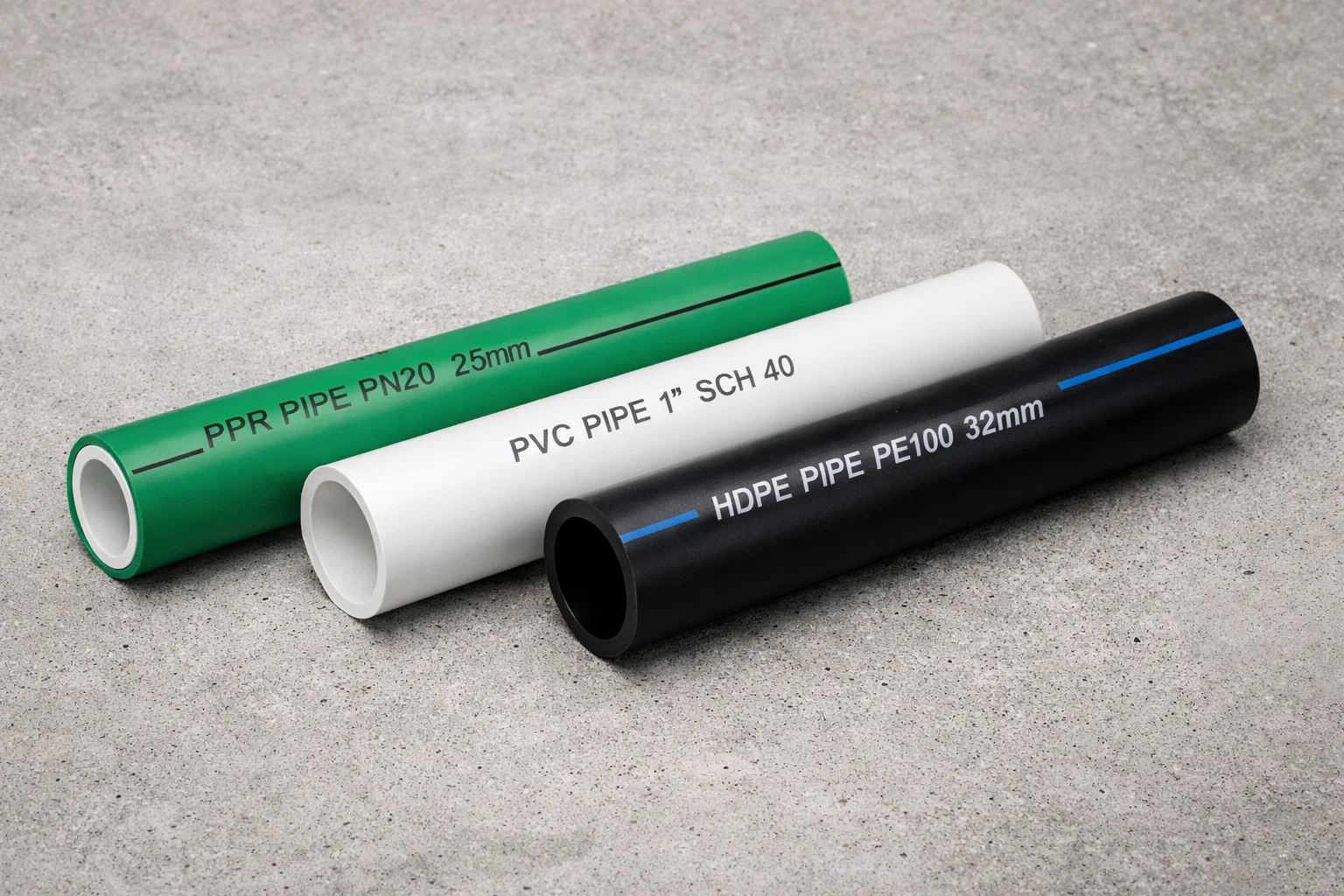
You are standing in front of a plumbing project, a detailed spec sheet in hand, and three pipe material options staring back at you. PPR, PVC, or HDPE — all plastic, all widely used, yet critically different in performance, temperature tolerance, installation method, and long-term durability. Choosing the wrong pipe material is a costly mistake that can result in burst joints, system failures, water contamination, or complete pipe replacement years down the road.
This guide breaks down the PPR vs PVC vs HDPE pipes debate definitively, covering every critical factor so you can make a confident, project-specific decision backed by technical data.
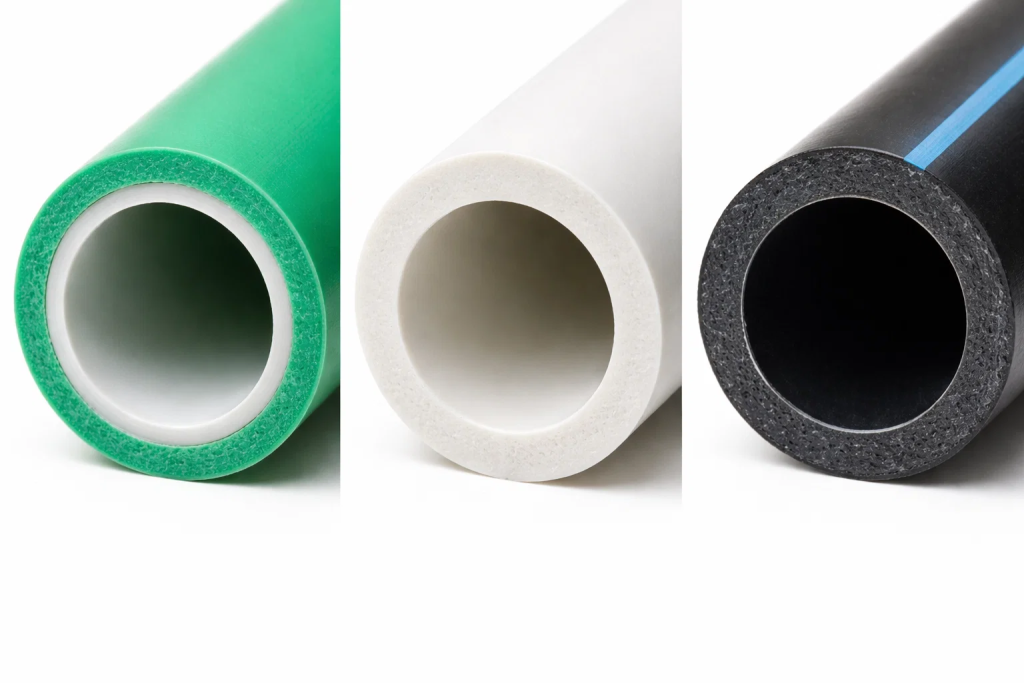
Before comparing them head-to-head, it is important to understand what each material actually is and why it was engineered in the first place.
PPR (Polypropylene Random Copolymer) pipes are thermoplastic pipes manufactured through an extrusion process using random copolymer polypropylene. They are best known for their excellent heat resistance and are a dominant choice in hot and cold water supply systems inside residential and commercial buildings. To learn more, read What Are PPR Pipes and Fittings on the Dave Pools blog. You can also explore How PPR Pipes Are Manufactured for a deeper look at the production process.
PVC (Polyvinyl Chloride) pipes are arguably the most widely recognized plastic pipe material in the world. Made from a rigid thermoplastic polymer, PVC excels in cold-water plumbing, drainage, irrigation, and structural applications. The comprehensive PVC pipe guide on Dave Pools covers everything from its composition to its full range of applications.
HDPE (High-Density Polyethylene) pipes are manufactured from high-density polyethylene resin, offering exceptional flexibility, chemical resistance, and impact strength. They are routinely chosen for underground water mains, sewage systems, gas distribution, and large-scale infrastructure projects. The complete HDPE pipe guide provides an in-depth overview of this versatile material.
All three belong to the broader family of thermoplastic polymer pipes, but their molecular structures and processing methods give each one a distinct performance profile.
| Property | PPR Pipe | PVC Pipe | HDPE Pipe |
|---|---|---|---|
| Material | Polypropylene Random Copolymer | Polyvinyl Chloride | High-Density Polyethylene |
| Max Temperature | Up to 95°C (short-term) | Up to 60°C | Up to 60°C |
| Pressure Rating | PN10 to PN20 | PN6 to PN16 | PN6.3 to PN20 |
| Flexibility | Rigid | Rigid | Highly Flexible |
| Installation Method | Heat Fusion Welding | Solvent Cement / Threaded | Butt Fusion / Electrofusion |
| Ideal Application | Hot and cold water systems | Drainage, irrigation, cold water | Underground, large-scale infrastructure |
| UV Resistance | Moderate (requires protection) | Good (with UV-stabilized grades) | Good (with UV-stabilized grades) |
| Chemical Resistance | Excellent | Good | Excellent |
| Lifespan | 50+ years | 50+ years | 50+ years |
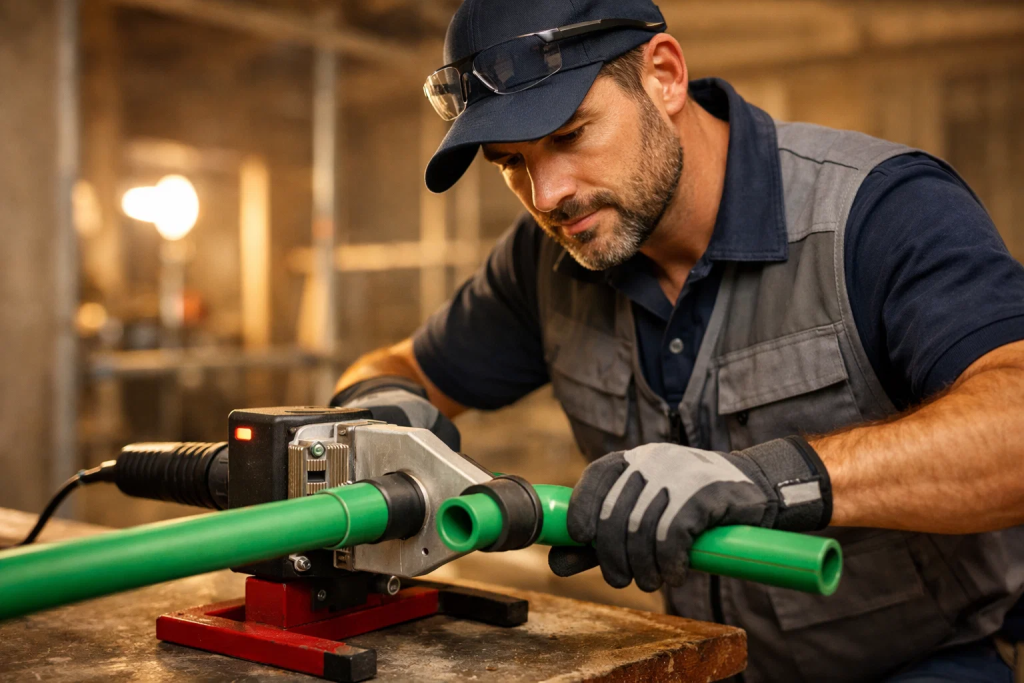
PPR pipes have become a go-to solution for hot and cold water plumbing systems across residential buildings, hotels, and hospitals throughout the Middle East and beyond. Their standout advantage is thermal performance. PPR pipe is compatible with both hot and cold water, operating reliably at temperatures up to 70°C continuously and surviving short-term exposure up to 95°C.
Key Strengths of PPR Pipes:
PPR pipes are ideally deployed in indoor hot and cold water distribution, understanding why PPR pipes are used helps clarify their dominance in domestic plumbing, chilled water systems, and compressed air distribution. They connect seamlessly through the PPR pipe connection methods using socket fusion or butt fusion techniques for watertight, permanent joints.
Pro Tip: If you ever encounter a joint failure, refer to How to Repair a PPR Pipe Leak for a step-by-step repair walkthrough.
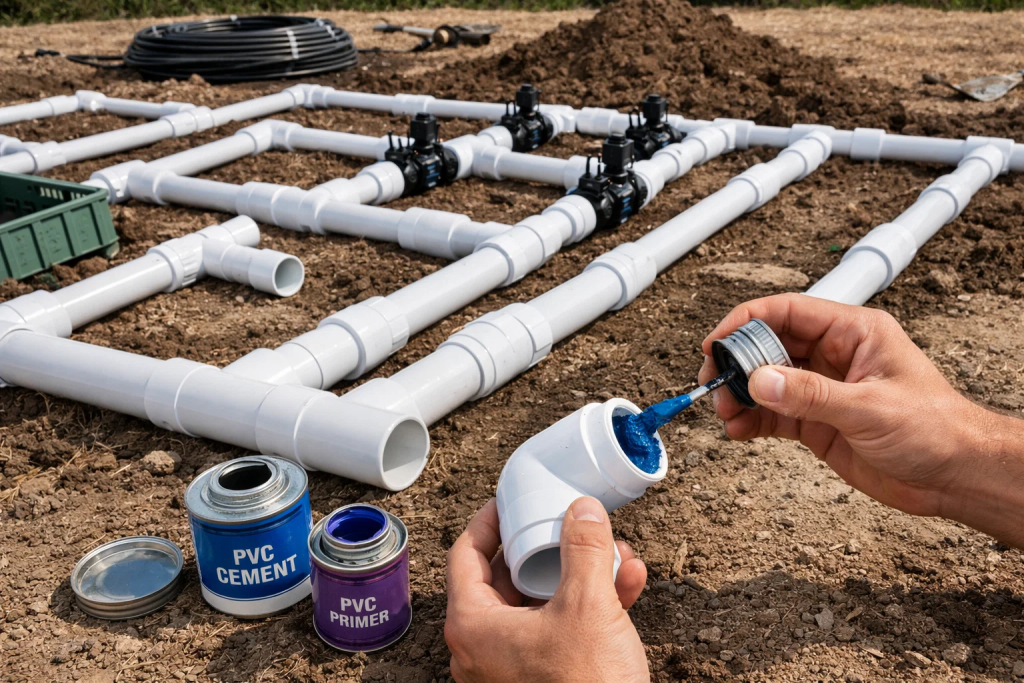
PVC pipes are the workhorses of the plumbing world. Rigid, chemically stable, and available in an extensive range of standard PVC pipe sizes, they serve millions of installations across drainage, irrigation, pool plumbing, and cold-water supply worldwide.
When comparing CPVC vs PVC pipe, standard PVC performs best in cold-water and ambient-temperature applications, while chlorinated PVC (CPVC) takes the lead when higher heat tolerance is needed.
Key Strengths of PVC Pipes:
PVC pipes shine in underground drainage and sewage systems, pool plumbing, and irrigation networks. When installing PVC pipes underground, proper bedding, trench depth, and backfill procedures are critical to long-term performance. PVC is also the dominant pipe material in fire sprinkler systems — explore which pipes are used in fire sprinkler systems for a detailed breakdown.
For pool installations, PVC combined with PVC high-pressure valves delivers reliable, corrosion-free performance in chlorinated environments.
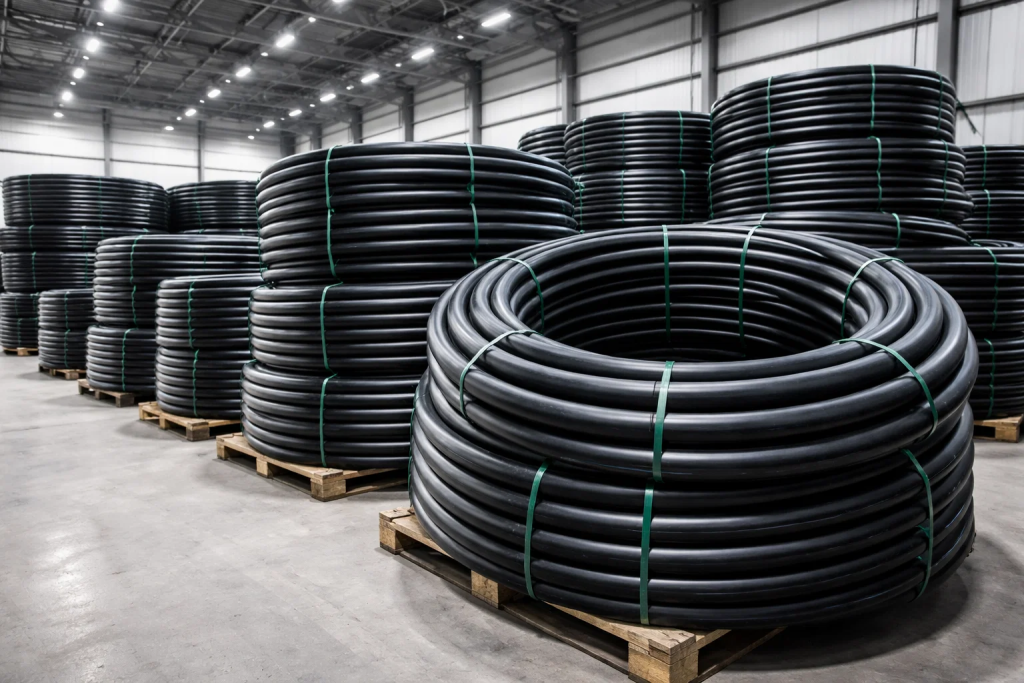
HDPE pipes are the engineering champions of large-scale infrastructure. Their combination of flexibility, chemical inertness, and impact resistance makes them the default choice for water mains, sewer lines, gas distribution networks, and marine applications. The HDPE large diameter pipe range extends into sizes rarely achievable with PPR or standard PVC systems.
Key Strengths of HDPE Pipes:
HDPE pipes are the dominant material for municipal water supply mains, sewer force mains, gas distribution pipelines, and agricultural irrigation networks. Their flexibility makes them ideal for trenchless installation methods such as horizontal directional drilling (HDD). Learn how to choose the best pipe material for your irrigation system when HDPE competes with PVC across large irrigation networks.
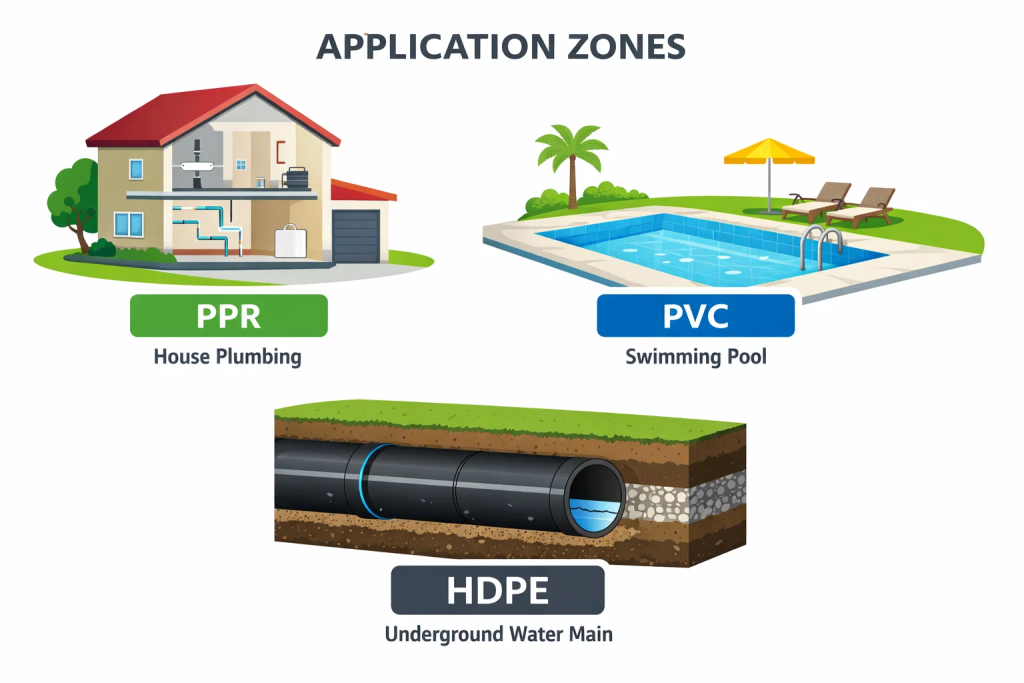
Choosing between PPR vs PVC vs HDPE pipes ultimately comes down to the demands of the specific application. Here is a clear, application-based breakdown:
Hot Water Supply (Residential and Commercial) PPR is the clear winner. Its heat fusion joints and continuous service temperature up to 70°C make it the only logical choice among the three. Learn more in which pipe is used for hot water supply.
Cold Water Plumbing (Indoor) Both PPR and PVC perform excellently here. PPR offers a joint-quality advantage with fusion welding. PVC offers broader size availability and simpler installation using solvent cement.
Drainage and Sewage Systems PVC and HDPE both excel. PVC is preferred for gravity-drain systems due to rigidity, while HDPE dominates in pressurized sewer force mains and environments with ground movement.
Underground Water Mains and Infrastructure HDPE is the definitive choice. Its flexibility, long coil lengths, and leak-free fusion joints outperform both PPR and PVC in buried, large-scale installations.
Pool Plumbing PVC is the standard choice for pool circulation systems due to its chemical resistance to chlorinated water, ease of fabrication, and wide range of compatible fittings and valves.
Irrigation Systems Both PVC and HDPE serve irrigation well. PVC is preferred for structured, above-ground mainline networks while HDPE handles flexible underground distribution lines with ease. See different types of irrigation systems for a full picture. For modern landscape projects across the UAE, smart irrigation systems are increasingly specifying HDPE and PVC pipe combinations to maximize water efficiency and system longevity..
Industrial and Chemical Applications HDPE and PPR both offer superior chemical resistance over standard PVC. PPR handles corrosive liquids at elevated temperatures; HDPE handles high-volume industrial flows at ambient temperatures.
When evaluating PPR vs PVC vs HDPE pipes for your specific project, work through these five decision factors:
1. Operating Temperature If your system carries hot water above 60°C, PPR is the only viable thermoplastic option. For cold-water and ambient-temperature systems, all three work.
2. Operating Pressure Review the pressure class of each material and match it to your system’s design pressure. Use the pipe measurement guide to ensure you are specifying the correct nominal diameter and schedule.
3. Installation Environment For underground and trenchless applications, HDPE wins with its flexibility. For indoor structural plumbing, PPR offers the cleanest result. For surface-mounted drainage, PVC is most practical.
4. Chemical Exposure Assess whether the fluid being conveyed contains chemicals, chlorine, or industrial compounds. HDPE and PPR offer broader chemical resistance profiles than standard PVC.
5. Long-Term Maintenance All three materials offer 50-year lifespans when correctly installed, but consider the ease of repair and availability of fittings in your region. For the best pipe material for home plumbing decisions, ease of local supply matters enormously.
For guidance on supplier quality, the Dave Pools pipes and fittings range covers PPR, PVC, HDPE, CPVC, and uPVC across a comprehensive product portfolio trusted by engineers and contractors across the UAE.
PPR pipes are best for hot and cold water supply with heat-fused joints. PVC pipes are rigid and ideal for cold water, drainage, and pool plumbing. HDPE pipes are flexible, highly durable, and designed for underground infrastructure and large-scale water distribution. Each material has a distinct molecular structure that determines its performance envelope.
All three materials are approved for potable water use in appropriate grades. PPR is widely preferred for indoor drinking water lines due to its non-toxic composition, smooth bore, and heat-fused monolithic joints. HDPE is the standard for municipal water mains.
Yes, PPR pipes can be buried underground for short runs, but HDPE is the preferred material for long underground water supply lines due to its superior flexibility, ground-movement accommodation, and availability in long coil lengths that minimize the number of buried joints.
It depends on the application. HDPE outperforms PVC in pressurized underground irrigation mains where flexibility and ground movement matter. PVC performs better in structured, above-ground irrigation mainlines and laterals where dimensional stability and ease of fitting assembly are priorities.
Standard PVC pipes typically operate safely at temperatures up to 60°C. Beyond this threshold, the material softens and loses structural integrity. For higher temperature applications, CPVC or PPR should be specified instead.
PPR pipes are joined by polyfusion heat welding, which melts the pipe and fitting together into a single molecule bond. PVC pipes use solvent cement welding or threaded connections. HDPE pipes use butt fusion or electrofusion welding methods.
Both HDPE and PPR offer broader chemical resistance than standard PVC. HDPE is particularly resistant to a wide range of solvents, acids, and alkalis, making it the top choice for chemical transport applications.
Standard PVC pipes should not be used for continuous hot water service. Refer to PVC pipe temperature ratings to understand the precise limits. CPVC or PPR should be selected for hot water lines above 60°C.
All three thermoplastic pipe materials deliver service lives of 50 years or more when correctly installed, operated within their rated pressure and temperature limits, and protected from UV exposure where applicable.
PVC is the standard choice for pool plumbing systems due to its resistance to chlorinated water, wide availability of fittings and valves, ease of fabrication on-site, and excellent performance in the ambient temperature range typical of pool circulation systems.
The PPR vs PVC vs HDPE pipes comparison does not have a single winner — it has a winner for each application. PPR leads in hot and cold water indoor plumbing with its superior thermal performance and fusion-welded integrity. PVC dominates in drainage, pool plumbing, and irrigation with its rigidity, ease of fabrication, and extensive size range. HDPE reigns supreme in underground infrastructure, municipal water mains, and large-scale industrial installations where flexibility and leak-free performance are non-negotiable.
Making the right choice requires aligning the pipe material’s properties with the actual demands of your project: temperature, pressure, environment, and fluid type. When in doubt, work with a trusted supplier who understands these distinctions deeply.
Dave Pools supplies a full range of PPR pipes and fittings, HDPE pipes and fittings, and PVC high-pressure pipes and fittings — all sourced from verified manufacturers and available in the full range of pressure classes, sizes, and configurations your project demands. Contact the Dave Pools team today for expert product guidance and fast supply.
Stop second-guessing your pipe material selection. Whether you need PPR for a hot water system, PVC for pool plumbing or drainage, or HDPE for an underground water main, Dave Pools has you covered with a complete, verified product range and expert guidance every step of the way.
🔧 Shop PPR Pipes & Fittings → 🏊 Shop PVC Pipes & Fittings → 🏗️ Shop HDPE Pipes & Fittings → 📦 Browse the Full Product Range → 📞 Contact Our Pipe Experts Today →