
Table of Contents
Quick Facts
Selecting the wrong pressure rating for your pool piping system can lead to catastrophic failures, costly repairs, and potential safety hazards. Many pool owners and even some contractors struggle to understand the crucial differences between PN10 and PN16 ratings, resulting in improper installations that compromise system integrity. By understanding these pressure classifications and their specific applications, you can ensure optimal performance, longevity, and safety for your pool’s plumbing system.
Pressure Nominal (PN) ratings are standardized classifications that indicate the maximum pressure a piping component can safely handle under normal operating conditions. These ratings are essential for ensuring system safety, reliability, and compatibility between different components in a piping network.
These ratings aren’t just a Dave Pools convention — they come straight from ISO 1452 (published in Europe as EN 1452), the standard that governs PVC-U pressure pipe classification. Under that standard, the PN class a pipe can carry depends on its diameter: pipes under 90mm can be rated anywhere from PN6 to PN20, while larger diameters follow a different pressure series. That’s why two pipes with similar wall thickness can still carry different ratings depending on size.
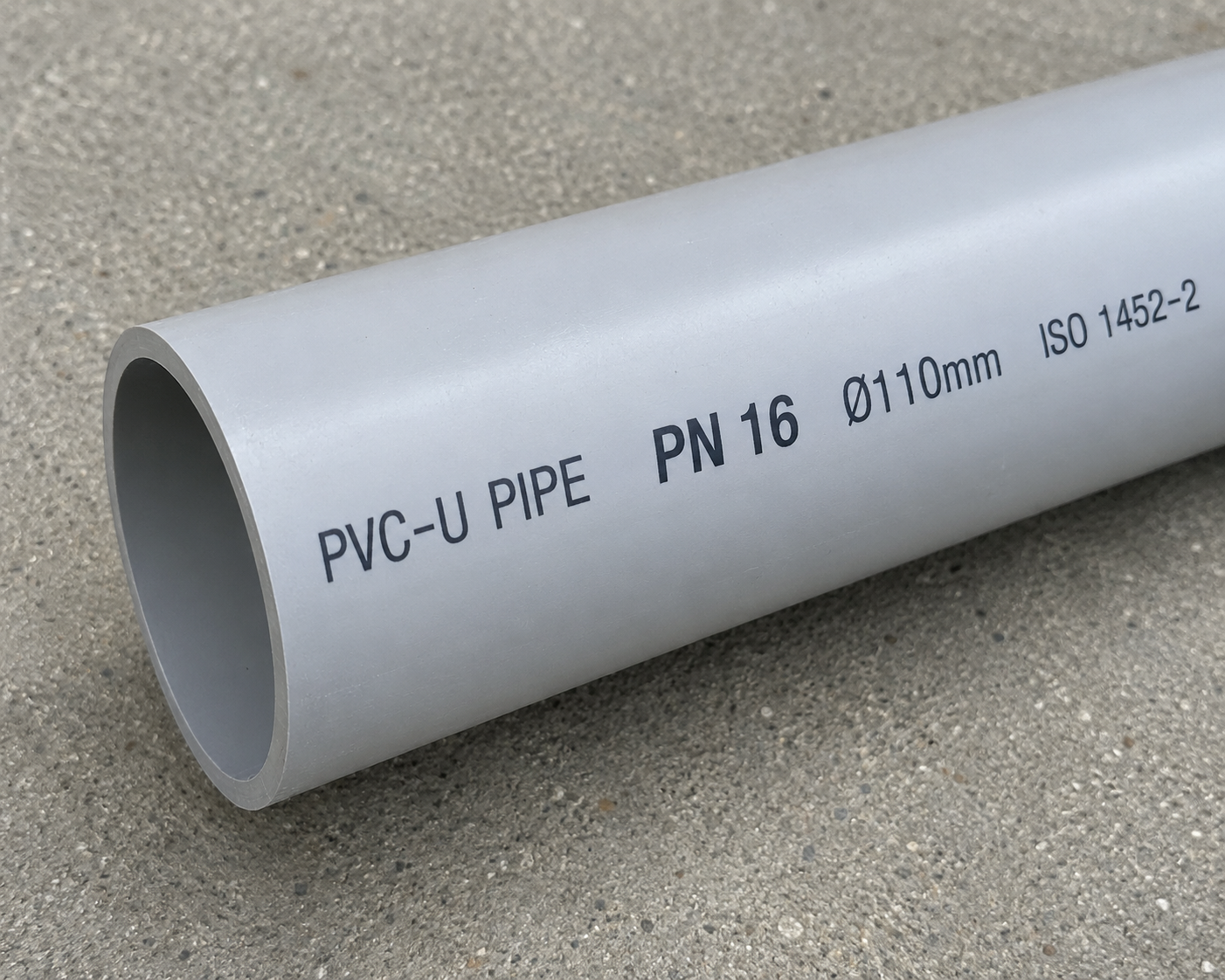
The PN rating system is internationally recognized and follows standards established by organizations like ISO (International Organization for Standardization). The number following “PN” represents the maximum pressure in bars that the component can withstand at 20°C (68°F).
In swimming pool systems, pressure ratings are particularly critical because they directly impact:
Understanding these ratings is fundamental to building a robust and reliable pool system that will function optimally for years to come.
What does PN10 stand for?
PN10 indicates a pressure rating of 10 bars (approximately 145 psi) at 20°C. This means pipes, fittings, valves, and other components with this rating are designed and tested to withstand pressures up to this threshold under normal operating conditions.
Technical specifications of PN10:
Common applications for PN10 in pool systems:
PN10 components are commonly used in:
PN10 provides adequate pressure handling for many residential pool applications while offering cost benefits compared to higher-rated alternatives.
Key Takeaway
If your system’s pressure stays comfortably under 10 bar — true for most residential return and suction lines — PN10 gets the job done for less money. Save PN16 for the side of the system where pressure actually climbs.
What does PN16 stand for?
PN16 denotes a pressure rating of 16 bars (approximately 232 psi) at 20°C. Components with this rating have been engineered and tested to safely handle pressures up to 60% higher than PN10 components.
Technical specifications of PN16:
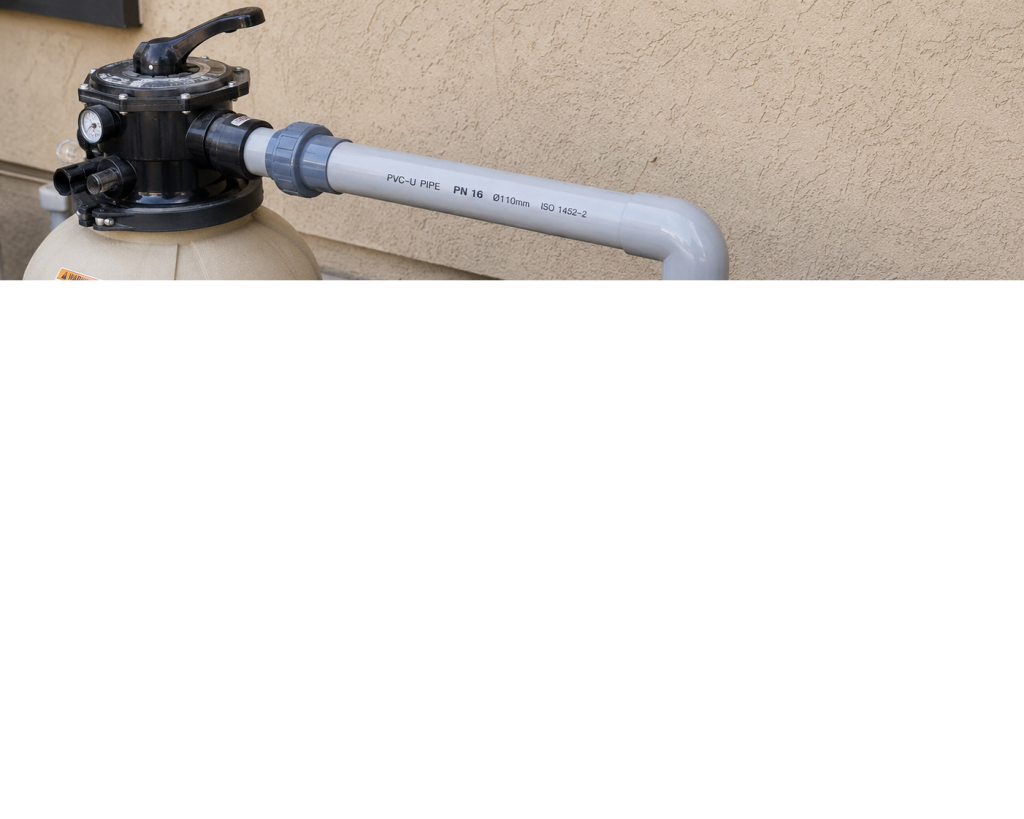
Common applications for PN16 in pool systems:
PN16 components are ideal for:
The enhanced pressure capability of PN16 components provides greater safety margins and reliability in demanding applications, making them the preferred choice for critical system segments.
Key Takeaway
PN16 isn’t about playing it safe everywhere — it’s specifically for the pressure-side plumbing right after your pump, where spikes and surges are most likely to expose a weak joint.
Understanding the fundamental differences between PN10 and PN16 components is crucial for making informed decisions about your pool’s plumbing system:
1. Pressure Threshold Comparison
| Feature | PN10 | PN16 | Practical Implication |
|---|---|---|---|
| Maximum pressure at 20°C | 10 bar (145 psi) | 16 bar (232 psi) | PN16 offers 60% higher pressure tolerance |
| Safety factor | Standard | Enhanced | PN16 provides greater protection against pressure spikes |
| Burst pressure | Lower | Higher | PN16 has superior resistance to catastrophic failure |
2. Material and Construction Differences
PN16 components typically feature:
These construction differences result in noticeably heavier components for PN16 versus their PN10 counterparts.
3. Cost Considerations
The price differential between PN10 and PN16 components generally ranges from 15-30%, with PN16 being more expensive due to:
4. Durability and Lifespan
PN16 components typically offer:
The choice between PN10 and PN16 components depends largely on your specific pool configuration and equipment characteristics:
When to use PN10 in pool installations:
When to use PN16 in pool installations:
Critical pool components and their pressure requirements:
Different segments of your pool’s plumbing system experience varying pressure levels:
For pumps, filters, and heaters sized to match your pressure requirements, Dave Pools is one of the trusted swimming pool equipment suppliers in Dubai.
Understanding these pressure zones helps in selecting the appropriate components for each section of your pool’s plumbing system.
Making the right choice between PN10 and PN16 components involves considering several key factors:
1. Assessing your system’s pressure requirements:
2. Considering environmental factors:
3. Cost-benefit analysis:
For many pool owners, a hybrid approach makes economic sense:
4. Safety margins and best practices:
Professional pool installers typically recommend:
For the pressure-side plumbing where PN16 is non-negotiable, pair it with properly rated high-pressure PVC valves rather than standard fittings.
A quick way to sanity-check your choice: Required PN rating = (supply pressure + elevation head + pump pressure) × 1.3. That 1.3 multiplier builds in a 30% safety margin for surges and long-term wear. Most municipal water supply runs at just 2–5 bar, which is exactly why PN10 covers the majority of return and suction-side plumbing without issue.
Request a professional pressure assessment from Dave Pools
Avoid these frequent errors when dealing with pressure ratings in pool systems:
1. Mixing different pressure ratings:
Installing a PN10 component in a line that contains mostly PN16 components creates a potential weak point. The system’s maximum pressure capacity is only as strong as its lowest-rated component.
2. Underestimating pressure requirements:
Many pool owners fail to account for:
3. Overlooking temperature effects on pressure ratings:
Temperature plays a role too — if your pool deals with heater discharge or high ambient heat, check pressure capacity against our PVC pipe temperature rating guide before finalizing your PN selection.Standard PN ratings are based on 20°C (68°F) water temperature. As temperature increases:
Key Takeaway
In Dubai’s summer heat, pipe and water temperature can climb well past the 20°C baseline these ratings are tested at — which means your real-world pressure capacity is lower than the number printed on the pipe.
4. Ignoring signs of pressure issues:
Warning signs that your system may be experiencing pressure problems include:
Key Takeaway
The single costliest mistake is using a PN10 fitting anywhere downstream of the pump “just to save a few dirhams” — that’s the joint most likely to fail first under real operating pressure.
Follow these best practices when installing components with different pressure ratings:
1. Proper connection methods:
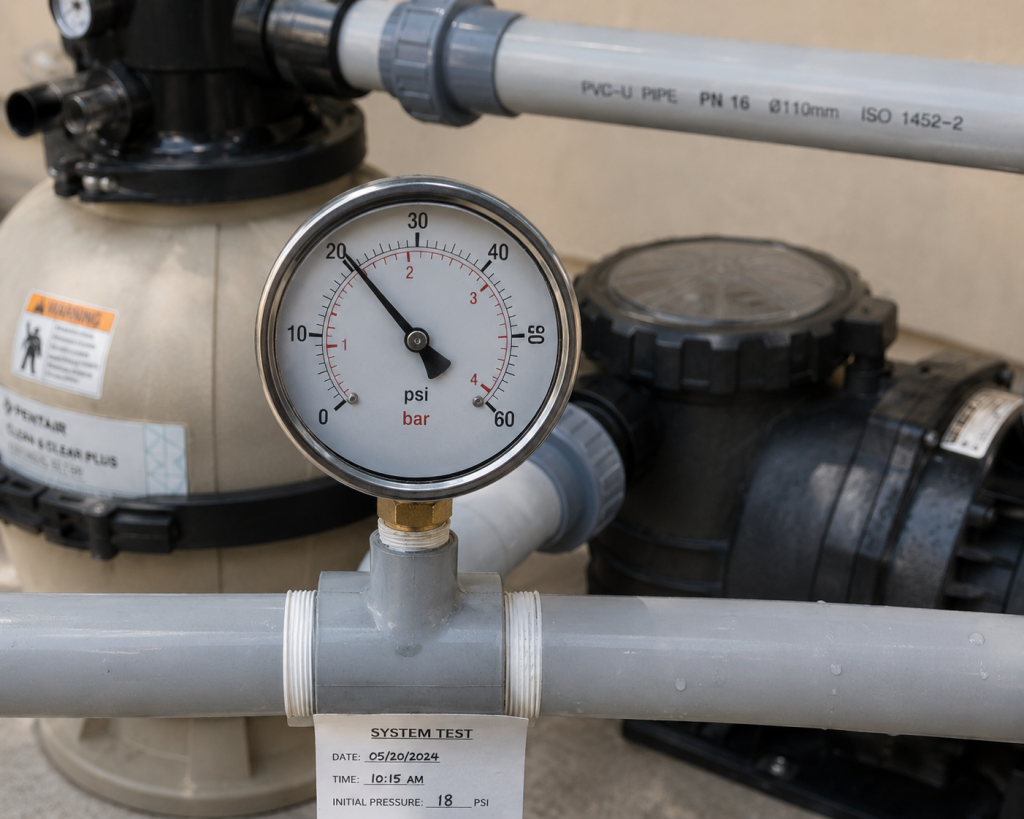
2. Testing procedures:
3. Maintenance considerations:
Before putting any new line into service, follow a proper process for pressure testing a new installation to confirm it holds at 1.5x its working pressure.
It’s short for “Pressure Nominal 10” — the pipe or fitting is rated to handle up to 10 bar, or about 145 psi, at 20°C. It’s an international standard, so a PN10 pipe from any reputable manufacturer performs the same way.
PN16 means the component can safely handle pressure up to 16 bar, or roughly 232 psi, at 20°C. That’s about 60% more pressure tolerance than PN10, which is why PN16 shows up on the high-pressure side of pool and plumbing systems.
You can, but it’s not ideal. Your system’s true pressure limit is only as strong as its weakest-rated part. If you do mix ratings, make sure the PN10 sections are only ever exposed to pressure well below their limit.
Check the side of the pipe first — most quality manufacturers print the rating right on it. No marking? Measure the wall thickness instead. PN16 pipes are noticeably thicker than PN10 pipes of the same diameter.
Yes. PN ratings are set at 20°C and drop as temperature rises. A PN16 pipe running water at 45°C might only handle 12 to 13 bar safely instead of the full 16 — worth checking if your system runs warm.
Not necessarily. It costs 15 to 30% more and isn’t needed everywhere. If your pressure stays comfortably under 10 bar — which covers most residential return lines — PN10 does the job just fine and saves you money.
Most residential pools do well with PN10 on the suction side and returns, and PN16 right after the pump and before the filter, where pressure spikes hardest. High-performance pumps may push you toward PN16 throughout.
They’re different systems measuring similar things. As a rough guide, Schedule 40 lines up closest to PN10–12, and Schedule 80 is closer to PN16–20 — though the exact match shifts depending on the pipe’s actual diameter.
The PN rating itself doesn’t change with saltwater, but most pros lean toward PN16 anyway. The thicker walls hold up better against the slightly more corrosive environment that salt chlorination creates over time.
It can. Variable-speed pumps usually run at lower pressure to save energy, but at full speed they can generate more pressure than a single-speed pump with the same horsepower. Double-check your plumbing can handle the pump’s peak output, not just its average.
Understanding the difference between PN10 & PN16 pressure ratings is essential for designing, building, and maintaining a safe and efficient swimming pool system. While PN10 components offer cost advantages and are suitable for many standard applications, PN16 components provide enhanced pressure handling, greater safety margins, and superior durability for demanding installations.
By carefully assessing your specific needs, consulting with professionals when necessary, and following industry best practices, you can make informed decisions about pressure ratings that will contribute to the long-term performance and reliability of your pool’s plumbing system.
Remember that pressure considerations extend beyond just the pipes – valves, fittings, filters, and other components all have pressure limitations that must be respected for a cohesive and dependable system. When in doubt, consulting with pool professionals can help ensure your system is properly designed for optimal performance and longevity.As a trusted PVC pipes and fittings supplier in Dubai , Dave Pools carries both PN10 and PN16 components in stock, ready to match your project’s exact pressure requirements.
Don’t guess on PN10 vs PN16 — a wrong call here means leaks, blown joints, or an expensive mid-project pipe swap. Dave Pools supplies pipes and fittings in Dubai , including PN10 and PN16 rated PVC pipes and fittings, with technical support to help you choose the right option for your system.
Explore PVC Products →