
Table of Contents
Quick Facts
Choosing PVC pipes without understanding temperature ratings leads to catastrophic failures costing thousands in repairs. Many contractors and homeowners install standard PVC in applications exceeding its temperature limits, only to face warping, joint failures, and complete system breakdowns within months. This comprehensive guide reveals everything you need to know about PVC pipe temperature ratings to ensure safe, long-lasting installations.
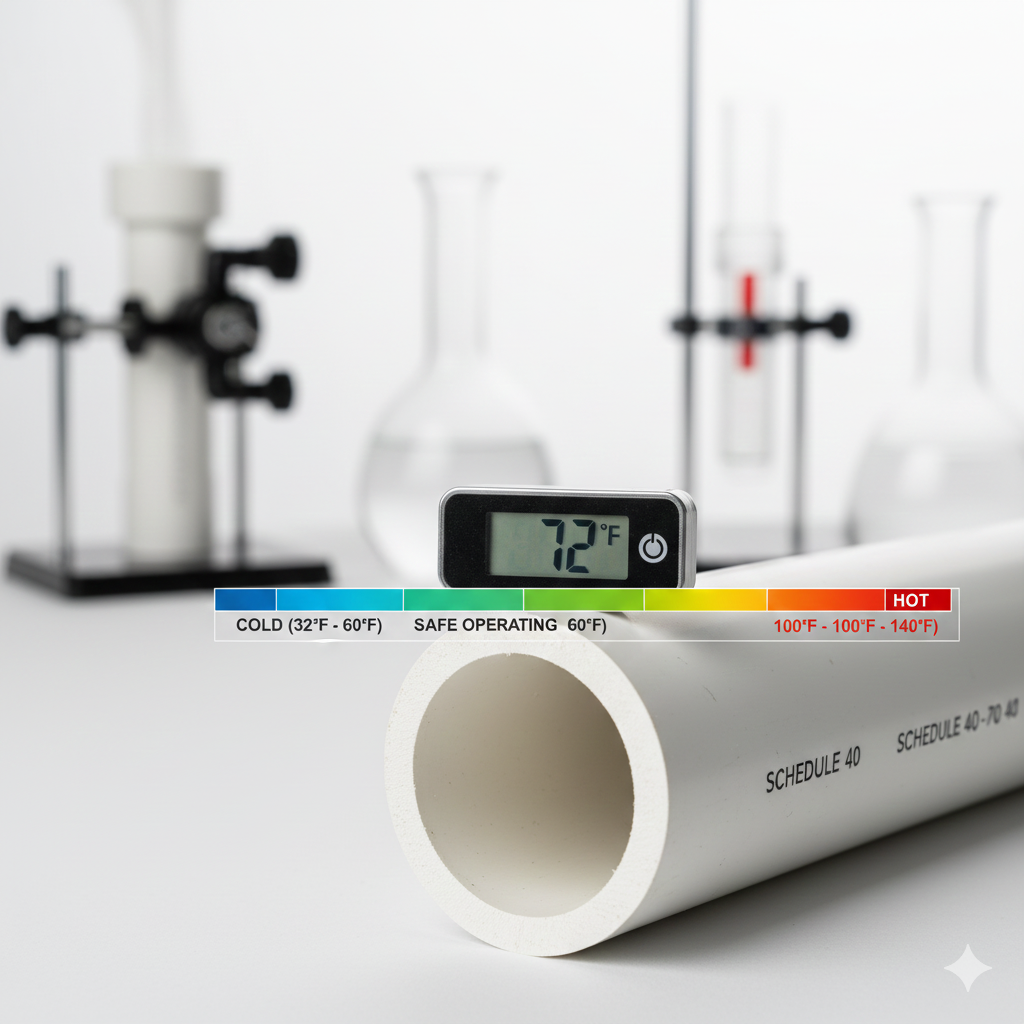
PVC pipe temperature ratings define the safe operating range where the material maintains structural integrity and performance characteristics. These ratings aren’t arbitrary numbers—they’re based on extensive testing measuring how temperature affects PVC’s molecular structure, pressure capacity, and dimensional stability.
Temperature ratings specify the maximum continuous operating temperature where PVC pipes perform reliably under pressure. At temperatures exceeding these limits, PVC experiences:
Understanding PVC pipe fundamentals helps you grasp why temperature affects this versatile material so significantly.

Manufacturers establish temperature ratings through rigorous testing protocols:
These tests ensure rated temperatures provide adequate safety margins for real-world applications.
Standard Schedule 40 PVC pipe operates safely within these temperature parameters:
Maximum Continuous Operating Temperature:
This lines up with international standards too. ISO 1452 — the same standard behind PN10 and PN16 pressure classifications — specifies PVC-U pipe for water service only up to 45°C (113°F), reinforcing why hot water service calls for CPVC instead of standard PVC.
Key Takeaway
The pressure rating printed on a pipe only applies at 73°F. As temperature climbs, that number quietly drops — always check the derating table for your actual operating temperature, not just the headline psi figure.
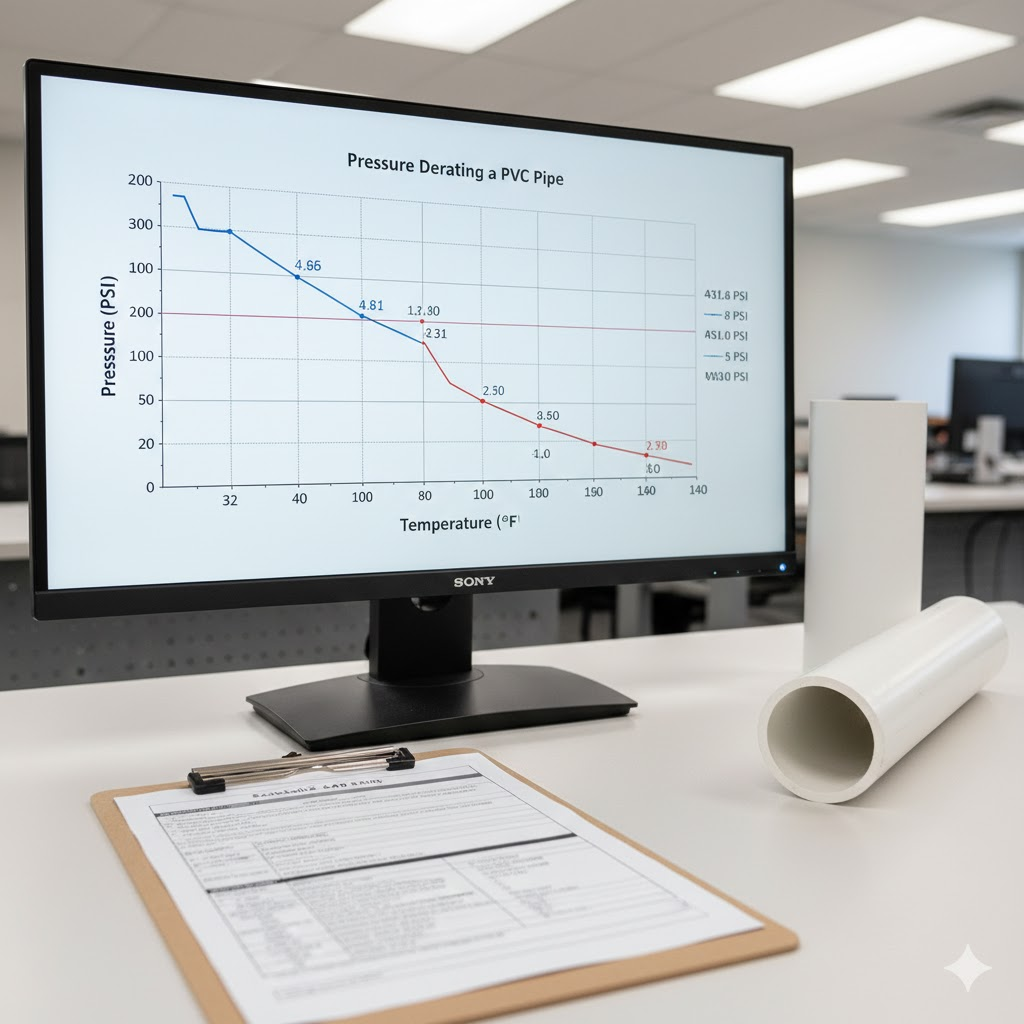
Pressure Derating with Temperature:
| Temperature | Pressure Capacity |
|---|---|
| 73°F (23°C) | 100% rated pressure |
| 80°F (27°C) | 88% rated pressure |
| 90°F (32°C) | 75% rated pressure |
| 100°F (38°C) | 62% rated pressure |
| 110°F (43°C) | 50% rated pressure |
| 120°F (49°C) | 38% rated pressure |
| 130°F (54°C) | 25% rated pressure |
| 140°F (60°C) | 12% rated pressure |
Notice the dramatic pressure capacity reduction as temperature increases. A pipe rated for 160 PSI at 73°F handles only 19 PSI at 140°F—an 88% reduction.
Schedule 80 PVC features thicker walls but identical temperature limitations:
The thicker wall provides higher pressure ratings at any given temperature but doesn’t extend temperature limits. Learn more about schedule differences in our PVC pipe guide.
PVC tolerates brief temperature spikes beyond continuous ratings:
However, frequent temperature excursions reduce overall service life significantly.
Operating pressure directly impacts safe temperature limits. Higher pressures require lower temperature maximums:
High-Pressure Systems (80+ PSI):
Low-Pressure Systems (0-40 PSI):
Thicker walls provide structural advantages but don’t change temperature ratings:
When measuring pipe size, consider both schedule and application temperature.
Continuous versus intermittent exposure creates different stress patterns:
Continuous High Temperature:
Intermittent Exposure:
Chemicals alter PVC’s temperature tolerance:
Always consult chemical compatibility charts for specific applications.
Ultraviolet radiation combined with heat accelerates PVC degradation:
Cold water systems operate well within PVC temperature limits:
Typical Operating Conditions:
Cold water represents ideal PVC applications with minimal temperature stress.
Standard PVC isn’t suitable for continuous hot water service:
Why PVC Fails in Hot Water:
For hot water applications, CPVC offers superior performance with 200°F (93°C) continuous rating.
Drainage applications tolerate higher temperatures due to low/no pressure:
Temperature Considerations:
Our guide on drainage pipe types covers material selection for various waste systems.
Irrigation pipes face unique temperature challenges:
Temperature Variables:
Surface Temperature Concerns: Dark-colored PVC in direct summer sunlight can reach 150-180°F surface temperatures, though internal water temperature remains lower.
Pool systems present specific temperature considerations:
Heated Pools/Spas:
Recommendation: Use Schedule 80 PVC for heated pool/spa applications or switch to CPVC for heater discharge lines.
Chlorinated PVC (CPVC) offers significantly higher temperature resistance:
CPVC Temperature Ratings:
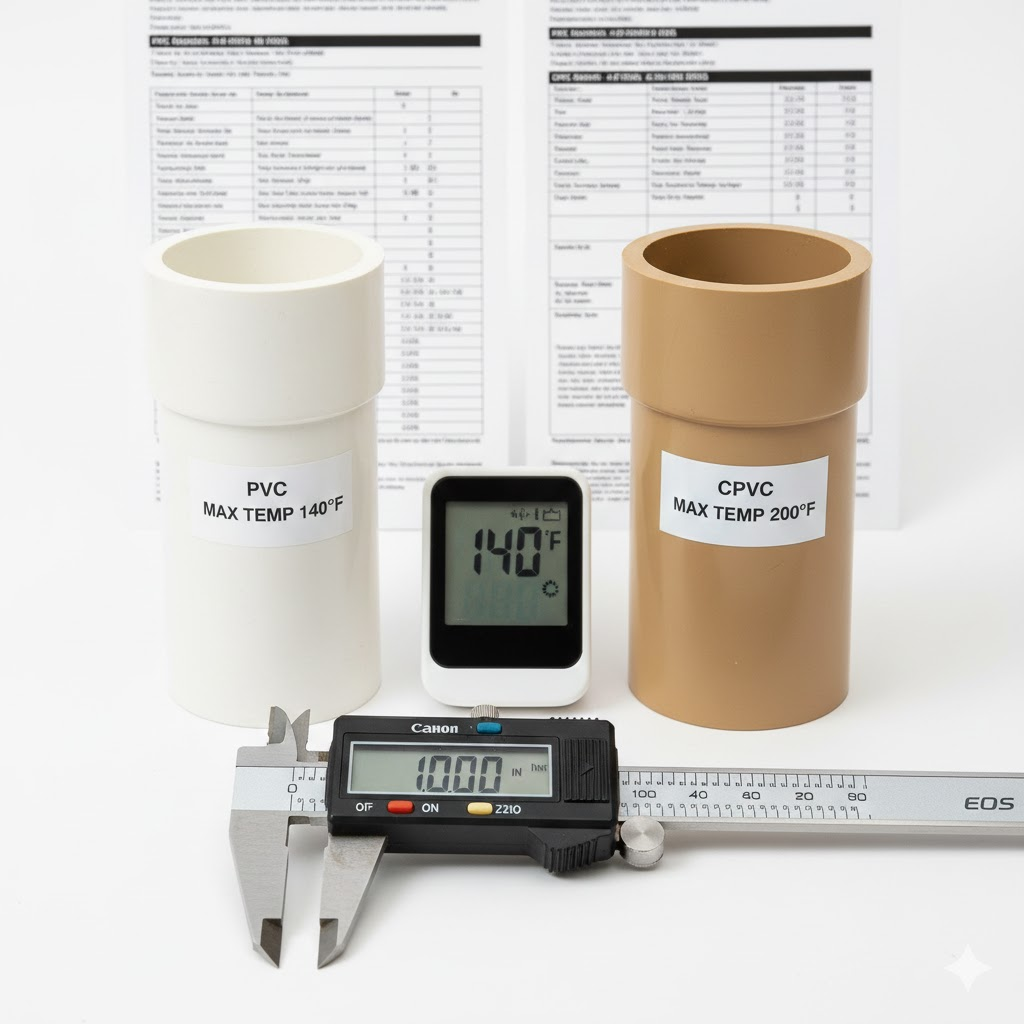
Select CPVC for these applications:
Our detailed CPVC vs PVC comparison helps you choose the right material.
CPVC Advantages:
CPVC Disadvantages:
Choose CPVC only when temperature requirements justify the additional cost.
Key Takeaway
If your system regularly runs above 120°F, that’s the threshold where CPVC starts to justify its higher cost over standard PVC — not a hard rule, but a useful gut check before you commit to a material.
Cold temperatures affect PVC differently than heat:
Low Temperature Characteristics:
Frozen water causes pipe failures, not cold temperatures alone:
Freeze Damage Prevention:
Learn how to install PVC pipes underground at proper depths for freeze protection.
Installing PVC in cold weather requires special precautions:
Cold Installation Guidelines:
See our PVC gluing guide for temperature-specific techniques.
Key Takeaway
It’s not the cold that bursts a pipe — it’s the water freezing inside it. Focus your prevention efforts on keeping water moving or draining systems before winter, rather than worrying about the pipe material itself.
Ideal Installation Temperature Range:
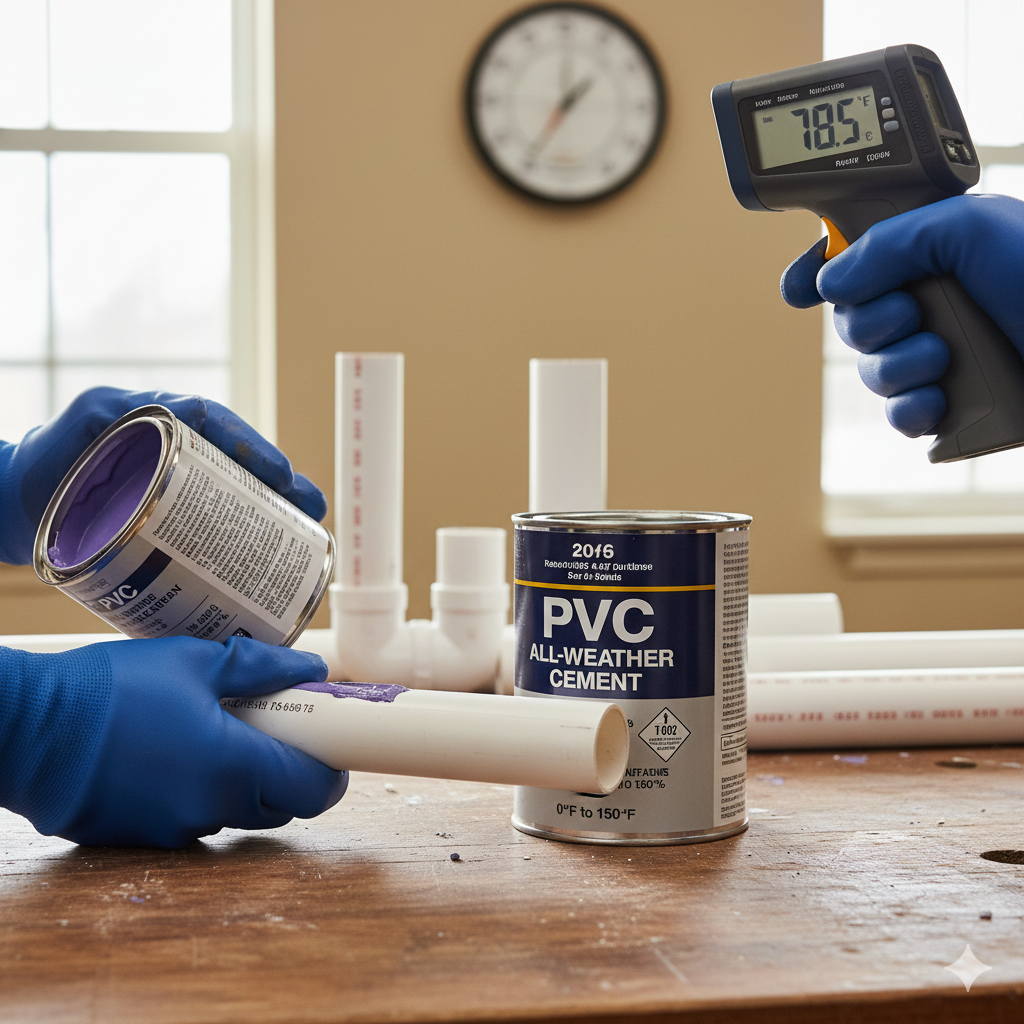
Proper cure times prevent premature failures:
Temperature-Adjusted Cure Times:
| Ambient Temp | Set Time | Handle Time | Pressure Test | Full Cure |
|---|---|---|---|---|
| 40-60°F | 30 min | 4 hours | 48 hours | 96 hours |
| 60-100°F | 15 min | 2 hours | 24 hours | 48 hours |
| 100-110°F | 10 min | 1 hour | 16 hours | 36 hours |
Never rush cure times regardless of temperature. Our PVC gluing guide provides detailed cementing procedures.
Key Takeaway
Cold-weather installs need patience, not workarounds. Doubling the cure time below 60°F isn’t a suggestion — pressurizing a joint too early in cool conditions is one of the most common causes of early joint failure.
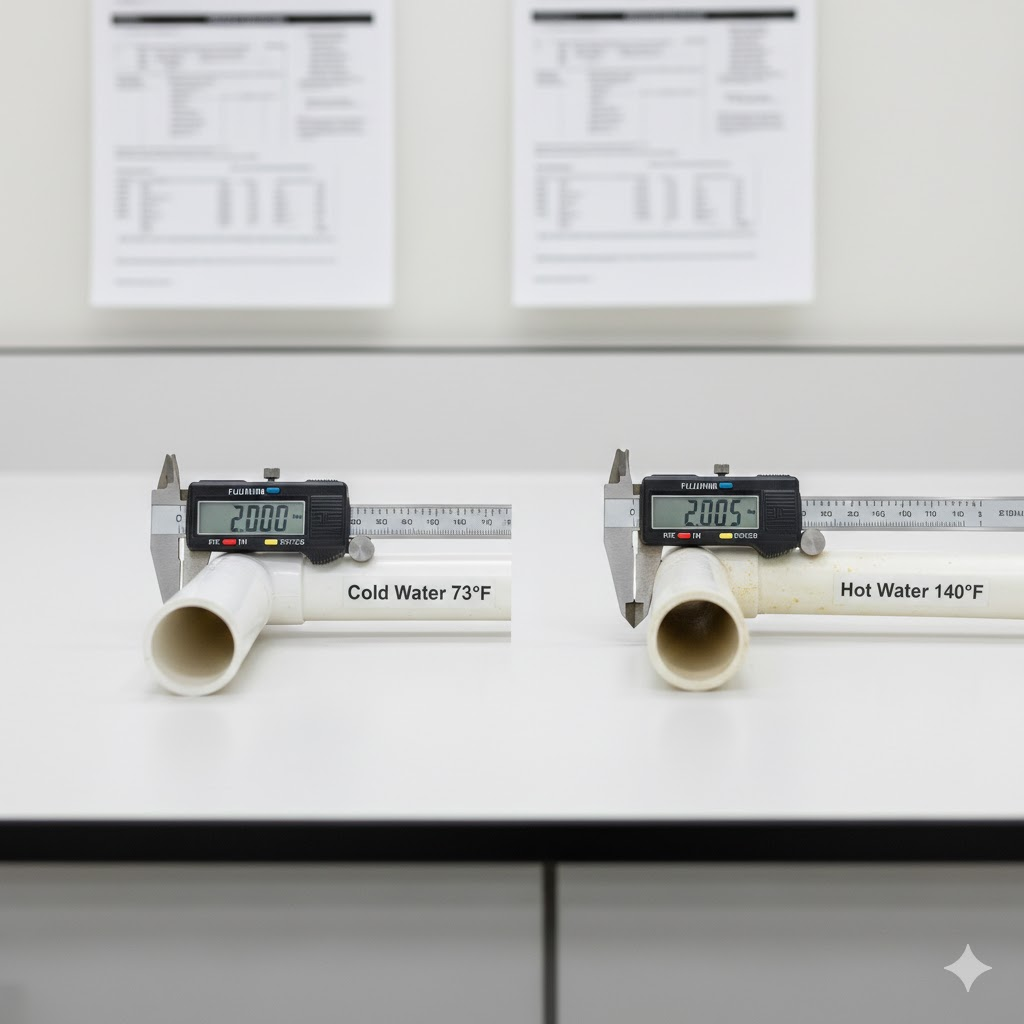
Temperature changes cause dimensional variations:
PVC Thermal Expansion Rate:
Expansion Joint Spacing:
Pressure testing should occur at expected operating temperatures:
Testing Best Practices:
See our complete guide on pressure testing PVC pipe for detailed procedures.
Joint Separation:
Pipe Deformation:
Pressure Capacity Reduction:
Recognize temperature-related problems early:
Design Phase:
Installation Phase:
Operational Phase:
Choose piping material based on comprehensive analysis:
Primary Considerations:
Use Standard PVC When:
Use CPVC When:
Consider Alternatives When:
Understanding different pipe materials helps optimize material selection.
Pipe quality affects temperature performance:
Quality Indicators:
Our guide on choosing PVC pipe manufacturers ensures quality material selection.
Building codes specify temperature requirements:
Always verify local code requirements before material selection.
What’s the maximum temperature for PVC pipe?
Standard PVC tops out at 140°F (60°C) for continuous, pressurized use. It can tolerate brief spikes up to 180°F without lasting damage, but regular use above 140°F causes pressure loss and faster wear. Need higher heat? CPVC is rated for 200°F continuous.
Can PVC pipe handle hot water?
Not for continuous service. Domestic hot water sits at 120–140°F, right at or beyond PVC’s limit, which risks reduced pressure capacity and joint failures over time. CPVC is built for this — rated to 200°F continuous — while PVC is fine for occasional hot drainage discharge.
How does temperature affect PVC’s pressure rating?
Dramatically. At 73°F, PVC holds 100% of its rated pressure; at 140°F, that drops to just 12%. A pipe rated for 160 psi at room temperature only handles around 19 psi at 140°F — always derate based on your actual operating temperature.
What temperature can Schedule 80 PVC handle?
The same 140°F (60°C) ceiling as Schedule 40 — thicker walls boost pressure capacity, not temperature tolerance. Both schedules use identical PVC compound, so Schedule 80’s advantage is strength under pressure, not heat resistance.
At what temperature does PVC pipe actually start to soften?
PVC begins noticeably softening as it approaches 140–160°F — well below its melting point, but high enough to lose rigidity and structural strength. That’s the same range where pressure capacity has already dropped to roughly 12–19% of its rated value.
Can PVC pipe freeze and burst?
The PVC itself tolerates freezing fine — it’s the water inside that causes bursting. Water expands about 9% as it freezes, generating enough pressure to crack the pipe. Bury lines below the frost line and insulate exposed sections to prevent this.
How cold is too cold to install PVC pipe?
Stay above 40°F (4°C) if you can. Cold PVC gets brittle and more likely to crack while cutting or handling, and cement cures slower too — double your normal cure time below 60°F, and just wait if it’s freezing out.
Does PVC expand when it heats up?
Yes — about 0.4 inches per 100 feet for every 10°F change. It’s a small number per foot, but it adds up fast on long runs. Use expansion joints or loops so the pipe isn’t fighting against rigid restraints.
What’s the real difference between PVC and CPVC temperature ratings?
A 60°F gap — PVC tops out at 140°F continuous, CPVC handles 200°F. CPVC gets there through a chlorination process that strengthens the polymer against heat, which is exactly why it’s the standard choice for hot water lines. It costs 2–3x more, though.
Can PVC be used for heating systems?
No — skip it entirely. Heating systems typically run 140–180°F, beyond PVC’s safe range, and even radiant floor heating at 100–120°F cuts it too close for comfort. PEX, copper, or other high-temp-rated plastics are the right call here.
Understanding PVC pipe temperature ratings is critical for system longevity and safety. Standard PVC pipes safely handle temperatures up to 140°F (60°C) for continuous operation, with significant pressure derating as temperature increases. For applications involving hot water or temperatures exceeding 120°F, CPVC provides superior performance with ratings up to 200°F.
Remember that temperature affects PVC in multiple ways: reducing pressure capacity, increasing thermal expansion, and accelerating material degradation. Proper material selection based on actual operating temperatures, combined with correct installation techniques and expansion accommodation, ensures reliable long-term performance.
Whether installing cold water lines, irrigation systems, or drainage applications, always consider both maximum operating temperature and pressure requirements. The small investment in appropriate materials and proper installation techniques prevents costly failures and ensures decades of trouble-free service.
Not Sure Which Pipe Handles Your Temperature Range?
Guessing on temperature rating is how warped pipes and blown joints happen. Dave Pools stocks Schedule 40, Schedule 80, and CPVC piping rated for everything from cold water to 200°F hot water service, with technical guidance to match the right material to your actual operating conditions. Browse our PVC pipes and fittings, UPVC pipes and fittings and PVC HP pipes for cold water and pressure lines, CPVC pipes and fittings for hot water, or PPR pipes and fittings for hot and cold supply systems.
Talk to Dave Pools’ Technical Team →