
Are you struggling with inefficient watering methods that waste resources and deliver poor results? Many property owners continue using outdated irrigation approaches, leading to water waste, higher utility bills, and unhealthy plants. The consequences of improper irrigation extend beyond your garden – affecting your wallet and the environment.
Fortunately, understanding the different types of irrigation systems available today can transform your approach to watering. This comprehensive guide explores the most effective irrigation methods for various applications, helping you make informed decisions for your specific needs.
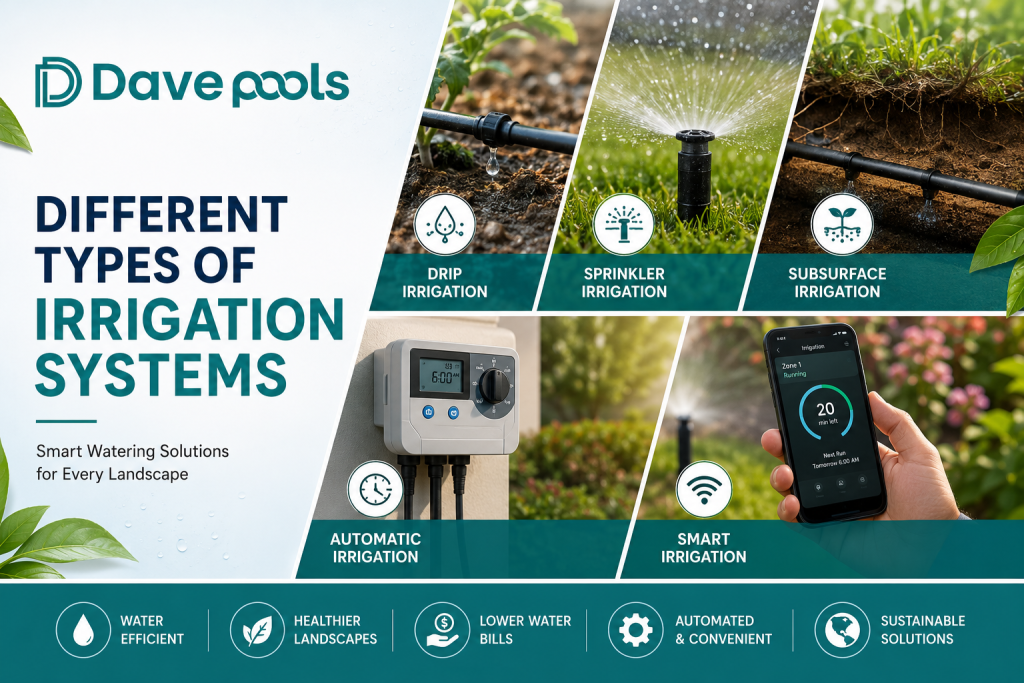
Most water-efficient option for gardens, shrubs, and landscapes.
Best for lawns and large turf areas.
Water delivered below ground with minimal evaporation.
Timer-controlled watering with minimal manual effort.
Uses sensors and weather data for maximum efficiency.
Surface irrigation is one of the oldest and most widely used irrigation methods worldwide, particularly in agricultural settings. Water flows across the soil surface and infiltrates into the root zone through gravity.
Surface irrigation systems rely on gravity rather than pumps or pressurized pipes to distribute water. Common methods include basin irrigation, furrow irrigation, and border irrigation, each suited to different crops, soil conditions, and field layouts.
Basin irrigation divides fields into level basins surrounded by small dykes or levees. Water is applied to the entire basin and allowed to infiltrate into the soil.
Furrow irrigation directs water through small channels running between crop rows. Water infiltrates the soil as it moves down the furrow.
Border irrigation floods strips of land separated by raised ridges or borders. It is commonly used for pasture, forage crops, and large agricultural areas.
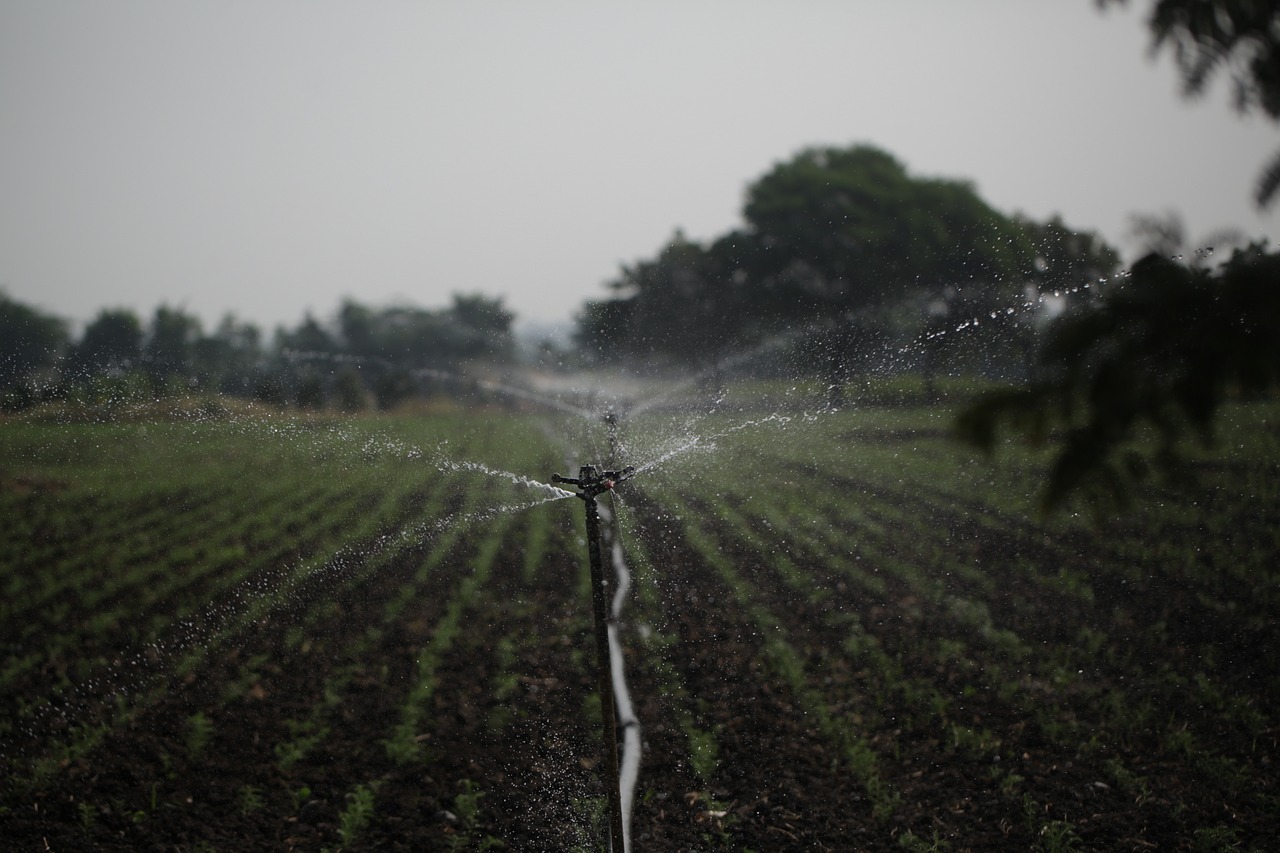
Sprinkler irrigation mimics natural rainfall by distributing water through a network of pipes, valves, and sprinkler heads. It is one of the most popular irrigation methods for residential lawns, commercial landscapes, sports fields, and gardens.
Sprinkler irrigation systems distribute water evenly over a landscape using pressurized water and spray heads. Depending on the design, these systems can provide broad coverage for lawns or targeted watering for specific landscape areas.
Fixed sprinkler systems use permanently installed pipes and sprinkler heads positioned throughout the landscape to provide consistent irrigation coverage.
Rotating sprinklers distribute water in circular or arc-shaped patterns, making them ideal for large lawn areas and open landscapes.
Pop-up sprinklers stay hidden below ground when inactive and automatically rise when the irrigation system is running.
For residential landscapes in hot climates such as the UAE, combining sprinkler systems for lawns with drip irrigation for trees, shrubs, and flower beds can significantly improve water efficiency while maintaining healthy plant growth.
For professional installation and high-quality irrigation equipment in Dubai, consider Dave Pools’ irrigation system and equipment supply services.
Drip irrigation is one of the most water-efficient irrigation methods available today, delivering water directly to plant root zones with minimal waste. It is widely used in residential landscapes, gardens, agricultural fields, and water-conscious environments.
Unlike traditional sprinkler systems, drip irrigation delivers water directly to the soil around plant roots. This targeted watering approach significantly reduces evaporation, runoff, and water waste while promoting healthier plant growth.
Emitter drip systems deliver water through individual emitters positioned near each plant, allowing highly targeted irrigation.
Micro-spray irrigation combines the precision of drip irrigation with a wider spray radius, making it suitable for closely spaced plantings.
Drip tape uses flexible tubing with pre-installed emitters at regular intervals, making it ideal for row crops and vegetable gardens.
If your goal is maximum water efficiency, emitter drip systems remain the gold standard. They can reduce water consumption by up to 90% compared to conventional irrigation methods while delivering precise watering directly to plant roots.
Smart irrigation systems represent the latest evolution in landscape watering technology, combining automation, sensors, weather intelligence, and remote control to maximize water efficiency while maintaining healthy landscapes.
Unlike traditional irrigation systems that operate on fixed schedules, smart irrigation systems make real-time watering decisions using weather forecasts, soil moisture readings, flow monitoring, and automated controls. This results in healthier plants, lower water bills, and significant water conservation.
These systems automatically adjust watering schedules using local weather forecasts, rainfall predictions, temperature data, and seasonal conditions.
These systems continuously monitor soil moisture levels and irrigate only when plants actually need water.
Flow sensors monitor water movement throughout the irrigation system and detect leaks, excessive usage, or system malfunctions.
In hot climates such as the UAE, smart irrigation systems can dramatically reduce unnecessary watering by responding to weather conditions and soil moisture levels. Combining smart controllers with drip irrigation often delivers the highest water efficiency and long-term cost savings.
Subsurface irrigation delivers water directly below the soil surface, creating ideal root zone conditions while minimizing evaporation and water waste. These systems are among the most efficient irrigation solutions available for both residential and agricultural applications.
Unlike surface watering methods, subsurface irrigation delivers water directly where plants need it most—at the root zone. This significantly reduces evaporation, runoff, and weed growth while maximizing water efficiency.
Subsurface Drip Irrigation (SDI) places drip lines below the soil surface, delivering water directly to plant roots while remaining hidden and protected underground.
Capillary irrigation uses the natural wicking action of soil or specialized materials to move water upward into the plant root zone as needed.
★★★★★
Excellent
Very High
Advanced
Subsurface drip irrigation is often considered one of the most water-efficient irrigation methods available today. For property owners seeking maximum water conservation and minimal evaporation, SDI can deliver outstanding long-term results despite its higher installation complexity.
Center pivot irrigation systems are among the most recognizable irrigation methods in modern agriculture. These systems rotate around a central pivot point, delivering water uniformly across large circular fields with minimal manual intervention.
A center pivot system consists of a long pipeline supported by motorized towers that slowly rotate around a central water source. As the system moves, sprinklers mounted along the pipeline distribute water evenly across crops.
Center pivot irrigation is commonly used on large farms because it can efficiently irrigate extensive areas while reducing labor requirements. Modern systems often include automation, remote monitoring, and variable-rate irrigation technology.
Large Agricultural Fields
★★★★☆
Excellent
Moderate
The large green circles often visible in satellite images of agricultural regions are typically center pivot irrigation systems. Their circular shape is created as the irrigation arm rotates around a fixed central point.
Specialized irrigation systems are designed to provide highly targeted watering for specific plants, trees, shrubs, garden beds, and landscape features. These solutions offer precise water delivery where traditional irrigation methods may be less effective.
Not every landscape requires full-scale sprinkler or drip systems. Specialized irrigation solutions are ideal when specific plants, trees, or garden areas require customized watering strategies for optimal growth and water efficiency.
Bubbler irrigation systems deliver a higher volume of water to a concentrated area around trees and shrubs, helping establish deeper root systems and healthier plant growth.
Soaker hoses are porous tubes that slowly release water along their entire length, making them a simple and affordable irrigation solution for gardens and planting beds.
Bubbler systems are often the preferred choice for establishing trees and large shrubs because they encourage deep root growth. For vegetable gardens and flower beds, soaker hoses offer a simple, affordable irrigation solution that can be installed without specialized equipment.

Selecting the right irrigation system requires careful consideration of several factors:
Dave Pools offers professional irrigation system design services that take all these factors into account.
Consider these factors when deciding between professional and DIY installation:
Regular maintenance ensures optimal system performance:
Be prepared to address these common irrigation problems:
Modern irrigation systems significantly reduce water consumption:
Efficient irrigation helps protect water quality:
Smart water management translates to energy savings:
Due to extreme heat, high evaporation rates, and water conservation requirements, drip irrigation and smart irrigation systems are typically the most effective choices for UAE gardens and landscapes. These systems deliver water precisely where it is needed while minimizing waste.
When selecting an irrigation system, consider your soil type, plant varieties, climate, water availability, and budget. For drought-prone areas, drip irrigation offers excellent efficiency. For lawns, sprinkler systems typically work best. Consider consulting with a professional from Dave Pools for a customized recommendation based on your specific needs.
Drip irrigation systems are generally considered the most water-efficient, with 90-95% efficiency compared to 50-70% for typical sprinkler systems. Subsurface drip irrigation offers even greater efficiency by delivering water directly to root zones with minimal evaporation or runoff.
Perform basic visual inspections monthly during the growing season. Clean filters quarterly for drip systems, and conduct a comprehensive system check at the beginning and end of each season. Smart systems require less frequent monitoring but should still receive annual professional inspections.
The lifespan varies by type: quality sprinkler systems typically last 10-15 years, while drip irrigation components may need replacement every 5-8 years. Smart system controllers can last 7-10 years. Regular maintenance significantly extends system longevity.
Start by adding a smart controller or soil moisture sensors to your current system. Replace high-flow sprinkler heads with more efficient models, or convert sprinkler zones to drip irrigation where appropriate. Consider consulting with irrigation professionals for a system assessment.
While extremely versatile, drip irrigation works best for individual plants, shrubs, and trees. For lawns and dense groundcover, micro-sprinklers or specialized drip grids are more appropriate. Vegetable gardens typically thrive with drip tape or emitter systems.
Smart systems use real-time data from weather services, soil moisture sensors, or evapotranspiration models to automatically adjust watering schedules. Studies show they typically reduce water usage by 20-50% compared to conventional timer-based systems.
Yes, specialized micro-irrigation kits work excellently for container gardens. These systems typically use small-diameter tubing with adjustable emitters or micro-sprays and can be connected to standard outdoor faucets with simple timers.
Drip systems require regular filter cleaning, periodic flushing of lines to remove sediment, emitter inspection for clogging, pressure regulation checks, and occasional component replacement. Most systems benefit from end-of-season drainage in colder climates to prevent freeze damage.
Understanding the different types of irrigation systems available today is essential for making informed decisions about your landscape or agricultural water management. From traditional surface irrigation to cutting-edge smart systems, each approach offers distinct advantages and limitations for specific applications.
By carefully matching irrigation technology to your particular needs, you can achieve significant water savings, reduce maintenance requirements, and create healthier growing conditions for your plants. Remember that the most effective irrigation strategy often combines multiple system types, creating hydrozones that address the specific requirements of different planting areas. For a real-world example of irrigation equipment supply for a landscaping project in Dubai, explore our commercial irrigation equipment supply case study.
For professional guidance on selecting, installing, and maintaining the ideal irrigation system for your property in Dubai, contact Dave Pools’ irrigation experts. Their experienced team can help you navigate the options and implement a solution that balances efficiency, effectiveness, and sustainability.
Investing in the right irrigation system today will deliver returns through lower water bills, reduced maintenance time, and a more beautiful, sustainable landscape for years to come.
For professional guidance on selecting, installing, and maintaining the ideal irrigation system for your property in Dubai, contact Dave Pools’ irrigation experts. Their experienced team can help you navigate the options and implement a solution that balances efficiency, effectiveness, and sustainability.