![RAKtherm vs Cosmoplast PPR Pipes: Which Is Better for Dubai Projects? [2026]](https://davepools.com/wp-content/uploads/2026/07/a_clean_studio_advertising_product_image_overall.webp "RAKtherm vs Cosmoplast PPR Pipes: Which Is Better for Dubai Projects? [2026] 8")

You spent weeks designing a beautiful garden or landscape. Then the UAE summer arrived, temperatures broke 45°C, and your plants began to wilt, your water bill soared, and you realized your old irrigation setup simply cannot keep up with this climate.
Ignoring the right irrigation strategy in the UAE does not just kill your plants. It wastes thousands of liters of precious water, drives up utility expenses dramatically, and puts unnecessary strain on municipal supply systems that are already under pressure across Dubai, Abu Dhabi, and Sharjah.
Smart irrigation systems for UAE landscapes offer a proven, science backed solution. This complete guide walks you through every component, every pipe choice, every sensor, and every best practice you need to keep any UAE landscape green, healthy, and water efficient all year round.
A smart irrigation system is an automated, sensor driven watering network that delivers exactly the right amount of water to exactly the right zones at exactly the right time. Unlike traditional timer based sprinklers that run on a rigid schedule regardless of conditions, smart systems read real time data including soil moisture levels, weather forecasts, evapotranspiration rates, and temperature readings to make intelligent watering decisions.
In the UAE context, where rainfall averages less than 100 mm per year and summer soil temperatures can exceed 70°C at surface level, this level of precision is not a luxury. It is an absolute necessity.
The difference between a conventional setup and a smart irrigation system tailored for UAE landscapes can mean water savings of up to 50 percent annually, dramatically healthier plant root systems, and landscape surfaces that remain visually impressive even through the harshest months.
If you are already evaluating whether to modernize your current setup, the guide on 5 Reasons to Upgrade Your Irrigation System provides a strong foundation for understanding why the switch is so worthwhile in this region.
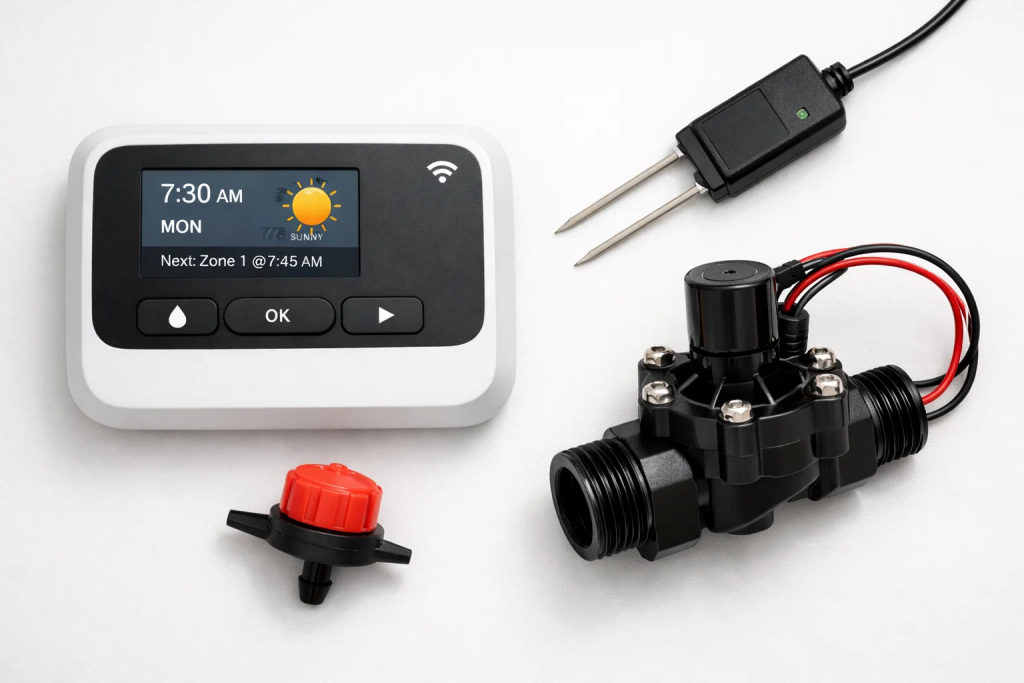
Understanding what goes into a smart system helps you make better purchasing and installation decisions. Every professional grade setup includes the following core elements:
1. Smart Controller (the brain) This is the central hub that processes sensor data and weather information to schedule and adjust watering cycles automatically. Modern controllers connect via Wi Fi or cellular networks and can be managed through smartphone apps.
2. Soil Moisture Sensors These devices measure the actual moisture content at root depth. When soil moisture drops below a set threshold, the controller triggers a watering cycle. When adequate moisture is detected, it skips the scheduled run entirely.
3. Rain and Weather Sensors Rain sensors automatically suspend irrigation when rainfall occurs. Weather based ET controllers use evapotranspiration data to calculate how much water the landscape actually lost to heat and wind, then replace only that amount.
4. Flow Meters and Leak Detectors These monitor water flow in real time. Any unexpected surge in flow triggers an alert, indicating a pipe burst or leak before it becomes a major problem. Learn how to identify underground pipe faults quickly in the guide on how to find a broken pipe underground.
5. Distribution Network (pipes, valves, and emitters) This is the physical infrastructure that carries water from the source to each irrigation zone. Pipe material selection is critical in UAE conditions and is covered in detail in the section below.
6. Zone Valves Electrically operated solenoid valves divide the landscape into independent watering zones. Each zone can receive a customized watering schedule based on plant type, sun exposure, and soil composition.
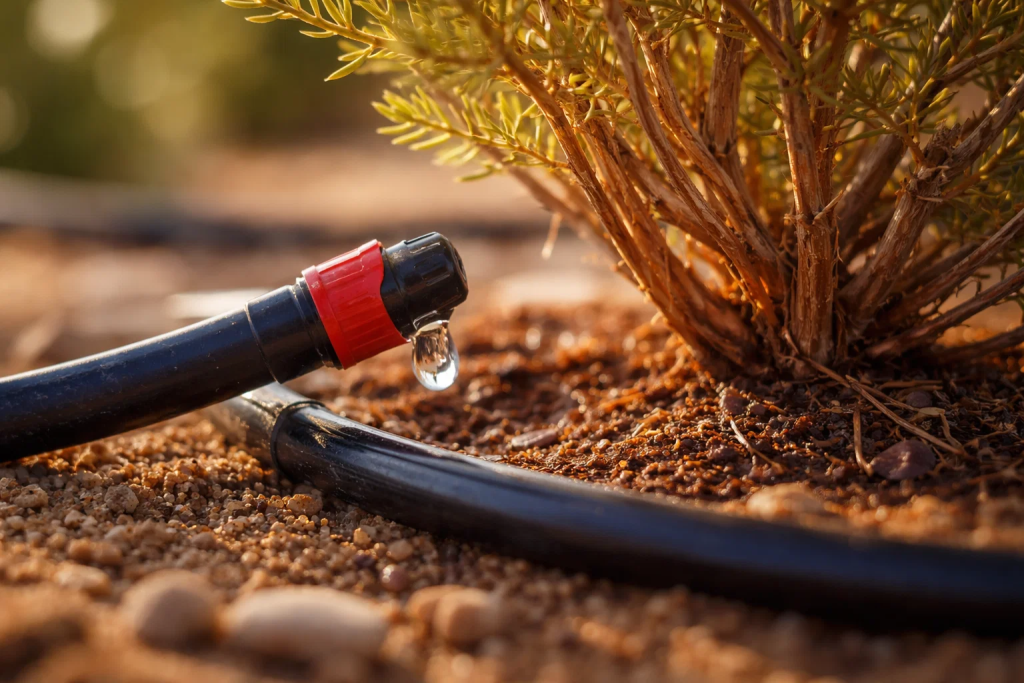
Not all irrigation methods perform equally in desert conditions. The UAE climate demands approaches that minimize surface evaporation and deliver water directly to root zones. Here are the most effective options:
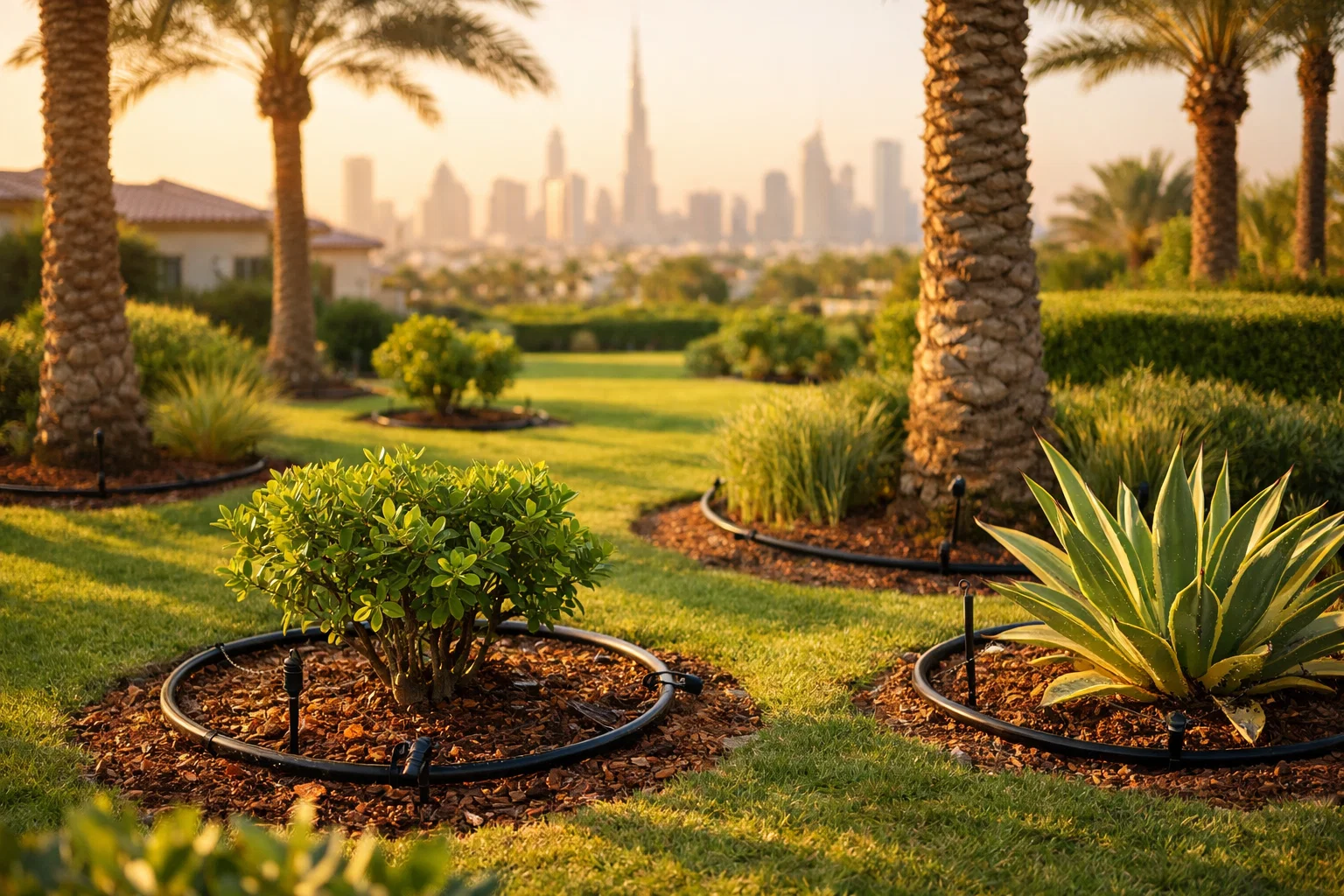
Drip irrigation is the gold standard for UAE landscaping. Water is delivered at very low flow rates directly to the base of each plant through a network of emitters and micro tubing. Surface evaporation is reduced to near zero, and deep root growth is actively encouraged. For a detailed breakdown of how this system functions, the guide on how drip irrigation works covers the mechanics thoroughly.
SDI takes drip irrigation underground, placing emitter lines 15 to 30 cm below the soil surface. This completely eliminates surface evaporation and wind losses, making it exceptionally effective for turf areas and densely planted landscape beds in the UAE.
These are ideal for shrubs, groundcovers, and tree basins where drip emitters alone cannot provide adequate coverage. They operate at low pressure and deliver water in a controlled radius.
Best reserved for large turf areas such as sports fields or parks, sprinkler systems should always be combined with smart controllers and rain sensors in the UAE to avoid massive evaporation losses during peak temperature hours.
For a comprehensive overview of all available irrigation approaches, the article on different types of irrigation systems offers an excellent reference.
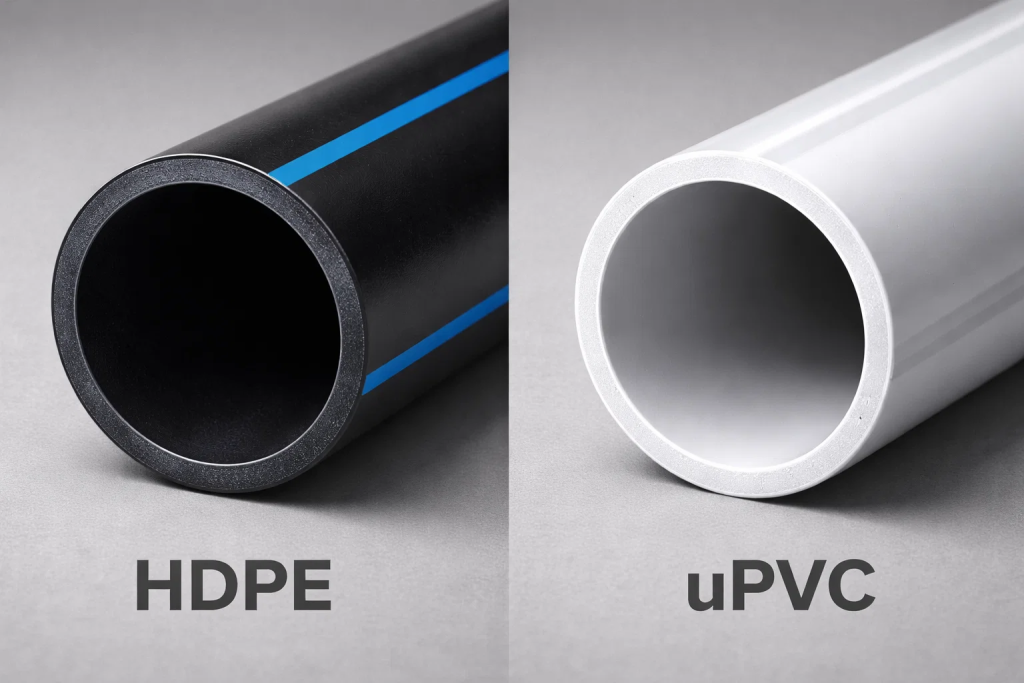
Pipe selection is one of the most critical decisions in any UAE irrigation project. The extreme temperature range from summer highs above 50°C to cooler winter conditions, combined with UV exposure and chemically treated groundwater, creates a demanding environment that not all pipe materials can withstand long term.
High Density Polyethylene (HDPE) pipes are widely regarded as the best choice for underground irrigation mains in the UAE. They are highly flexible, resistant to UV radiation, corrosion proof, and capable of withstanding significant pressure variations without cracking. Their fusion welded joints create a completely leak free system underground. For a full technical reference, the complete guide to HDPE pipes explains their properties in depth.
Dave Pools supplies a comprehensive range of HDPE pipes and fittings in Dubai and the UAE specifically rated for the demanding conditions found across the region.
Unplasticized PVC (uPVC) remains a popular choice for lateral lines and secondary distribution networks in irrigation systems. It is dimensionally stable, smooth bore for excellent flow efficiency, and very well suited to UAE soil conditions. Always ensure the pipe grade matches the operating pressure of your system. The standard sizes guide for PVC pipe helps you select the right dimension for each zone.
Temperature performance is a key consideration in UAE installations. The PVC pipe temperature rating guide explains the limits of PVC under prolonged heat exposure and where alternative materials become necessary.
For project sourcing, Dave Pools offers a broad selection of PVC high pressure pipes and fittings in Dubai, with grades suitable for both pressurized mainlines and gravity distribution systems.
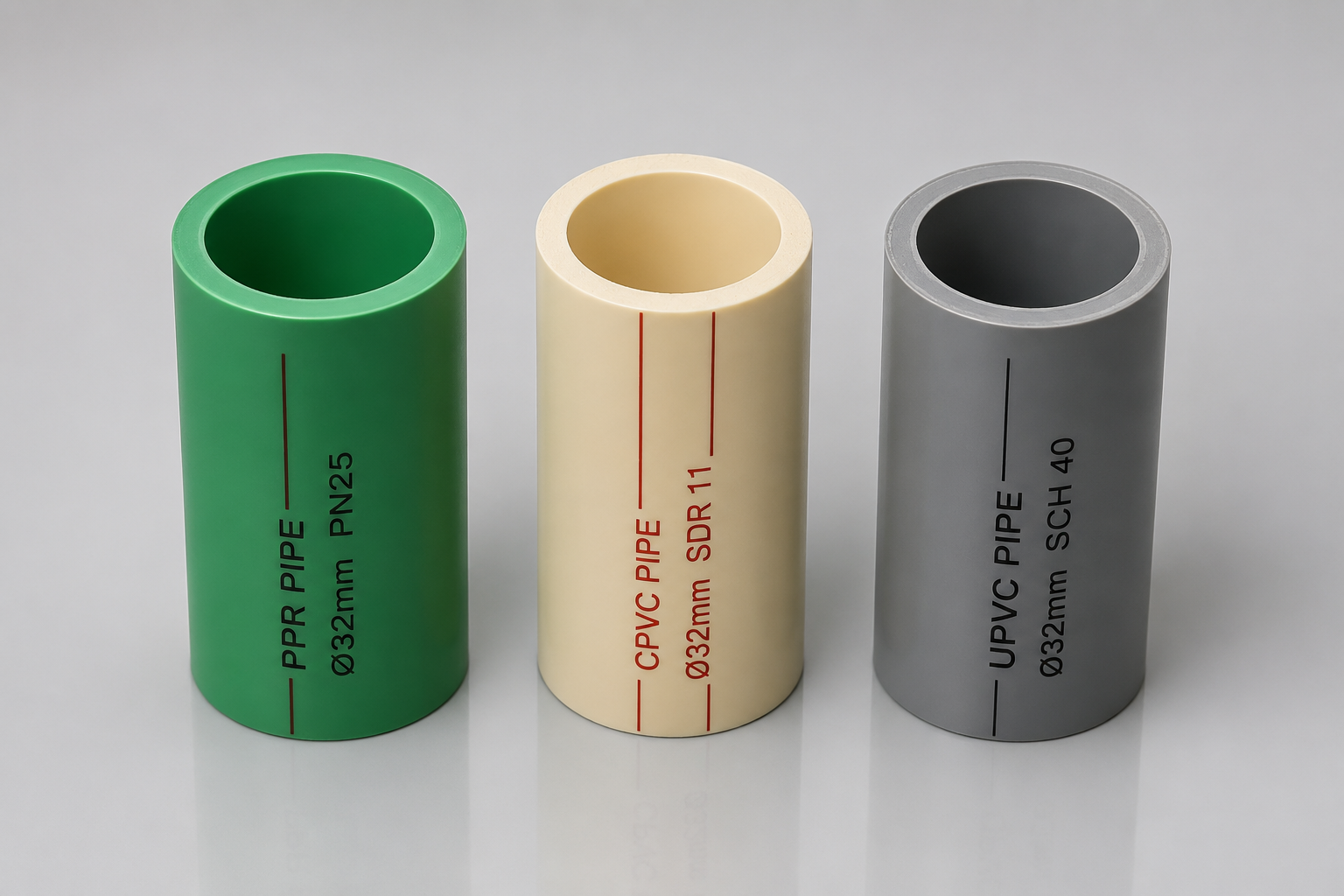
PPR (Polypropylene Random Copolymer) pipes are an excellent option for above ground supply lines, pump room connections, and chemical dosing lines within irrigation systems. Their heat fusion joining system creates molecularly bonded, leak free connections. Learn more about their properties in the guide on what are PPR pipes and fittings.
For a direct side-by-side comparison of all three materials, the guide on PPR vs PVC vs HDPE pipes breaks down the key differences in performance, durability, and application suitability. For broader guidance on selecting the best pipe material matched to specific irrigation zones and pressure requirements, the detailed article on how to choose the best pipe material for an irrigation system is an essential resource.
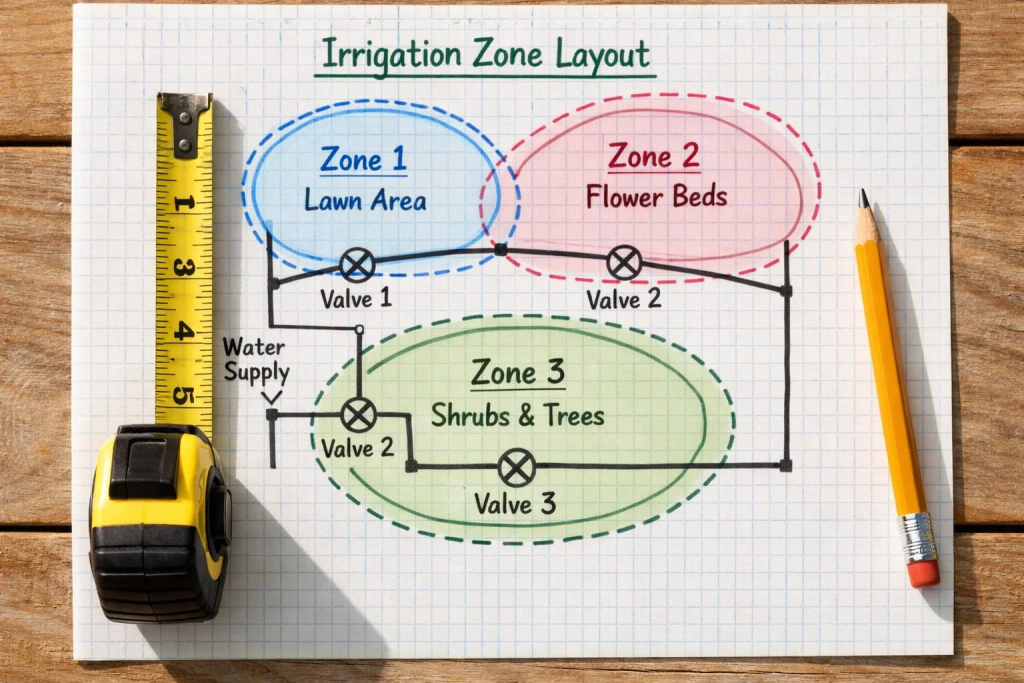
A well designed irrigation layout prevents dry spots, eliminates overwatering, and ensures every section of the landscape receives precisely calibrated moisture. Follow this structured design process:
Step 1: Site Survey and Zone Mapping Walk the entire property and identify distinct planting areas by plant type, sun exposure (full sun, partial shade, full shade), and soil type. Each distinct combination becomes a separate irrigation zone.
Step 2: Calculate Water Requirements Use evapotranspiration data for your UAE emirate to calculate how much water each zone needs per day during peak summer and cooler winter months. Local agricultural extension data for the UAE provides reliable ET reference figures.
Step 3: Determine Flow and Pressure Requirements Measure the available flow rate and static water pressure at the point of connection. This determines the maximum number of emitters or sprinkler heads that can run simultaneously per zone. If pressure is insufficient, the article on how to increase water pressure in a pipe covers practical solutions.
Step 4: Select Valve Configuration Design each zone around a dedicated solenoid valve. For systems with multiple zones running at high pressure, review the options in the guide to PVC high pressure valves to select appropriate valve types. If you are comparing valve materials, the article on PVC valves vs metal valves provides a useful decision framework.
Step 5: Plan the Pipe Network Route mainlines in the most efficient path from the water source to each zone valve manifold. Branch lateral lines from each valve to the emitter network. Keep pipe sizing consistent with flow velocity guidelines (typically 1.5 to 2.5 meters per second for mainlines).
Step 6: Integrate the Smart Controller Position the controller in a shaded, accessible location. Connect each zone valve to the controller and configure soil moisture sensors and weather data inputs during commissioning.
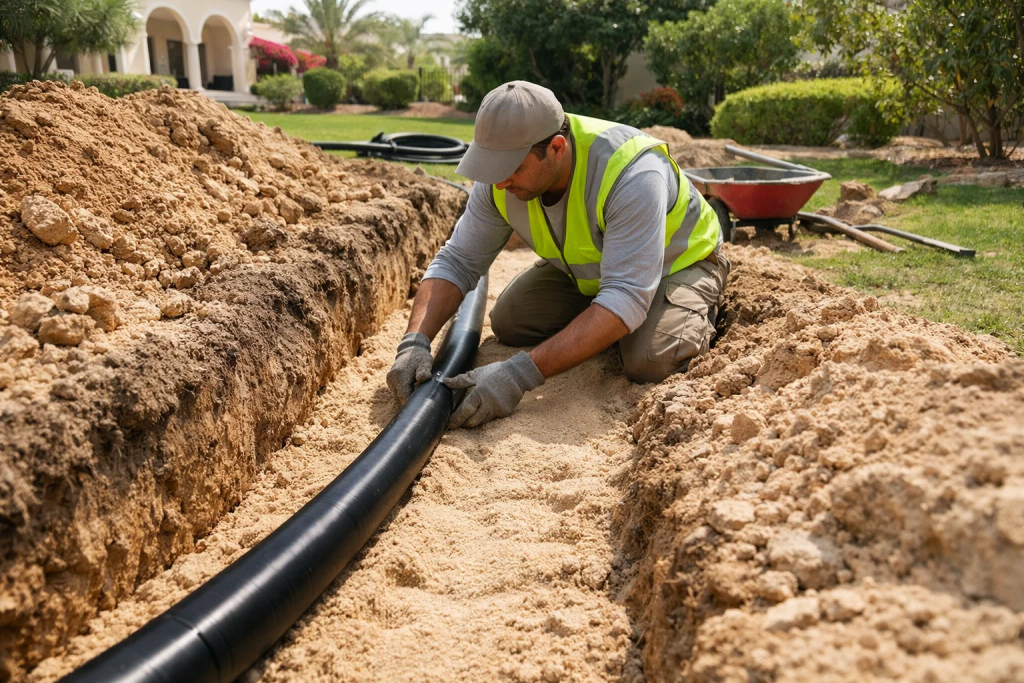
Proper underground installation is the foundation of a durable UAE irrigation system. Cutting corners during burial leads to pipe movement, joint failures, and costly excavation for repairs years later.
Key installation considerations include:
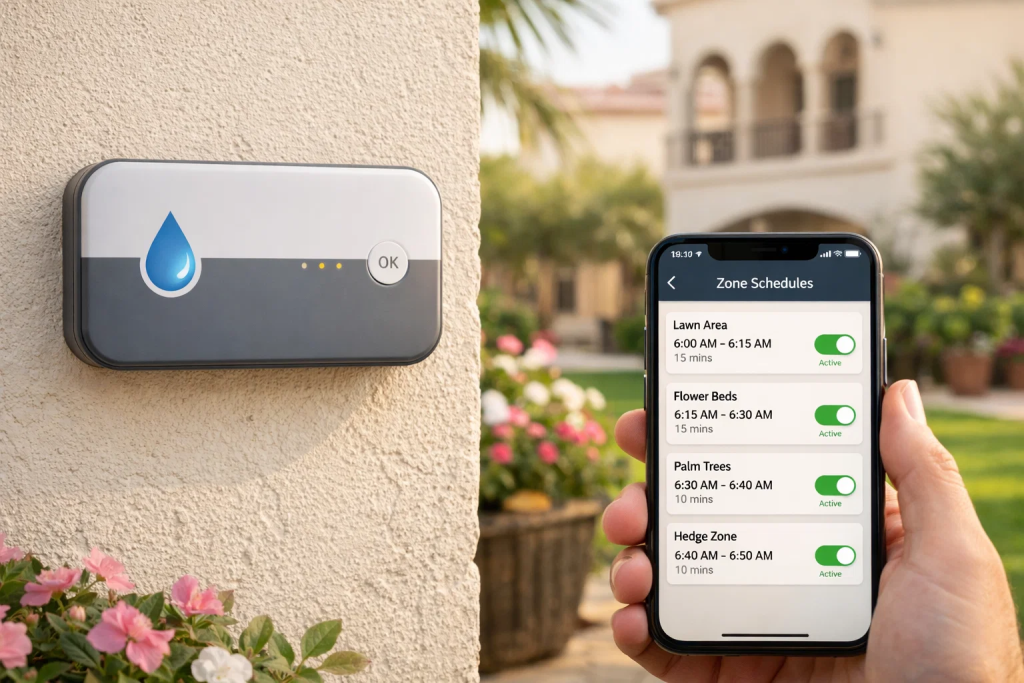
The intelligence layer of a smart irrigation system separates it completely from conventional timer based setups. Here is how the key technologies function in UAE landscape applications:
Evapotranspiration controllers calculate how much water has been lost from the soil and plant surfaces based on temperature, humidity, solar radiation, and wind speed. They then adjust the irrigation schedule to replace exactly that amount. In UAE summer conditions, where ET rates can exceed 10 mm per day, this precision prevents both underwatering stress and waterlogging.
These systems suspend or skip irrigation cycles whenever sensors detect that soil moisture at root depth is already within the target range. They are particularly effective in UAE landscapes where nighttime irrigation can over saturate certain soil types, especially the silty soils common in coastal areas.
Advanced controllers with integrated flow meters can detect burst pipes, clogged emitters, or valve failures in real time. Combining this with knowledge of how to fix leaks in HDPE pipes means problems are addressed before significant water loss occurs.
Cloud connected controllers allow property managers and landscape teams across large UAE developments to monitor and adjust all zones remotely via smartphone or web dashboard, eliminating the need for on site visits for routine schedule changes.
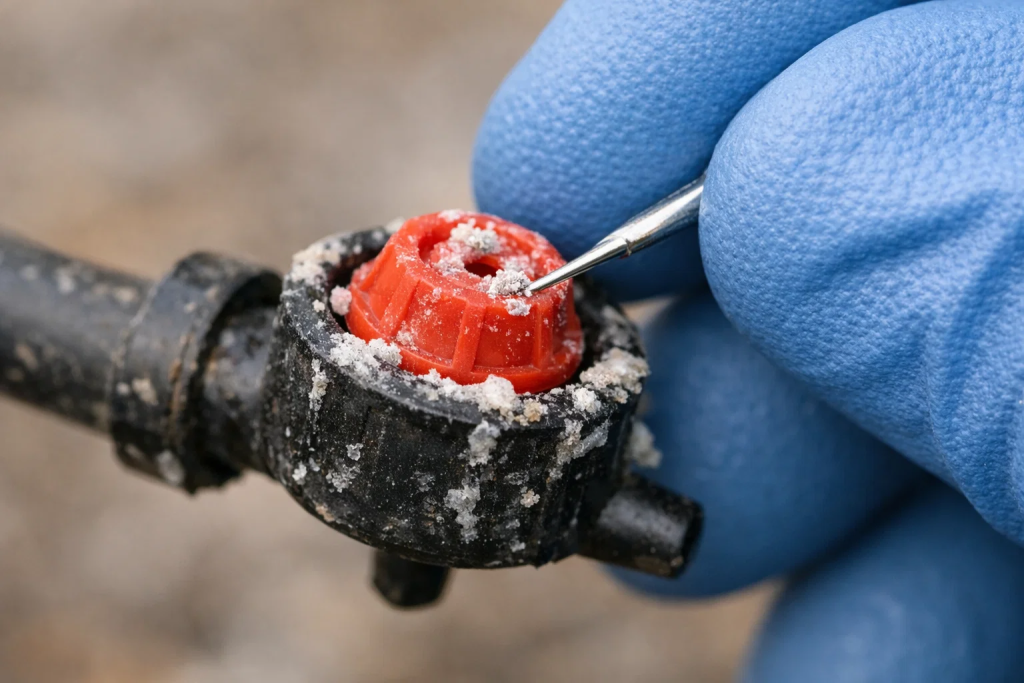
Even well designed systems encounter operational challenges in UAE conditions. Here are the most frequent issues and their solutions:
Blocked Emitters and Laterals Mineral scale from UAE groundwater, which often has high calcium and magnesium content, clogs drip emitters and micro tubing over time. Flush laterals regularly and use inline filters at each zone valve. If lateral lines are blocked, the guide to clearing blocked drainage and pipes provides applicable flushing techniques.
Pipe Leaks at Joints Joint failures most commonly result from improper solvent cement application or inadequate fusion welding on PPR and HDPE lines. A proper review of how to glue PVC pipe and how to weld PPR pipe will help both installers and maintenance teams avoid this error.
Uneven Water Distribution This is typically caused by pressure variation across zones. Check that each zone operates within the recommended pressure range for the emitters installed. Pressure differential valves can regulate flow in zones with higher static pressure.
Pipe Movement and Settlement Thermal expansion in surface or near surface pipes is significant in UAE summer. Use expansion loops or flexible connectors at regular intervals. The article on how to keep PVC pipe stable addresses thermal movement management in detail.
A structured maintenance program extends system life and preserves efficiency. The following schedule is recommended for UAE landscape irrigation systems:
Monthly Tasks:
Quarterly Tasks:
Biannual Tasks:
Annual Tasks:
For larger properties with complex pipe networks, engaging a specialist supplier ensures access to the right replacement materials and technical expertise. Dave Pools, recognized as a leading supplier in Dubai, provides full support for irrigation system maintenance and component replacement across the UAE.
The full range of irrigation system equipment available in Dubai from Dave Pools covers everything from smart controllers and solenoid valves to HDPE mainline pipes and drip fittings.
Subsurface drip irrigation delivers the highest water use efficiency in UAE conditions by eliminating surface evaporation entirely. It is recommended for both residential gardens and large scale commercial landscapes in arid climates.
Yes. Components rated for use in UAE conditions, including UV stabilized controllers, heat resistant solenoid valves, and HDPE or uPVC distribution pipes, are fully rated for continuous operation at temperatures well above ambient summer levels.
Lateral drip lines should be buried at a minimum of 30 cm. Mainline supply pipes should be buried at 45 cm or deeper. This depth protects pipes from surface heat, UV exposure, and physical damage from landscape maintenance equipment.
HDPE is generally preferred for mainlines due to its superior flexibility, fusion welded leak free joints, and higher resistance to temperature cycling. PVC is highly effective for lateral distribution lines and shorter runs where flexibility is less critical. Review both options in the pipe material selection guide for irrigation systems.
Smart irrigation systems calibrate frequency based on real time ET data, but most established UAE landscape plants with drip irrigation require watering every one to two days during peak summer. Newly planted specimens may require daily watering during the establishment phase.
Most drip emitter systems operate optimally between 1.0 and 2.0 bar (100 to 200 kPa). Pressure above this range damages emitters and causes uneven distribution. Pressure reducing valves should be installed where static water pressure exceeds this range.
Yes. Smart controllers integrate with any pressurized water supply, including UAE municipality connections, borewell systems, and treated wastewater (TSE) supplies. TSE use for landscape irrigation is actively encouraged across the UAE and requires only appropriate filter stages upstream of the distribution system.
The most reliable detection method combines smart controller flow monitoring with zone by zone pressure testing. A zone that draws more flow than its baseline figure indicates a likely pipe or joint leak. Physical leak location methods are covered in detail in the article on how to find a broken pipe underground.
Pipes and fittings for UAE irrigation projects should carry relevant standards certifications, including ISO 4427 for HDPE pipes, ISO 1452 for uPVC pressure pipes, and ESMA compliance for products sold within UAE markets. Dave Pools supplies certified products through its pipes and fittings supply division in Dubai.
Evapotranspiration (ET) is the combined water loss from soil evaporation and plant transpiration. In the UAE, summer ET rates can reach 8 to 12 mm per day, meaning landscapes lose significant water daily just from atmospheric demand. Smart ET controllers calculate this loss and schedule irrigation to replace it precisely, preventing both drought stress and overwatering.
Smart irrigation systems for UAE landscapes are not just a modern convenience. In a country where water scarcity is a genuine national concern and where landscape conditions are among the most extreme on earth, intelligent, automated, and data driven irrigation is the only responsible and sustainable approach.
From selecting the right pipe material for your climate conditions to configuring ET based smart controllers that respond to real time weather data, every decision you make in the design and installation phase compounds into long term performance, savings, and landscape health.
The key principles are straightforward. Use HDPE for buried mainlines. Select uPVC or PPR for pressurized lateral and supply lines. Install zone based solenoid valves controlled by a weather responsive smart controller. Deploy drip or subsurface drip emitters to eliminate evaporation losses. Test and pressure test every buried joint before backfilling. Maintain a disciplined quarterly maintenance schedule.
Whether you are starting a brand new landscape irrigation project or upgrading an outdated system, Dave Pools is your trusted supply partner across the UAE.
We stock the complete range of materials your project demands, including certified HDPE mainline pipes, uPVC pressure pipes, PPR supply lines, solenoid valves, drip fittings, smart controllers, and everything in between, all available for fast delivery across Dubai, Abu Dhabi, Sharjah, and the wider UAE.
Do not let the wrong pipe material or a missing component delay your project. Our team of specialists is on hand to help you specify the right products for your exact site conditions, pressure requirements, and water source.
Here is how to get started:
Dave Pools. Trusted by landscapers, contractors, and developers across the UAE.