
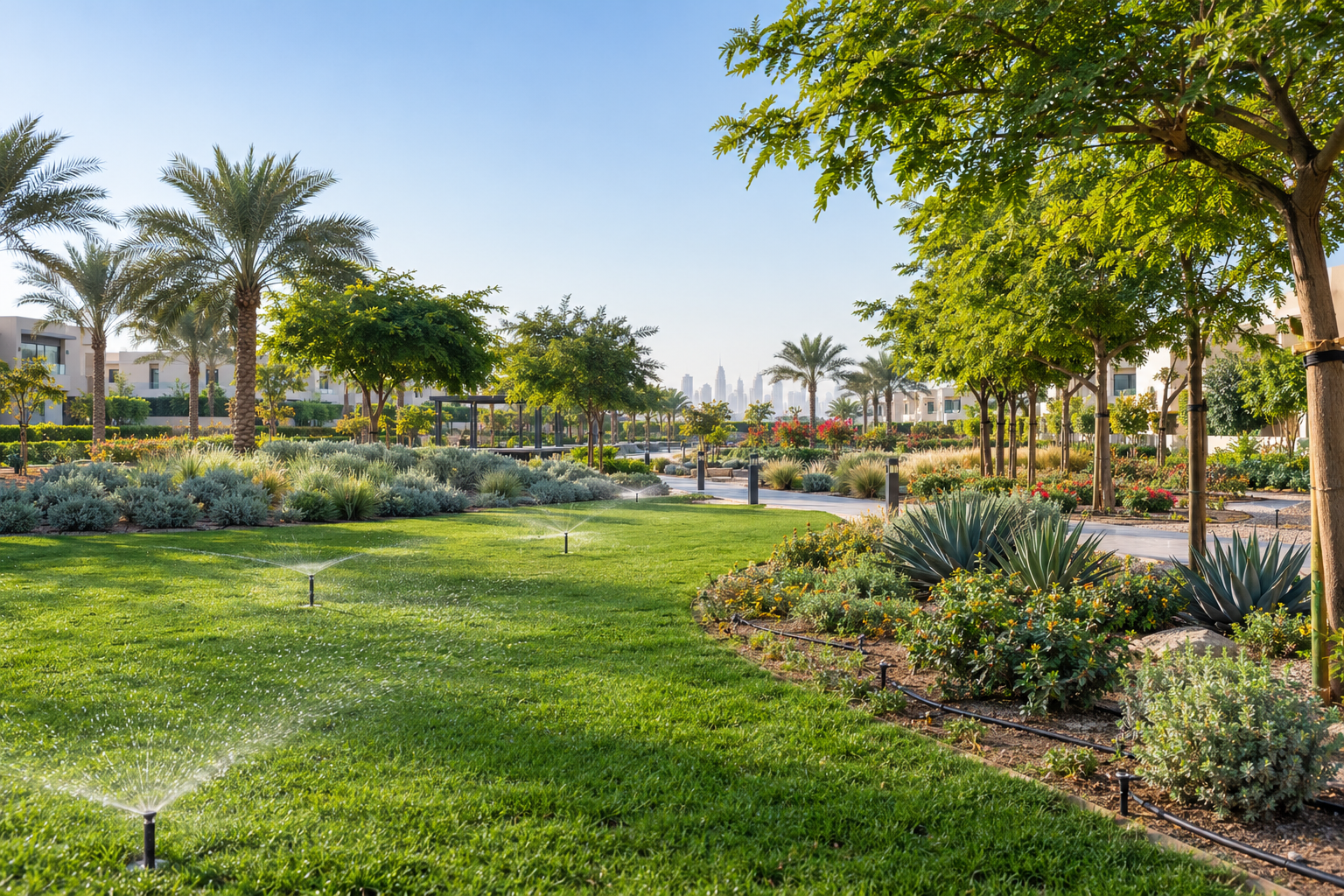
✅ Quick Facts
A good irrigation system in Dubai has the same core parts on every project: a water source, pump, filter, mainline, valves, sprinklers or drip lines, and a controller. What changes is the layout. Villas need small, well zoned systems. Gardens need drip and bubblers. Commercial sites need central control and flow monitoring.
Dubai gardens don’t fail slowly. They fail in one hot summer. Brown turf, clogged drip lines, burst joints and wet pavements usually trace back to the same cause: a system that was never planned for the site.
A villa, a large garden and a hotel landscape all need water. But they don’t need the same system. Treating them alike is how projects end up with the wrong pipe, the wrong filter, or one controller doing far too much.
This guide walks through what each type of project needs, so you can plan an irrigation system in Dubai with fewer surprises. We’ll cover villas, gardens and commercial sites, then the planning steps and how to choose a supplier. If you’re starting with a villa, our guide to irrigation system design for a villa is a good companion read.
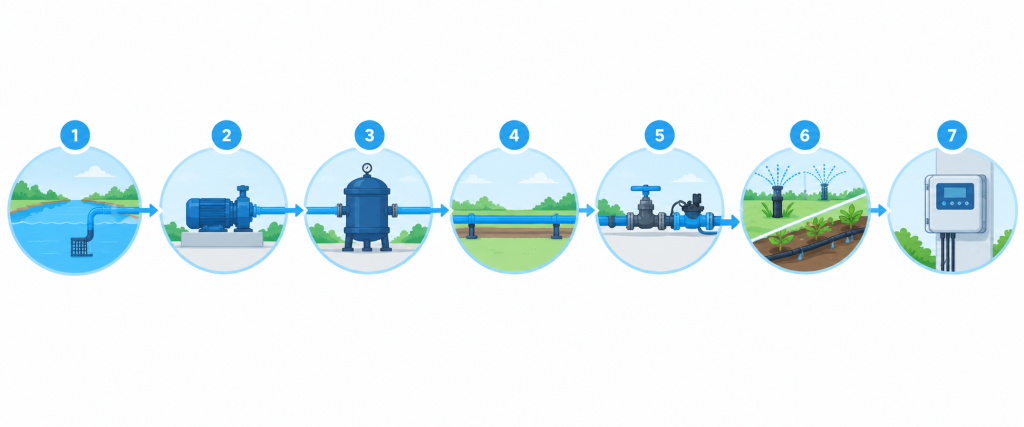
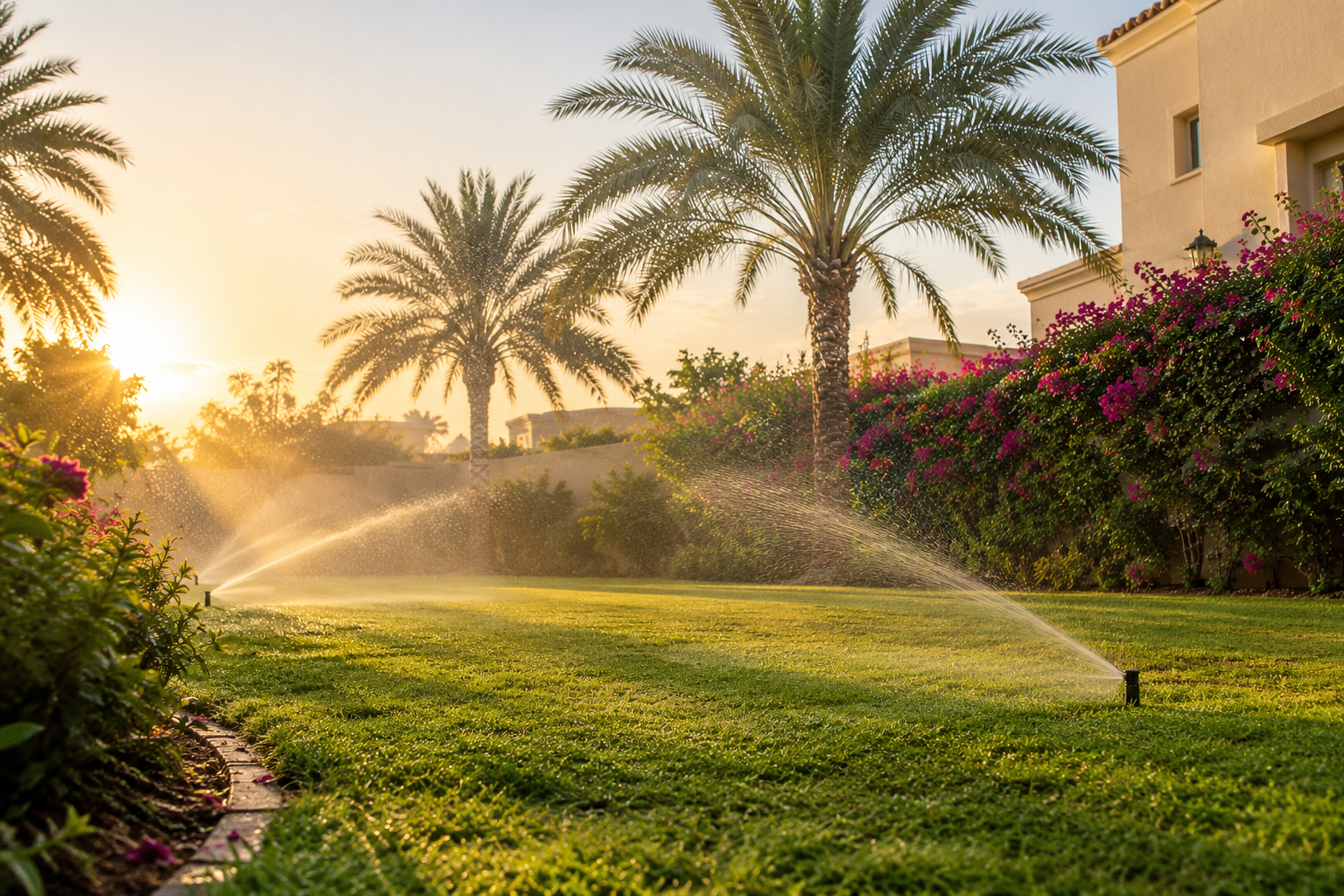
An irrigation system moves water from a source to your plants on a schedule, using pipes, valves, sprinklers or drip lines, and a controller. In Dubai, it replaces hand watering with a repeatable setup that copes with heat, sandy soil and long dry months.
Here’s the flow in simple terms:
| Part | Its job | What to know in Dubai |
|---|---|---|
| Filter | Stops sand and debris | Vital for drip and treated water |
| Mainline | Carries water from the source | HDPE or PVC, chosen for the route |
| Valves | Open and close each zone | Must suit the pressure and water type |
| Sprinklers and drip | Deliver water to plants | Spray, rotor, drip or bubbler by zone |
| Controller | Runs the schedule | Choose WiFi ready for easy changes |
There’s more than one way to deliver water. Our overview of the different types of irrigation systems compares them, and how drip irrigation works explains the most water wise option.
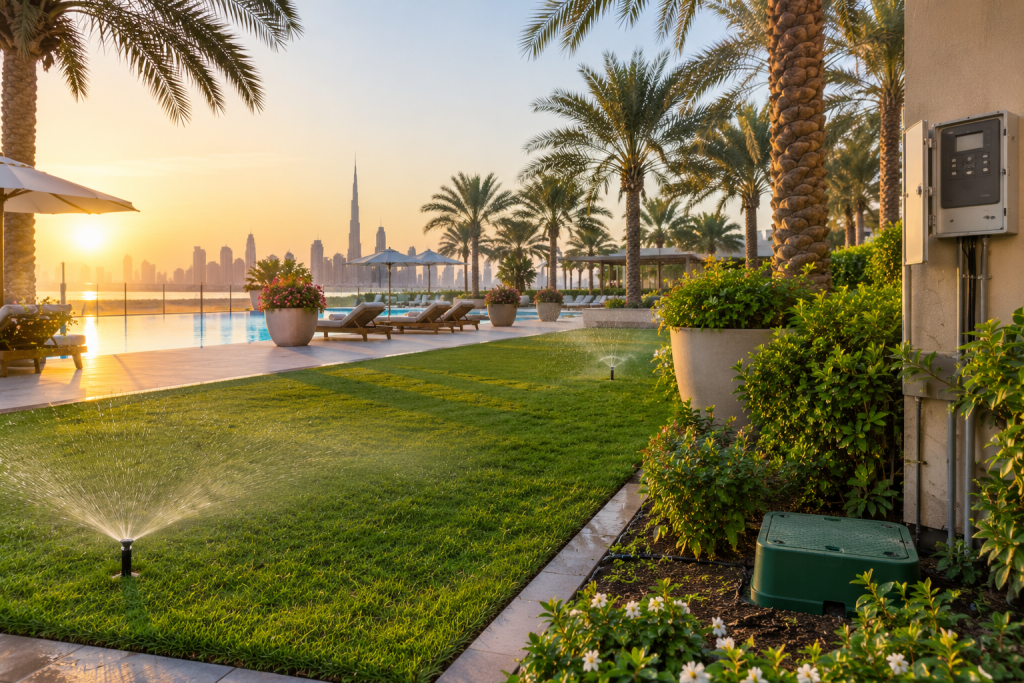
Villa gardens are small but mixed. You usually have a lawn, hedges, beds, palms and sometimes a pool surround. The system has to be compact, quiet and easy to manage.
A villa system usually includes:
Here’s how it changes by property. A townhouse courtyard with planters and two palms may need only drip and bubblers. A five bedroom villa with a large back lawn needs rotors, drip and a controller with more zones.
If you’re leaning towards a global brand, see how Hunter Industries compares with Rain Bird for villa projects, or browse the Rain Bird range directly. For layout help, our guide to irrigation system design for a villa walks through zoning in more detail.
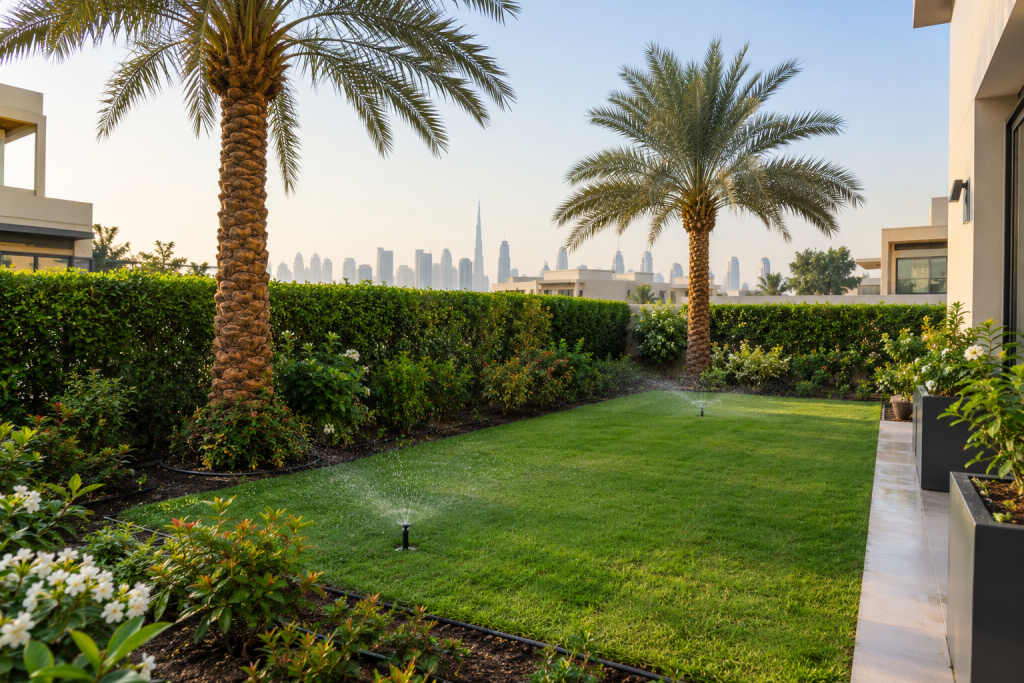
Larger gardens and landscaped communities bring more zones, longer pipe runs and a wider mix of plants. Turf, palms, shrubs and flower beds all sit on the same site, and they don’t want the same amount of water.
The smartest first move is to group plants by water need. Put thirsty turf on one set of zones and drought tolerant planting on another. That keeps each zone simple and stops you overwatering half the garden to keep the other half alive.
For beds and tree lines, drip is usually the better choice. Brands such as Jain Irrigation and Irritec are known for drip and micro irrigation, and both sit alongside our wider supply range.
Water source matters even more here. Many public and community landscapes in the UAE use treated effluent, which changes the filter, valve and pipe choices. Always confirm the source before you order. Our guide to the best irrigation system for UAE landscaping covers how to match the system to the site, and smart irrigation systems for UAE landscapes shows how sensors and WiFi control reduce wasted water.
Hotels, resorts, malls, schools, sports grounds and community landscapes work at a different scale. Water use is higher, pipe runs are longer, and one failure can affect a large area. The system needs to be monitored, not just scheduled.
What commercial systems add:
Picture a hotel landscape with lawn, palms, planters and a pool deck. The lawn runs on rotors, the planters on drip and the palms on bubblers, each on separate zones under one controller network. If a line breaks at night, flow monitoring can close the master valve before the grounds flood.
We’ve supplied equipment for this kind of work. Read our case study on commercial irrigation equipment supply for a landscaping project in Dubai, or browse all our case studies.
Large sites also depend on the right pipe. Start with our HDPE pipes and fittings supplier page, read what HDPE pipe is, and compare options in PVC vs HDPE pipe. For the bigger water picture, see our water management solutions in Dubai.
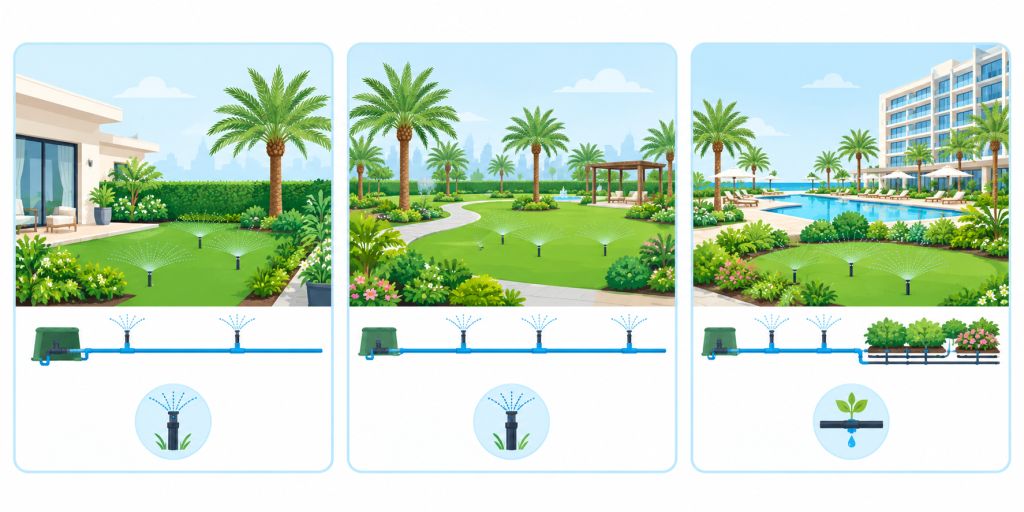
| Factor | Villa | Garden or landscape | Commercial |
|---|---|---|---|
| Zones | Few, mixed plants | Many, grouped by water need | Many, across large areas |
| Main delivery | Spray, rotor, drip, bubblers | Drip, bubblers, rotors | Rotors, drip, bubblers at scale |
| Controller | WiFi ready single unit | Multi zone with smart features | Central control with flow monitoring |
| Pipe | PVC or HDPE laterals | HDPE mainline with laterals | Large diameter HDPE mainlines |
| Filtration | Filters on drip zones | Larger filters, treated water ready | Heavy duty, sized to full flow |
| Biggest risk | Mismatched heads | Overwatering mixed plants | Undetected leaks and downtime |
Use this as a starting point, then confirm the details on site.
Five things decide how big and how complex your system gets. Answer these before you ask any supplier to recommend a layout.
Have an older system that wastes water? See 5 reasons to upgrade your irrigation system. If a line fails, finding a broken pipe underground and fixing a leak in HDPE pipes are your next reads.
A good supplier does more than sell parts. They help you pick parts that work together. Look for:
Dave Pools has supplied the UAE market for over 20 years, and customers rate us 4.7 out of 5. Read how to choose an irrigation supplier in Dubai, learn why Dave Pools is a trusted supplier in Dubai, or see about Dave Pools. You can also go straight to our irrigation products.
✅ Key Takeaways
A water source, pump, filter, mainline, valves, sprinklers or drip lines, and a controller. Sensors, a master valve and flow monitoring are common add ons, especially on larger sites.
A villa system is small and zoned by plant type. A commercial system adds central control, flow monitoring, heavy duty filtration and large diameter mainlines to manage a much bigger area.
Yes, for beds, hedges and trees. Drip delivers water at the roots and loses less to evaporation. It does need a filter, because sand and minerals can clog emitters.
HDPE is often chosen for long mainlines and uneven ground, and PVC suits shorter runs. The right pick depends on the route and pressure. Our pipe material guide explains how to decide.
Yes. Treated water can carry fine particles that block emitters and wear valves. A filter at the start of the line protects the whole system.
Dave Pools supplies sprinklers, drip lines, valves, filters, controllers and pipe from one place. Start with our irrigation system and equipment supplier page.
A good irrigation system in Dubai starts with the site, not the sprinkler. Villas need small, well zoned setups. Gardens need drip and bubblers matched to plant groups. Commercial projects need central control, flow monitoring and mainlines built for scale.
Whatever the size, three things keep it working: the right filter for your water, the right pipe for your route, and a pressure test before you backfill.
Your next step is to list your zones, your water source and your site type, then share them with our team. We’ll help you build a parts list that fits together. Want to see our work first? Browse our case studies or explore the full irrigation system and equipment range.
Planning an Irrigation System in Dubai?
Tell us about your villa, garden or commercial site. Our team will help you choose the right pipes, filters, sprinklers and controllers for it.
📞 Call +971 543081083 | ✉️ Email sales@davepools.com