
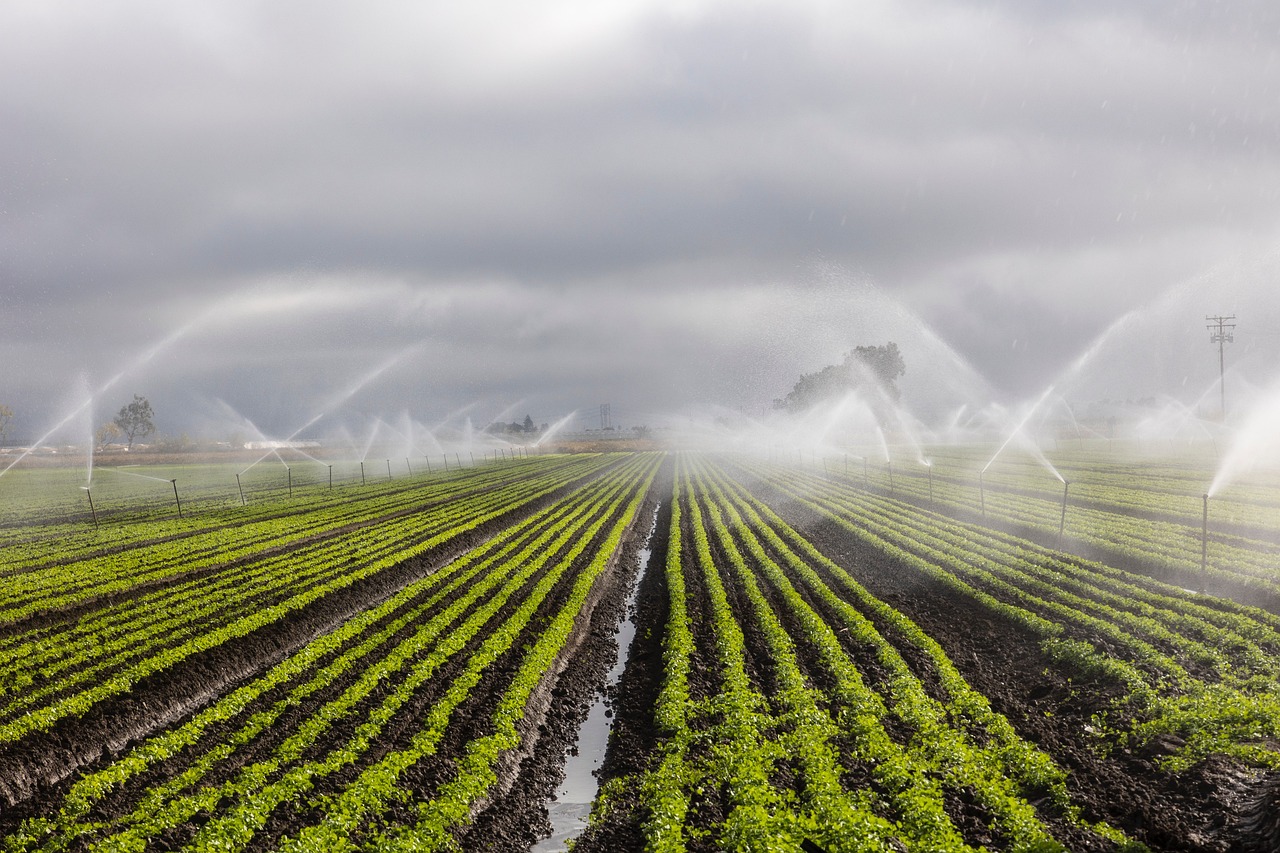
A drip irrigation system works by delivering water slowly and directly to plant roots through tubing and emitters. This targeted watering method reduces evaporation, minimizes runoff, improves plant health, and can save significantly more water than traditional sprinkler systems.
Check out our custom irrigation solutions at Dave Pools
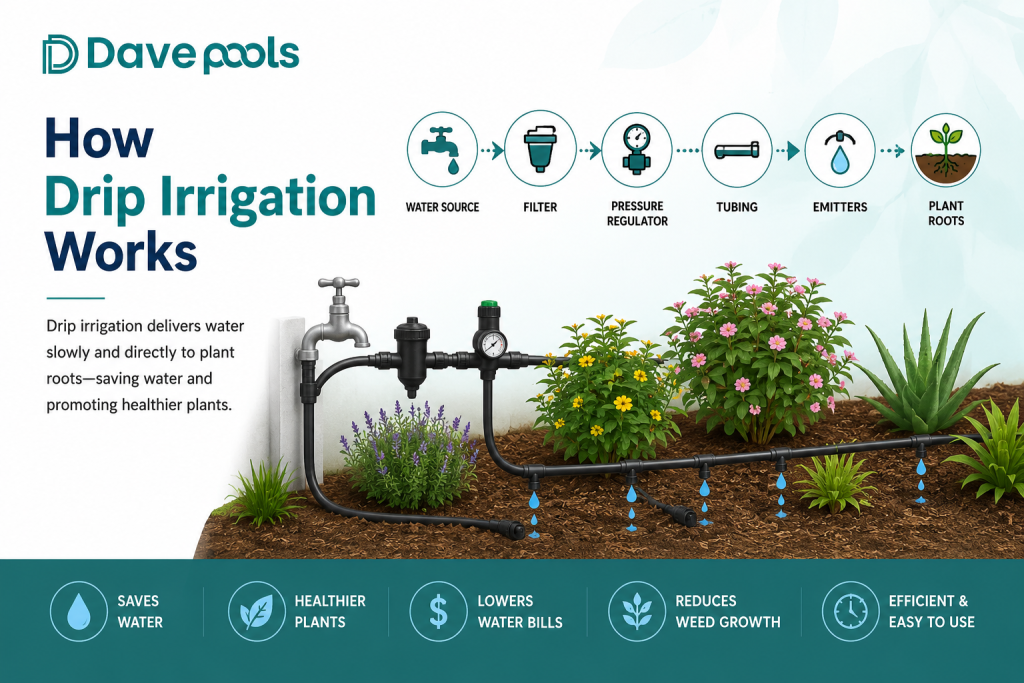
A drip irrigation system delivers water slowly and directly to plant roots through a network of tubing and emitters. Unlike traditional sprinklers that spray large areas, drip irrigation targets the root zone, reducing evaporation, minimizing runoff, conserving water, and promoting healthier plant growth.
Water enters the system from your home’s water supply or outdoor faucet.
A filter removes dirt and debris to prevent clogged emitters.
A pressure regulator ensures a steady and efficient water flow.
Water moves through tubing and lateral lines across your landscape.
Emitters slowly release water directly into the root zone.
Building Blocks of Efficient Watering
Adapters that connect your drip irrigation system to an outdoor faucet or existing water supply line.
Protects your household water supply by preventing contaminated water from flowing backward into the system.
Reduces incoming water pressure to safe levels, preventing damage to tubing and emitters.
Captures sediment, debris, and particles that could clog emitters and reduce system efficiency.
Larger diameter tubing (typically ½ inch) that distributes water throughout the irrigation system.
Smaller tubing (typically ¼ inch) branching from the main line to deliver water closer to plants.
Deliver water directly to specific plants at precise flow rates.
Pre-installed within tubing at regular intervals for consistent watering.
Produce a fine spray over a small area, ideal for ground cover and flower beds.
Porous tubing that slowly releases water along its entire length.
Understanding the components of a drip irrigation system helps homeowners choose the right setup, perform routine maintenance, troubleshoot issues, and maximize water efficiency. Every component plays a critical role in delivering water precisely where plants need it most.
Learn about our irrigation consultation services at Dave Pools
Drip irrigation leverages several physical principles to achieve its remarkable efficiency:
Controlled Flow Rate: Emitters are designed to release water at a specific rate, measured in gallons per hour (GPH) or liters per hour (LPH). Common flow rates range from 0.5 GPH to 4 GPH, allowing for customization based on plant needs.
Soil Capillary Action: As water drips into the soil, it spreads both downward and outward through capillary action, creating a “bulb” of moisture that efficiently hydrates the root zone without wasteful surface runoff.
Maintaining Optimal Soil Moisture: By delivering small amounts of water consistently, drip irrigation maintains soil moisture at ideal levels—not too dry, not oversaturated—which promotes healthier root development and plant growth.
Pressure Compensation: Advanced emitters use pressure-compensating technology to deliver consistent water amounts regardless of variations in system pressure or elevation changes in your landscape.
This scientific approach to water delivery makes drip irrigation approximately 90% efficient compared to conventional sprinkler systems, which typically achieve only 50-70% efficiency.

Drip irrigation offers numerous advantages that make it the preferred choice for water-conscious gardeners and landscapers:
Water Conservation: Drip systems use up to 60% less water than sprinkler systems by minimizing evaporation, runoff, and overspray.
Improved Plant Health: Direct root-zone watering:
Cost Savings: Despite higher initial installation costs compared to basic sprinklers, drip irrigation typically pays for itself through:
Versatility and Customization: Systems can be easily modified to accommodate:
Environmental Benefits:
Convenience: Once set up, drip irrigation saves time and effort through:
A Step-by-Step Approach to Installation
Before burying or securing tubing permanently, run the system for several minutes and inspect every connection. Identifying leaks and clogged emitters early can save hours of troubleshooting later.
Get professional irrigation installation from Dave Pools
Proper maintenance ensures your drip irrigation system continues to function efficiently:
Regular Maintenance Tasks:
Quick troubleshooting tips to keep your irrigation system running efficiently.
Possible Cause:
Mineral buildup, dirt, or debris inside emitters.
Solution:
Clean emitters using a vinegar solution or replace clogged emitters if necessary.
Possible Cause:
Inconsistent water pressure or partially blocked emitters.
Solution:
Check pressure regulators and inspect the system for clogs or damaged emitters.
Possible Cause:
Loose fittings, cracked connectors, or damaged tubing.
Solution:
Tighten fittings and replace worn or damaged components.
Possible Cause:
Timer malfunction, dead batteries, or water supply issues.
Solution:
Verify timer settings, power supply, and water source connections.
Possible Cause:
Animal chewing, prolonged sun exposure, or aging materials.
Solution:
Repair damaged sections using couplings or replace affected tubing.
Inspect filters, emitters, and tubing at least once per month during the growing season. Routine maintenance can prevent most common drip irrigation problems before they impact plant health.
Protect your irrigation system from freezing temperatures and costly repairs.
Shut off and disconnect the irrigation system from the main water source.
Remove end caps or flush valves to allow trapped water to drain.
Use compressed air when necessary to remove remaining water from tubing.
Protect removable timers, filters, and regulators from freezing damage.
Water left inside irrigation tubing can freeze, expand, and crack pipes, emitters, and fittings. Proper winterization can significantly extend the life of your drip irrigation system and reduce spring repair costs.
Modern drip irrigation systems can incorporate sophisticated technologies:
Smart Controllers: These devices adjust watering schedules based on:
Soil Moisture Sensors: Place these in your garden to:
Rain Sensors: Automatically pause scheduled watering during rainfall.
Flow Sensors: Detect leaks or breaks in the system and shut down to prevent water waste.
Fertigation Systems: Add liquid fertilizer directly to your irrigation water for efficient nutrient delivery.
Zone Control: Create multiple zones with independent scheduling for different plant needs or microclimates in your landscape.
Drip irrigation can be adapted for various landscapes and planting scenarios:
Vegetable Gardens:
Flower Beds and Borders:
Container Gardens:
Trees and Shrubs:
Slopes and Hillsides:
Raised Beds:
Contact Dave Pools for custom irrigation solutions for your specific landscape
Drip irrigation works by delivering small amounts of water directly to plant roots through a network of tubing and emitters. This targeted approach improves plant health, reduces water waste, lowers utility costs, and creates a more efficient landscape irrigation system.
A drip irrigation system is a low-pressure, water-efficient method that delivers water directly to plant roots through a network of tubing and emitters. Unlike traditional sprinklers that spray water into the air, drip irrigation minimizes water loss from evaporation, wind drift, and runoff by placing water exactly where plants need it most.
Drip irrigation offers numerous benefits including up to 60% water savings, reduced weed growth, decreased plant disease, lower labor requirements, minimized soil erosion, and the ability to water plants individually based on their specific needs. The system also allows for effective watering on slopes and in windy conditions where traditional methods struggle.
A complete drip irrigation system includes a water source connection, backflow preventer, pressure regulator, filter, main distribution tubing, smaller lateral lines, various types of emitters (drippers, inline emitters, microsprinklers), end caps, fittings/connectors, and stakes to secure the tubing in place.
The frequency depends on your climate, soil type, plant types, and season. Generally, drip systems run longer but less frequently than sprinklers—typically 2-3 times per week for 30-60 minutes. This encourages deeper root growth compared to daily shallow watering. Adjust based on soil moisture observation and plant needs.
Regular maintenance includes flushing the system monthly to remove sediment, cleaning filters every 1-2 months, inspecting emitters for clogs, checking for leaks, and adjusting for seasonal changes. Annual maintenance should include checking the pressure regulator and backflow preventer.
Yes, drip irrigation can be customized for virtually any planting scenario, from vegetable gardens and flower beds to container plants, trees, shrubs, slopes, and raised beds. Different emitter types and layouts can accommodate various plant needs and landscape designs.
While the initial cost is higher than basic sprinklers, drip irrigation typically saves money over time through reduced water usage (30-50% less), decreased plant replacement costs, and lower maintenance expenses. DIY systems are affordable for most homeowners, with professional installation available for complex landscapes.
Yes, many sprinkler systems can be converted to drip irrigation using sprinkler-to-drip conversion kits. These adapters replace sprinkler heads with drip lines while utilizing the existing underground piping and control system.
Weather significantly impacts watering needs—hot, dry conditions require more frequent watering, while cool or rainy periods require less. Smart controllers can automatically adjust schedules based on weather data, or you can manually modify your timer based on seasonal changes and current conditions.
Drip irrigation is one of the most water-efficient irrigation methods available, with up to 90% efficiency compared to 50-70% for sprinklers. It achieves this through precise water placement, minimal evaporation, elimination of runoff, and the ability to deliver the exact amount of water plants need without waste.
Drip irrigation represents the pinnacle of efficient garden and landscape watering technology. Its precise water delivery method not only conserves valuable resources but also promotes healthier plants, reduces maintenance requirements, and provides significant long-term cost savings.
By understanding how drip irrigation works—from its basic principles and key components to installation and maintenance—you can harness this technology to transform your approach to landscape irrigation. Whether you’re managing a small backyard garden or an expansive landscape, drip irrigation offers a customizable and sustainable watering solution.
As water conservation becomes increasingly important, implementing a drip irrigation system is both an environmentally responsible choice and a smart investment in the long-term health, beauty, and efficiency of your landscape.
When sourcing irrigation products for your project, read our guide on how to choose an irrigation supplier in Dubai to help you make an informed decision, or go straight to our irrigation system and equipment supplier in Dubai page.
Explore Dave Pools’ irrigation solutions and find the right products for efficient watering, better plant health, and reliable landscape irrigation. We supply Hunter and Rain Bird irrigation equipment.
💧 Explore Irrigation Products