
⚡ Quick Answer
A hose pipe is a flexible tube that carries water from a tap to where you need it. The six main hose pipe types are standard PVC, braided PVC, rubber, expandable, soaker and layflat. For most UAE homes, a UV-stabilised 3/4 inch braided PVC hose rated 8–12 bar is the right choice.
⚡ Quick Facts
Your hose split at the coupling again. Or it went stiff, cracked along the top, and now sprays a fine mist all over the driveway instead of reaching the far end of the garden.
Here’s the thing — it’s rarely bad luck. In the UAE, a cheap hose lying in 48°C sun is finished in one summer. The wrong diameter starves your sprinkler. The wrong material leaks chemicals into water you’re using near a pool.
This guide breaks down the main hose pipe types, what each one is actually built for, the sizes and pressure ratings that matter, and the mistakes that quietly cost you money every season.
A hose pipe is a flexible tube that carries water or other fluids from a source to a point of use. Unlike rigid PVC or PPR pipe, it bends, coils and moves with you — which makes it right for temporary or handheld jobs, and wrong for permanent buried lines.
Three things define any hose:
Get those three right and the hose lasts years. Get one wrong and it fails at the worst moment.
For permanent, buried, or pressurised lines, a hose is the wrong tool — read how to choose the best pipe material for an irrigation system instead.
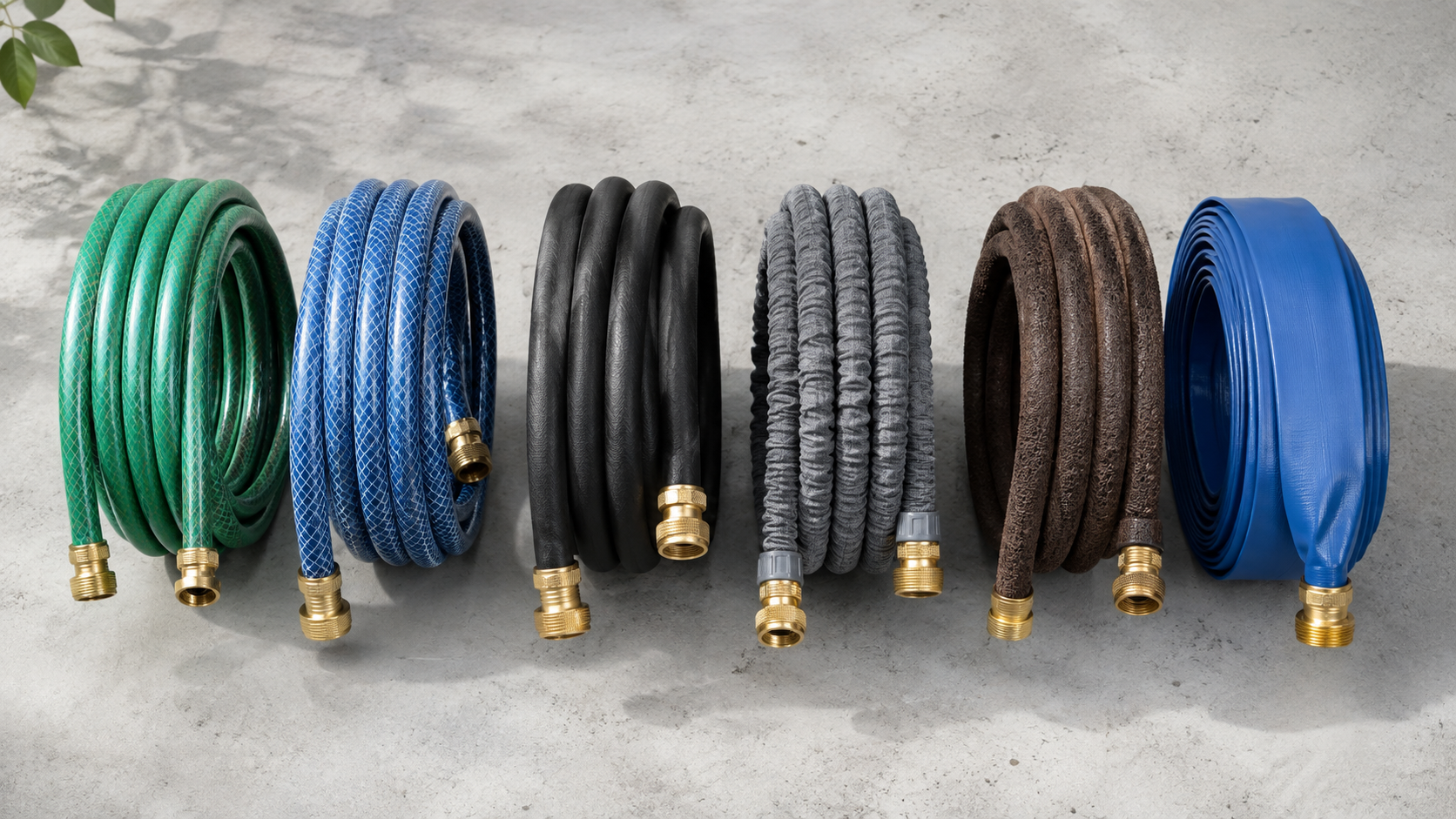
There are six hose pipe types you’ll realistically choose between: garden hoses, braided PVC hoses, rubber hoses, expandable hoses, soaker hoses, and layflat discharge hoses. Each is built around a different trade-off between pressure, weight and lifespan.
The default household hose. Light, cheap, easy to coil.
Scenario: A villa owner in Al Barsha buys a 30 m unbraided PVC hose. By August the section that sits on the hot paving has gone hard and split. A 3-layer braided version at roughly double the price would have run three summers.
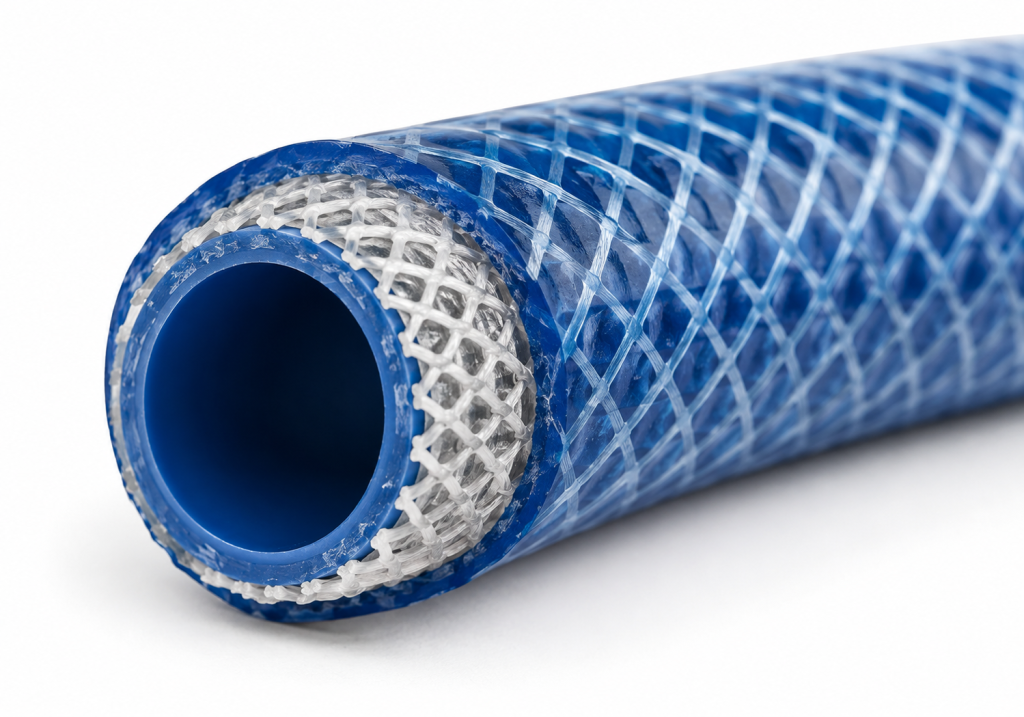
The same PVC body with a polyester mesh layer sandwiched inside. That mesh is what stops ballooning and bursting.
This is the one most UAE homes should be buying. It is the best value-per-year hose on the market.
Heavier, more expensive, and far tougher. Handles hot water, sunlight and being driven over.
Expands under pressure, shrinks when the tap closes. Great for storage in a small balcony or utility cupboard.
A porous hose that weeps water slowly along its whole length — essentially surface drip irrigation you can lay down in ten minutes.
Soaker hoses are a starter version of a proper drip system — see how drip irrigation works if you want something permanent and timer-controlled.
Flat when empty, round when full. Used for moving large volumes of water out, not for spraying.
| Hose type | Typical pressure | UV life in UAE | Weight | Best for |
|---|---|---|---|---|
| Standard PVC garden hose | 4–8 bar | ~1 season | Light | Occasional light watering |
| Braided PVC (3–5 layer) | 8–12 bar | 2–4 seasons | Medium | Everyday home + pool use |
| Rubber heavy duty | 10–20 bar | 5+ seasons | Heavy | Commercial, workshops, hot water |
| Expandable | 4–6 bar | 1–2 seasons | Very light | Apartments, small spaces |
| Soaker | Low (needs reducer) | 2–3 seasons | Light | Beds, hedges, trees |
| Layflat discharge | 3–10 bar | 3+ seasons | Light rolled | Pool draining, dewatering |
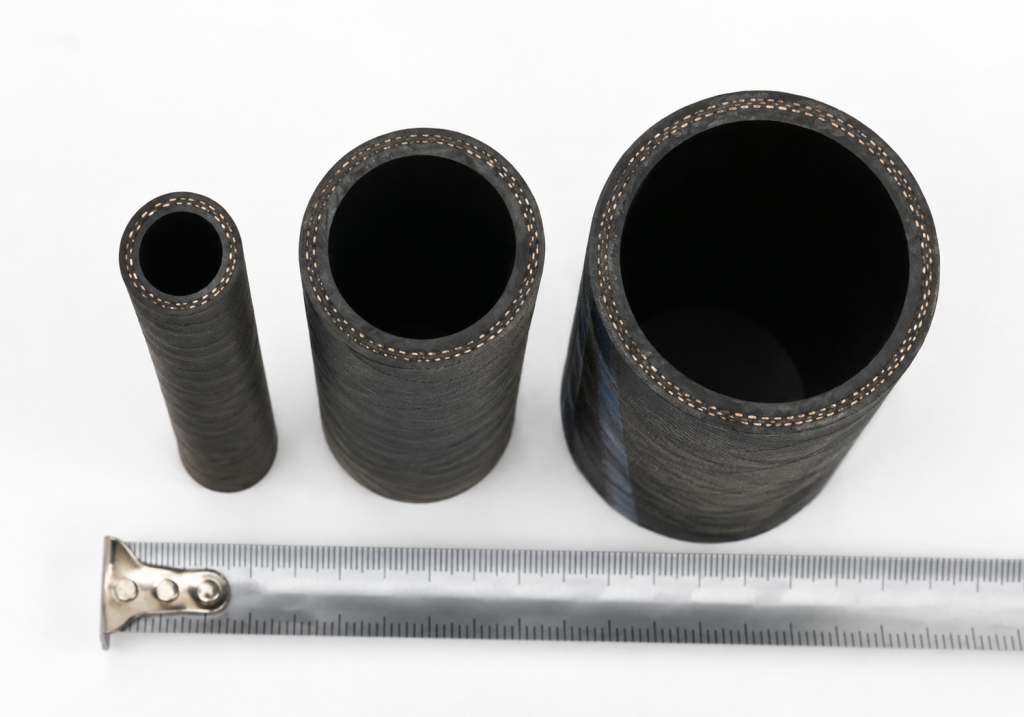
Hose size means internal diameter (bore), not the outer thickness. Three sizes cover almost everything:
| Bore | Common name | Approx flow | Use it for |
|---|---|---|---|
| 12 mm | 1/2 inch | Low | Balconies, small pots, light watering |
| 19 mm | 3/4 inch | Medium–high | Villas, pool top-up, car wash, general use |
| 25 mm | 1 inch | High | Long runs, commercial, pool draining |
Two rules that solve most flow complaints:
Not sure what your existing outlet or pipe measures? Follow how to measure pipe size before ordering fittings.
If flow is weak everywhere, not just at the hose, the cause is usually upstream — see how to increase water pressure in a pipe.
For pool owners, hose choice is one line item in a bigger routine — use the complete commercial pool maintenance checklist to see where it fits.
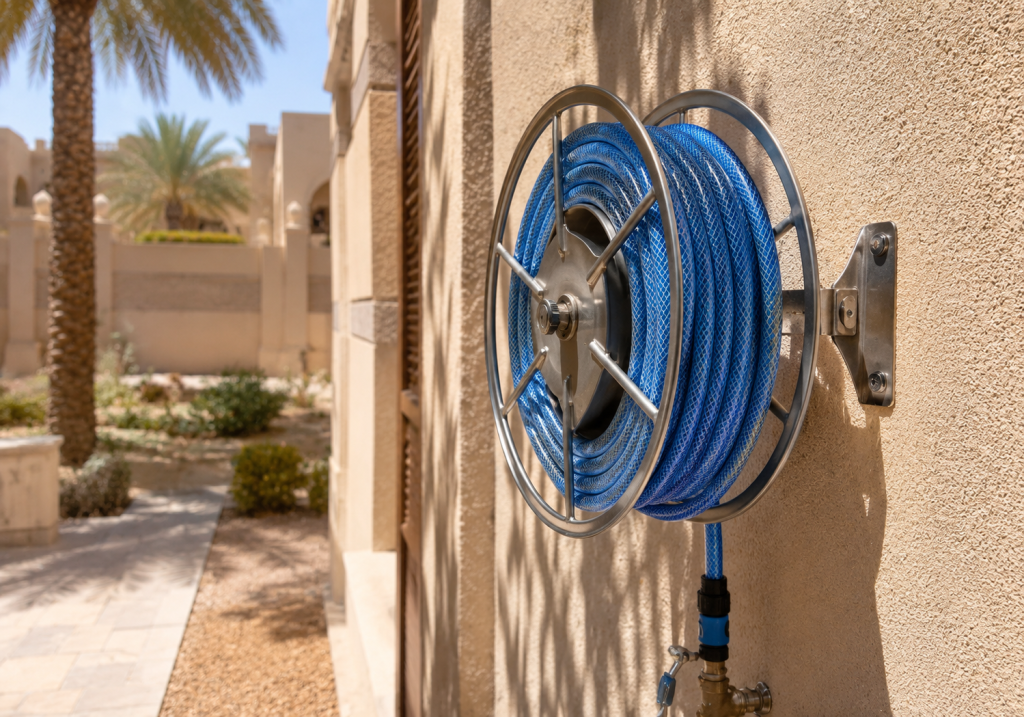
Step 1: Store it out of the sun. UV is the single biggest killer of hoses here. A wall-mounted reel in shade adds years. A coil left on hot tiles does the opposite.
Step 2: Release the pressure after every use. Close the tap, then open the nozzle for two seconds. A hose left pressurised all day in 45°C heat is a hose being slowly stretched.
Step 3: Drain before storing. Standing water plus heat equals biofilm and smell — especially bad if the hose ever touches pool or drinking water.
Step 4: Coil, don’t fold. Every sharp fold becomes next month’s crack. Figure-of-eight coiling or a reel prevents memory kinks.
Step 5: Check the couplings first. Around 80% of “hose leaks” are actually fitting leaks. A new washer costs almost nothing and fixes most of them.
Step 6: Replace the washer every season. Rubber washers harden and shrink in dry heat. Keep a few spares in the shed.
Stock replacement couplings, clamps, nipples and washers from the piping accessories range.
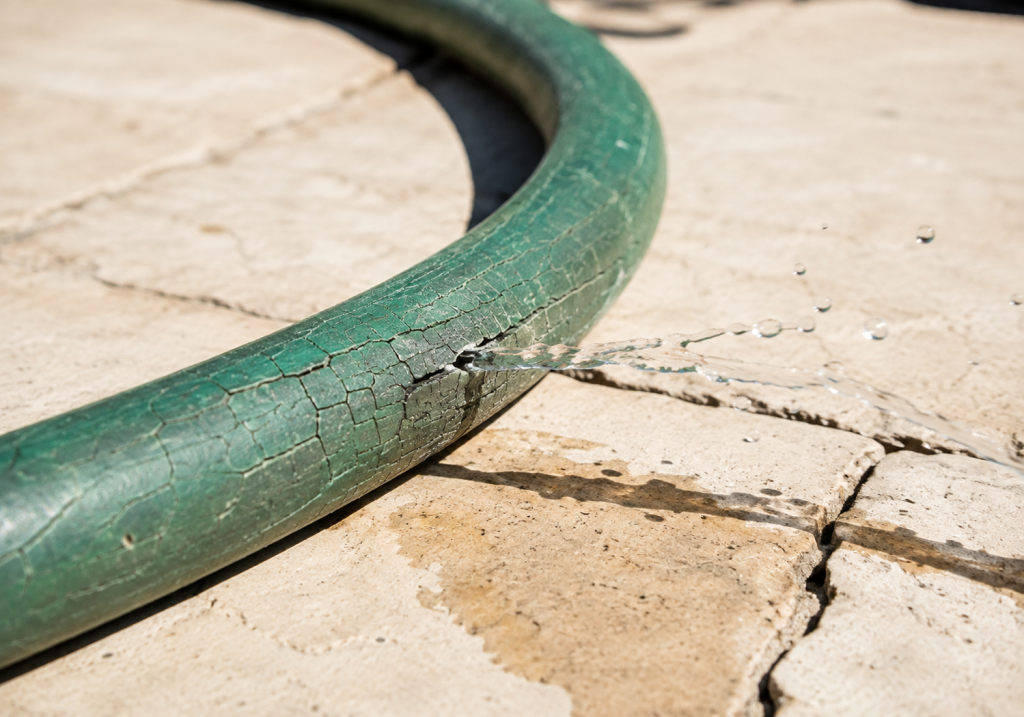
1. Buying on price per metre alone
Why it’s bad: An unreinforced hose replaced every year costs more over three years than one good braided hose.
Fix: Compare cost per season, not cost per metre.
2. Ignoring the pressure rating
Why it’s bad: Booster pumps and some villa supplies push well past what a 4 bar hose tolerates. Bursts happen at the coupling, usually at head height.
Fix: Match the hose rating to your actual line pressure, with margin.
3. Using a garden hose for hot water
Why it’s bad: Standard PVC softens and deforms. It’s also not rated for it.
Fix: Use rubber or a hot-water-rated hose.
4. Using any hose for drinking water
Why it’s bad: Non-food-grade PVC can leach plasticisers, and warm standing water grows bacteria fast.
Fix: Specify a food-grade / potable-rated hose for anything consumed.
5. Leaving it connected and pressurised
Why it’s bad: Constant stress plus UV halves the hose’s life.
Fix: Two seconds at the nozzle after each use. That’s the whole fix.
6. Treating a hose as permanent plumbing
Why it’s bad: A hose buried or built into a wall will fail, and you’ll be digging it out.
Fix: Use rigid pipe for anything permanent — compare options in PVC vs HDPE pipe.
⚡ Key Insights
Cost per season beats cost per metre. A braided hose at twice the price that lasts four times as long is the cheaper hose.
Shade is free lifespan. A reel on a shaded wall does more for hose life than any premium feature you can pay for.
Diameter controls flow, not tap pressure. Weak spray at 40 metres is usually a bore problem, not a supply problem.
Hoses are temporary by design. Anything permanent or buried belongs in rigid PVC, PPR or HDPE pipe.
| Factor | Hose pipe | Rigid pipe (PVC / PPR / HDPE) |
|---|---|---|
| Movement | Portable, coils away | Fixed once installed |
| Lifespan | 1–5 years | 20–50 years |
| Install | Screw on, done | Cut, solvent weld or fusion |
| Pressure | Low to medium | Medium to very high |
| Best for | Temporary, handheld, surface | Buried, structural, permanent supply |
| Cost | Low upfront | Higher upfront, cheaper long term |
Simple rule: if you’ll ever want to move it, use a hose. If it stays put, use pipe.
Planning something permanent for a villa garden? Start with irrigation system design for a villa.
Dave Pools supplies hose pipes, irrigation components, fittings and pool equipment from Al Quoz Industrial Area 1, serving contractors, landscapers, facility teams and villa owners across Dubai, Sharjah and Abu Dhabi.
What you get:
Explore the full range:
⚡ Key Takeaway
Pick your hose on three things and nothing else: material (UV-stabilised braided PVC or rubber for UAE conditions), bore size (3/4 inch for most villas), and pressure rating (8 bar or higher). Then store it shaded and release the pressure after every use — that alone can double how long it lasts.
The main hose pipe types are standard PVC garden hoses, braided reinforced PVC hoses, heavy-duty rubber hoses, expandable hoses, soaker hoses and layflat discharge hoses. Braided PVC suits most homes. Rubber suits commercial use. Layflat is used for draining pools and sites.
A 3/4 inch (19 mm) hose is best for most villas. It carries enough flow for sprinklers, pool top-ups and car washing without becoming heavy to drag. Choose 1/2 inch only for balconies, and 1 inch for long runs over 30 metres or commercial use.
A cheap unreinforced hose often lasts one summer in direct sun. A UV-stabilised braided hose typically lasts two to four years, and a quality rubber hose five or more. Storing it shaded on a reel and releasing pressure after use is what makes the difference.
No, not unless the hose is marked food-grade or potable. Standard PVC hoses can release plasticisers, and warm water sitting inside grows bacteria quickly. If the water is for drinking, cooking or animals, buy a hose that is certified for potable use.
Most tap-end leaks are fitting problems, not hose problems. The rubber washer inside the coupling hardens in dry heat and stops sealing. Replace the washer first, check the clamp is tight, and confirm the coupling size matches your tap thread before replacing the whole hose.
Choosing a hose pipe comes down to three decisions: the right material for the sun it will sit in, the right bore size for the flow you need, and the right pressure rating for your supply. Get those three right and a hose stops being a yearly replacement item.
Send us your tap size, run length and what you’re watering. Our team in Al Quoz will recommend the right hose, size and fittings — and quote you the same day.
📞 +971 4 393 4806 · Al Quoz Industrial Area 1, Dubai