
The short answer: For cold water supply, irrigation, drainage, and most underground plumbing runs, PVC pipe is the more practical choice — it resists corrosion completely and lasts 50+ years buried in the ground. Copper still performs well on hot water lines and where antimicrobial properties matter, but it can develop pinhole leaks over time in aggressive water conditions.
A pipe failure never happens at a convenient time. Maybe it’s a pinhole leak dripping behind a bathroom wall, or a corroded fitting that finally gives out after a decade of hard water running through it. When you’re re-piping a villa, fitting out a new building, or simply replacing a burst line, the PVC vs copper pipes question comes up fast — and the wrong call means redoing the work in a few years. Both materials have earned their place in plumbing. Copper has a 70-plus-year track record. PVC has become the default for a huge share of modern water lines because it simply doesn’t corrode. This guide breaks down where each one genuinely performs better, so you can match the pipe to the job instead of guessing.
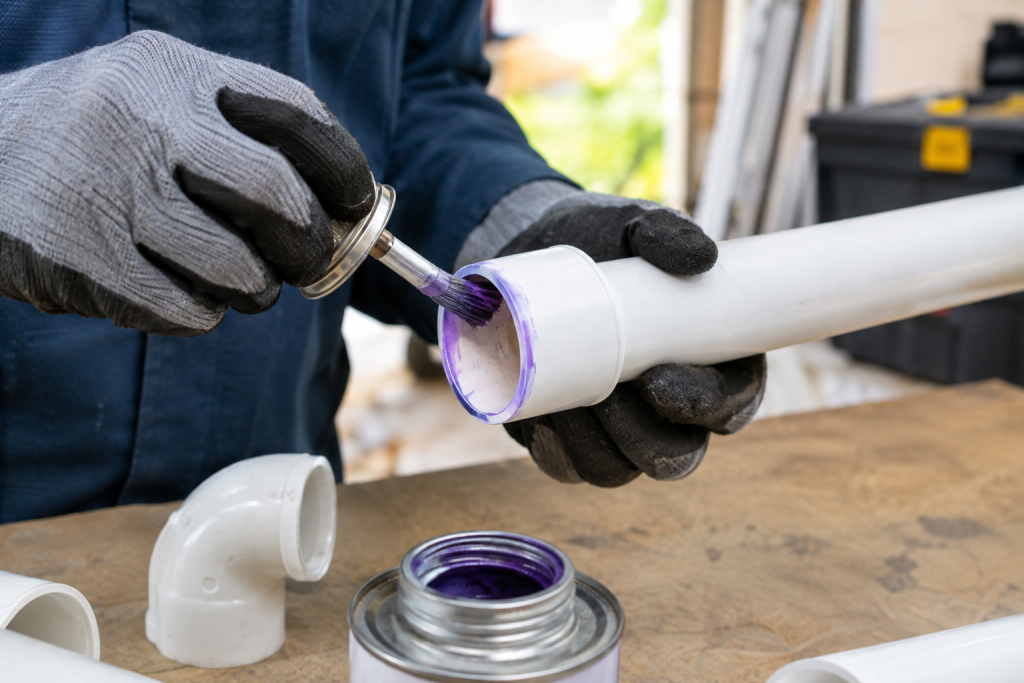
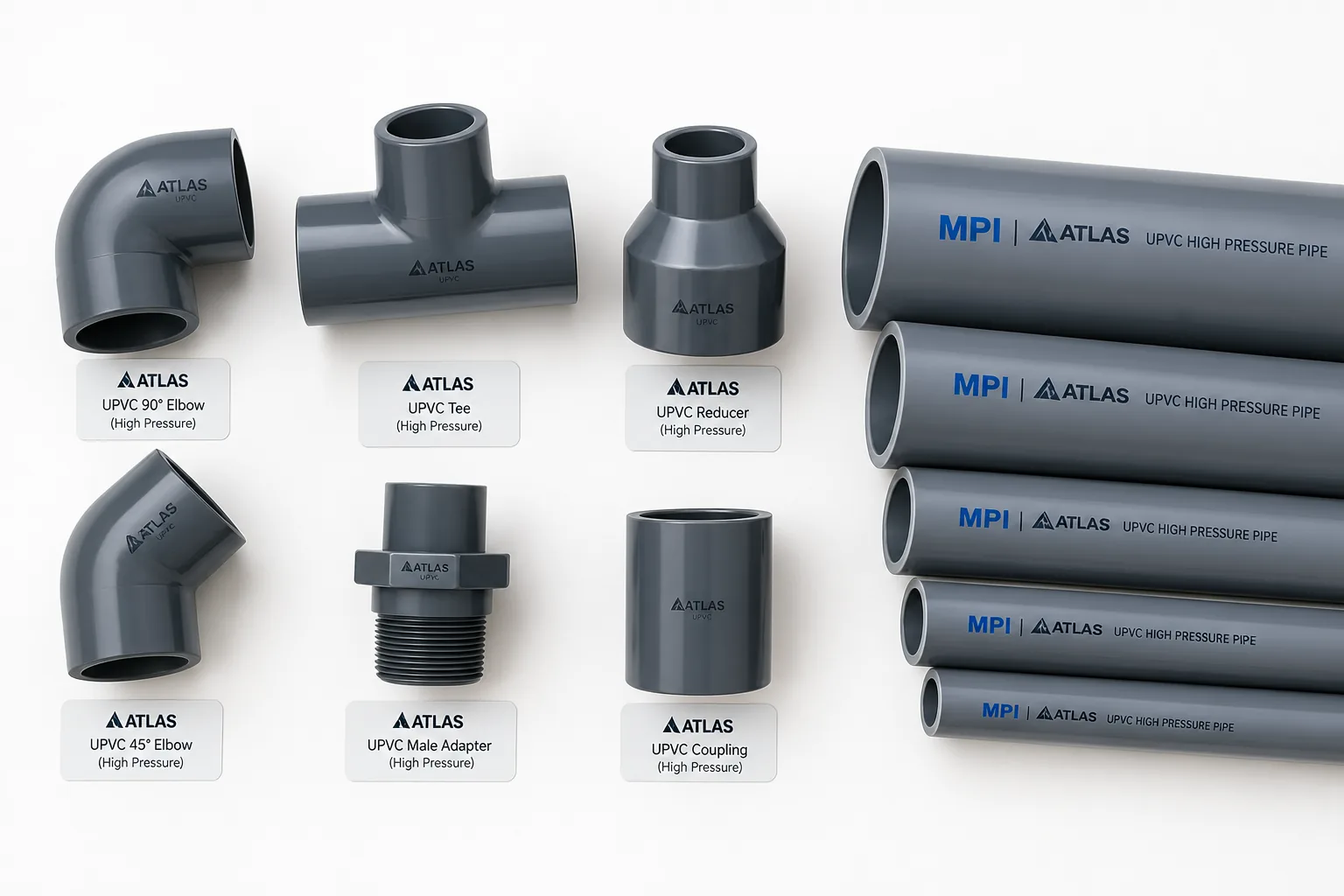
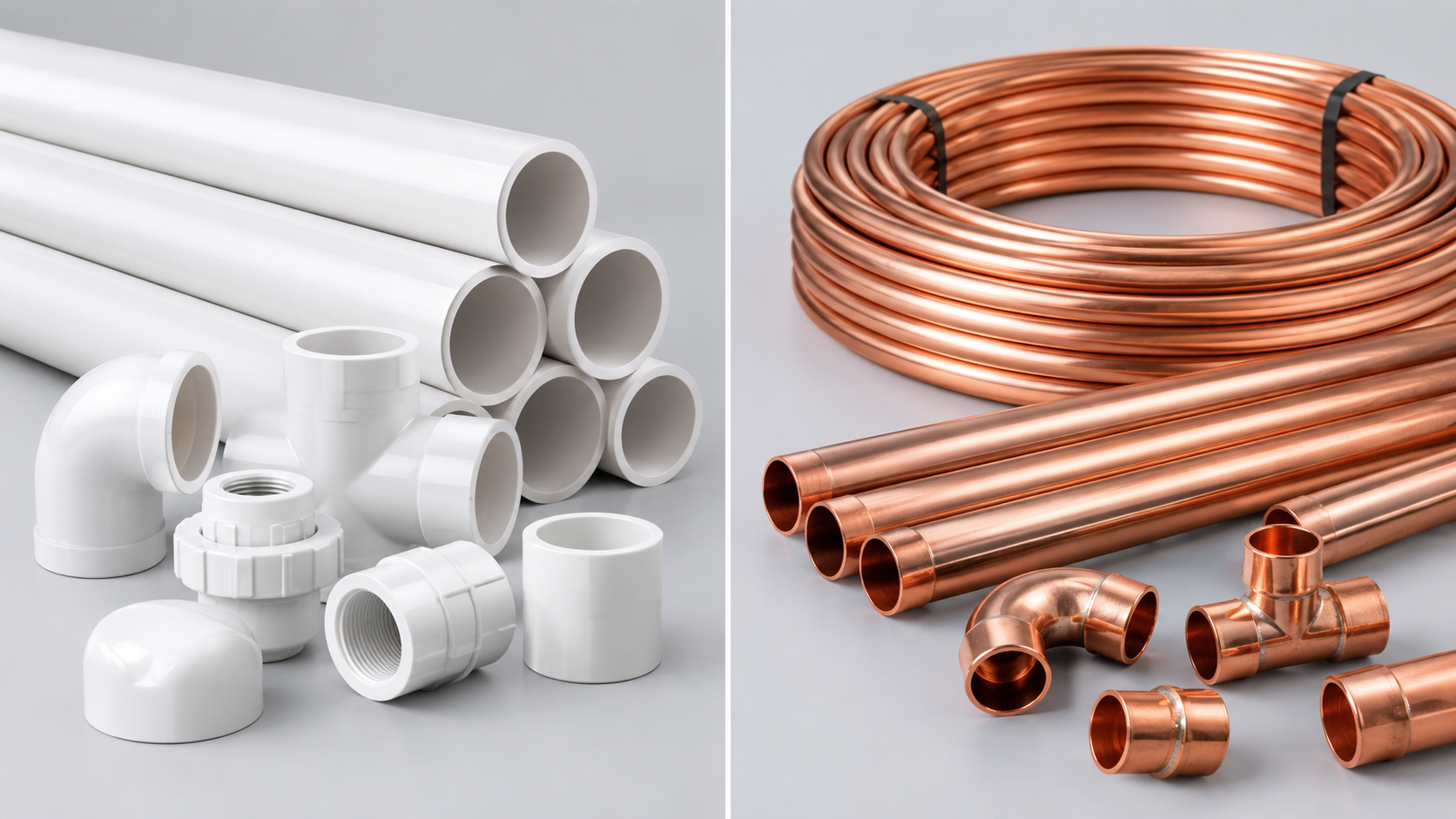
PVC (polyvinyl chloride) is a rigid plastic pipe made by extruding PVC resin into round lengths, then joining sections with solvent cement instead of heat or solder. It’s manufactured in standard schedules — Schedule 40 and Schedule 80 are the most common for pressure systems — and it never rusts, pits, or scales, because it isn’t a metal. That single property is why PVC dominates cold water supply lines, drain-waste-vent (DWV) systems, pool circulation piping, and irrigation networks across the Gulf, where groundwater and municipal supply can carry high mineral content. If you want the full breakdown of grades, pressure ratings, and where each is used, our comprehensive PVC pipe guide covers it in more depth, and the standard PVC pipe sizes chart is handy when you’re specifying a job.
One limit worth knowing upfront: standard PVC is rated for cold-to-warm water, generally up to around 140°F (60°C). Push past that and the pipe softens and loses pressure rating — which is exactly why hot water lines use a heat-tolerant cousin, CPVC, instead. More on that trade-off shortly.
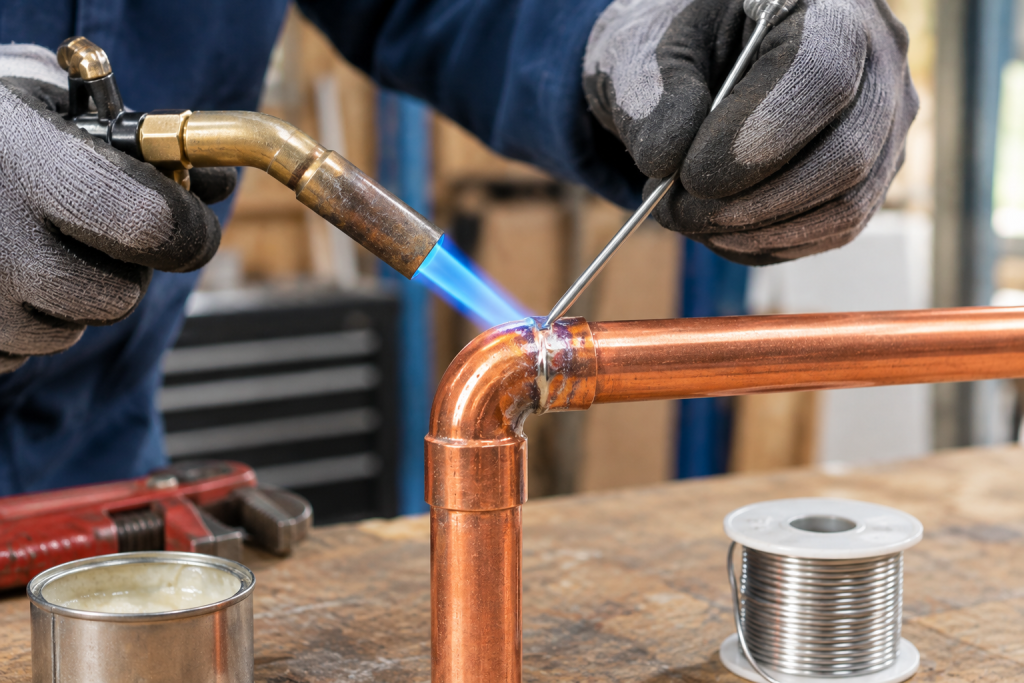
Copper pipe has been a plumbing standard since the 1950s. It comes in three wall thicknesses — Type M (thinnest, general-purpose), Type L (thicker, code standard for many water supply jobs), and Type K (thickest, used underground and for tougher applications) — and it’s joined by soldering (sweating), press-fit, or compression fittings. Copper handles hot and cold water equally well, tolerates high pressure, and its surface is naturally antimicrobial, meaning bacteria struggle to colonize it. Those are real advantages, and they’re why so much existing building stock still runs on copper.
The trade-off is that copper is a metal, and metals corrode. In water with low pH, high chlorine, or certain mineral profiles, copper pipe can develop pinhole leaks from the inside out — often with no external warning until water shows up somewhere it shouldn’t. Copper is also heavier, needs a skilled hand with a torch or press tool, and reacts galvanically if connected directly to other metals without a dielectric fitting in between. Worth noting: Dave Pools focuses on PVC, CPVC, PPR, and HDPE piping systems rather than copper, largely because these materials handle the region’s mineral-heavy water and high ambient heat with less long-term maintenance.
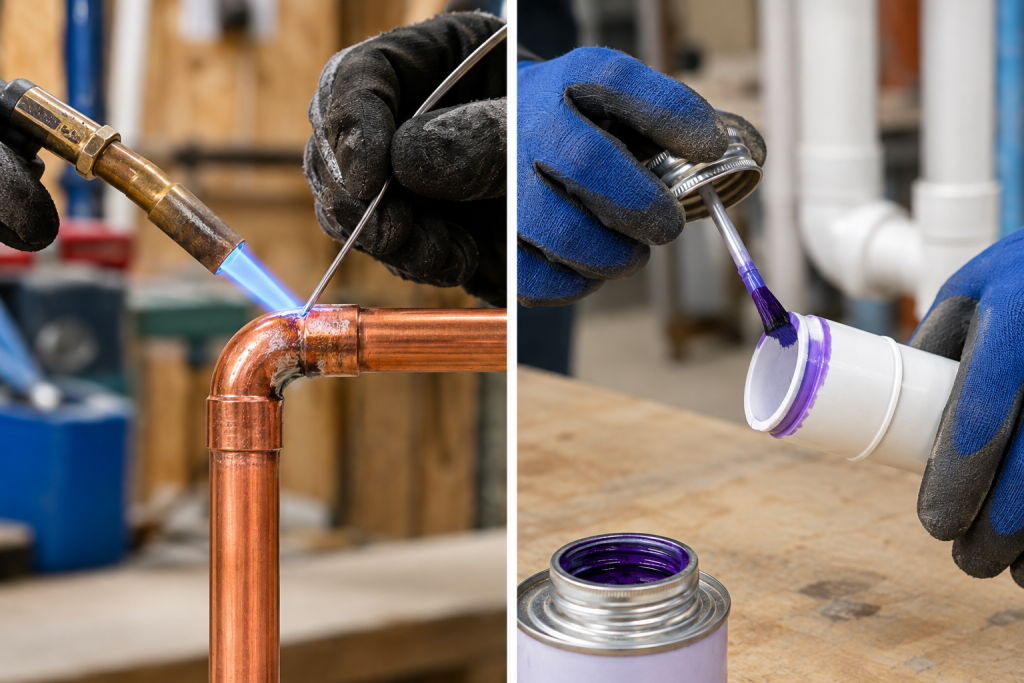
| Factor | PVC Pipe | Copper Pipe |
|---|---|---|
| Corrosion resistance | Immune — plastic doesn’t rust or pit | Vulnerable to pinhole leaks in aggressive water |
| Hot water use | Not for standard PVC (use CPVC/PPR) | Yes — handles hot and cold equally |
| Installation | Solvent-welded, no flame needed | Soldered / press-fit, needs skilled labor |
| Weight | Lightweight, easy to handle and transport | Roughly 3x heavier than comparable PVC |
| Noise / water hammer | Slightly quieter, more flexible | Can transmit more vibration and noise |
| UV exposure | Degrades with prolonged direct sunlight | Unaffected by UV |
| Typical design life | 50–100 years underground | 20–50 years, variable with water chemistry |
| Antimicrobial surface | No | Yes — naturally limits bacterial growth |
| Best-suited climate | Hot, high-mineral-content water regions | Moderate climates, neutral water chemistry |
| Ongoing maintenance | Minimal once installed correctly | Periodic inspection for pinhole corrosion |
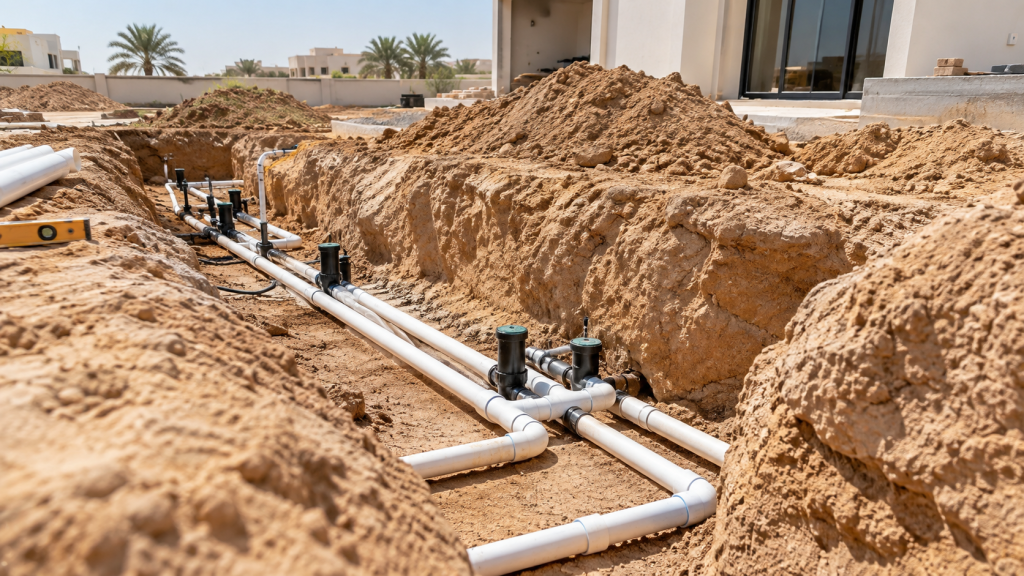
If you’re not sure which grade fits your project, Dave Pools’ team has spent 20+ years specifying PVC, CPVC, uPVC, and PPR piping systems for villas, hotels, and commercial developments across Dubai. Browse our uPVC pipes and fittings range, our CPVC pipes and fittings supply, or the full pipes and fittings catalogue. We stock trusted certified manufacturers including Hepworth and Cosmoplast for PVC and CPVC systems.
A: Yes. Potable-grade PVC pipe certified to NSF or WRAS standards is widely approved and used for drinking water supply lines worldwide.
A: Standard PVC cannot handle sustained hot water — it’s rated to roughly 140°F (60°C). For hot water lines, use CPVC or PPR pipe instead.
A: It can. Mineral scale builds up inside copper pipe in hard-water regions, gradually narrowing the bore and reducing flow — something PVC’s smooth interior avoids.
A: PVC typically outlasts copper underground since it can’t corrode. Copper’s lifespan varies widely — from 20 to 50+ years — depending on water chemistry.
A: Yes, when buried or shielded from constant direct sunlight. For exposed hot water lines, heat-rated CPVC or PPR pipe is the better fit.
There’s no universally “better” pipe — only the better pipe for the job in front of you. PVC wins on corrosion resistance, installation speed, and long-term value for cold water, drainage, irrigation, and pool lines, especially in a climate and water profile like the UAE’s. Copper still has a place, particularly on legacy hot water systems and specific antimicrobial applications, though most new hot water installations now lean on CPVC or PPR instead. Match the material to your water chemistry, temperature needs, and long-term maintenance appetite, and you’ll avoid the callback six years from now.
Dave Pools has specified PVC, CPVC, uPVC, and PPR piping systems across Dubai for 20+ years. Tell us about your project and we’ll recommend the right specification — no guesswork.
→ Get a Free Consultation