
August 2026 update · 9 min read
📋 Table of Contents
For most UAE projects, PVC pipes are the best choice for underground drainage — they resist Dubai’s salty groundwater and high soil alkalinity, cost less to install than concrete, and last 50+ years. Choose HDPE for areas with ground movement or heavy vehicle loads, and corrugated perforated pipe for French drains and villa gardens. Concrete stays the standard for large stormwater and municipal projects.
⚡ Quick Facts
Most drainage guides are written for temperate climates with steady rainfall and frost lines. None of that applies here. In Dubai and across the UAE, three local conditions decide which pipe survives and which one fails within a few years:
If you’re speccing a drainage system in the UAE, get this call wrong and you’re not looking at a small repair — you’re looking at re-excavation. Get it right, and the pipe outlasts the building’s first renovation cycle.
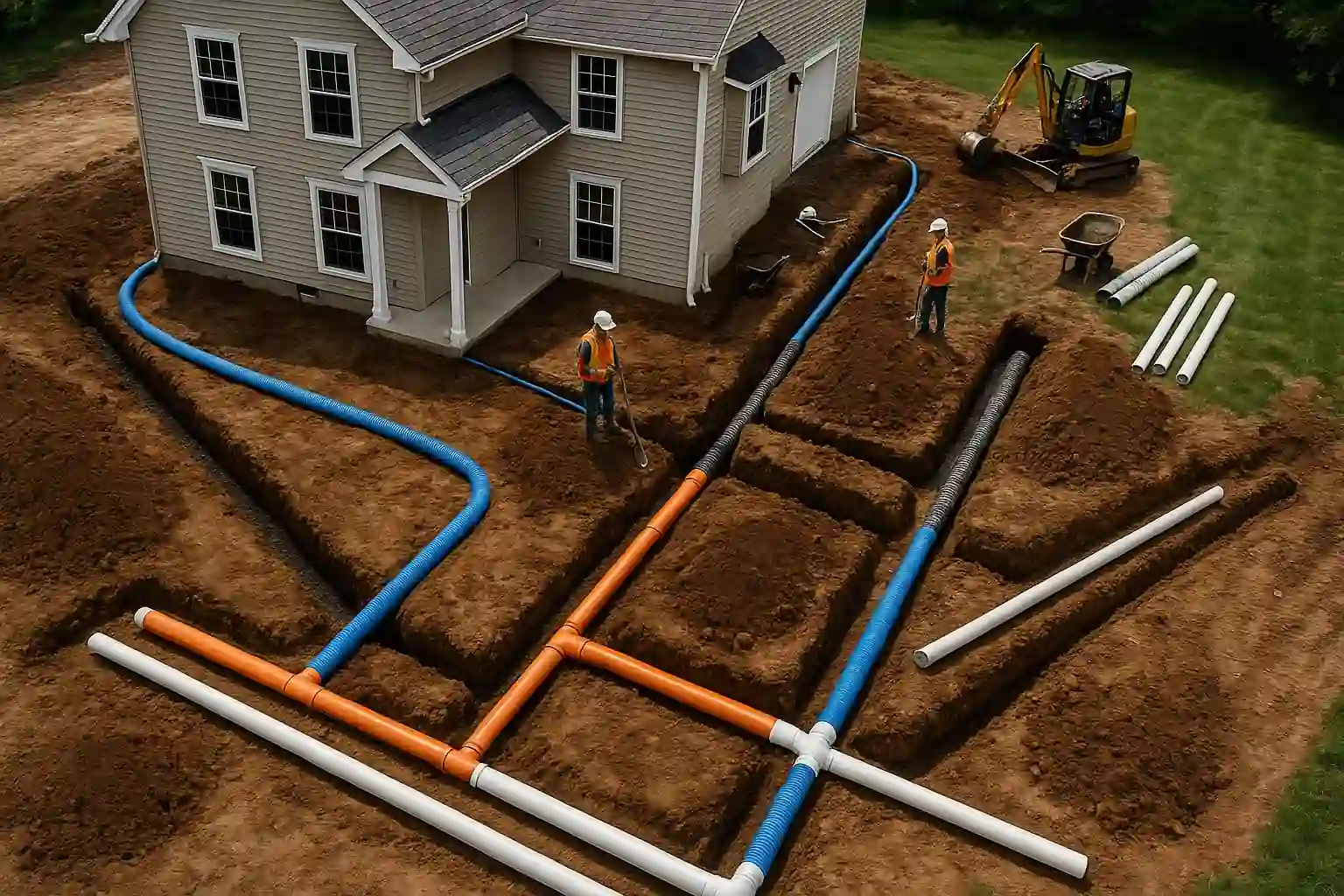
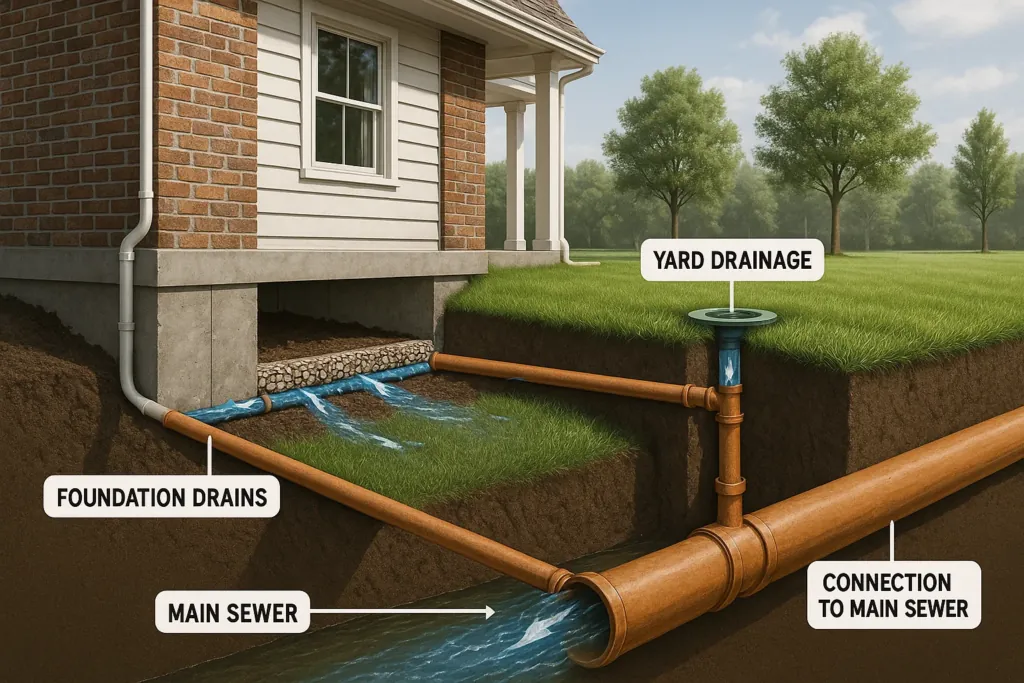
A drainage pipe moves water away from a structure or piece of land, either by collecting it from the surrounding soil (perforated pipe) or by carrying it from one point to another (solid pipe). It is not the same as a pressurised water supply pipe — drainage pipes rely on gravity and slope, not pump pressure, which is why the wrong slope or the wrong pipe stiffness causes more failures than material choice alone.
| Pipe Type | Best For | Lifespan | UAE Soil/Climate Fit | Relative Cost |
|---|---|---|---|---|
| PVC | Villa & residential yard drainage, sewer lines | 50–100 yrs | Excellent — corrosion and salt resistant | Low–Medium |
| HDPE | Roads, large developments, agricultural/landscaping | 50–75 yrs | Excellent — flexible under ground movement | Medium |
| Corrugated (perforated) | French drains, garden beds, septic leach fields | 25–50 yrs | Good — needs quality bedding to avoid crushing | Low |
| Concrete | Municipal stormwater, culverts, heavy traffic zones | 100+ yrs | Good, but heavy — needs machinery to install | High |
| Clay | Heritage/restoration projects, acidic-soil pockets | 50–200 yrs | Rare in new UAE builds — brittle, costly to source | High |
| Metal (galvanized/cast iron) | High-temperature industrial effluent, fire-rated zones | 20–50 yrs | Poor unless coated — salt air corrodes fast | Medium–High |
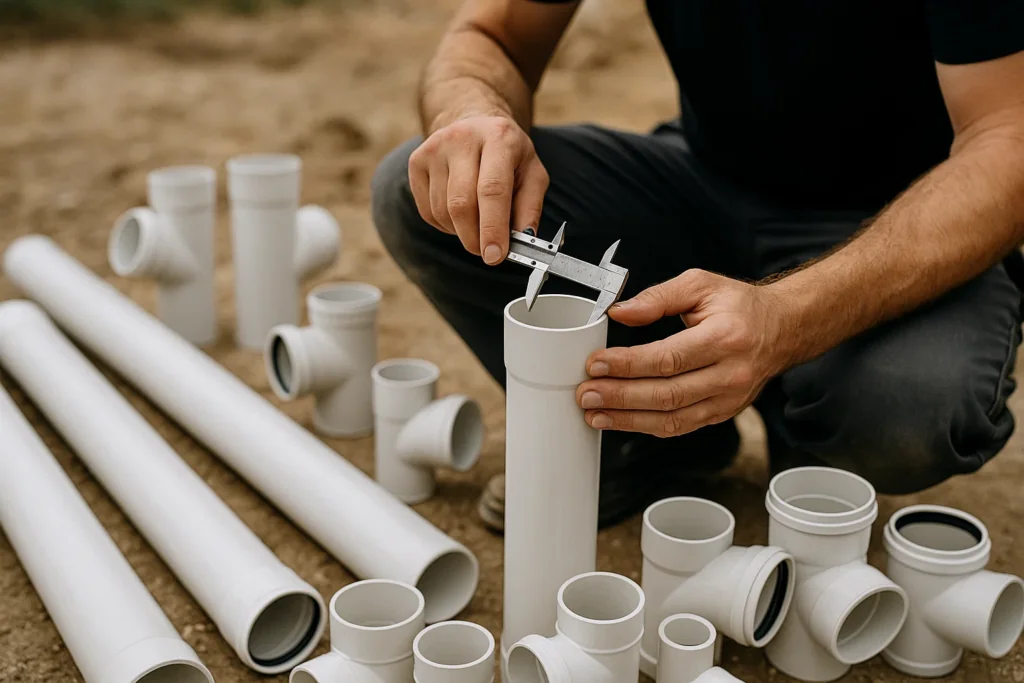
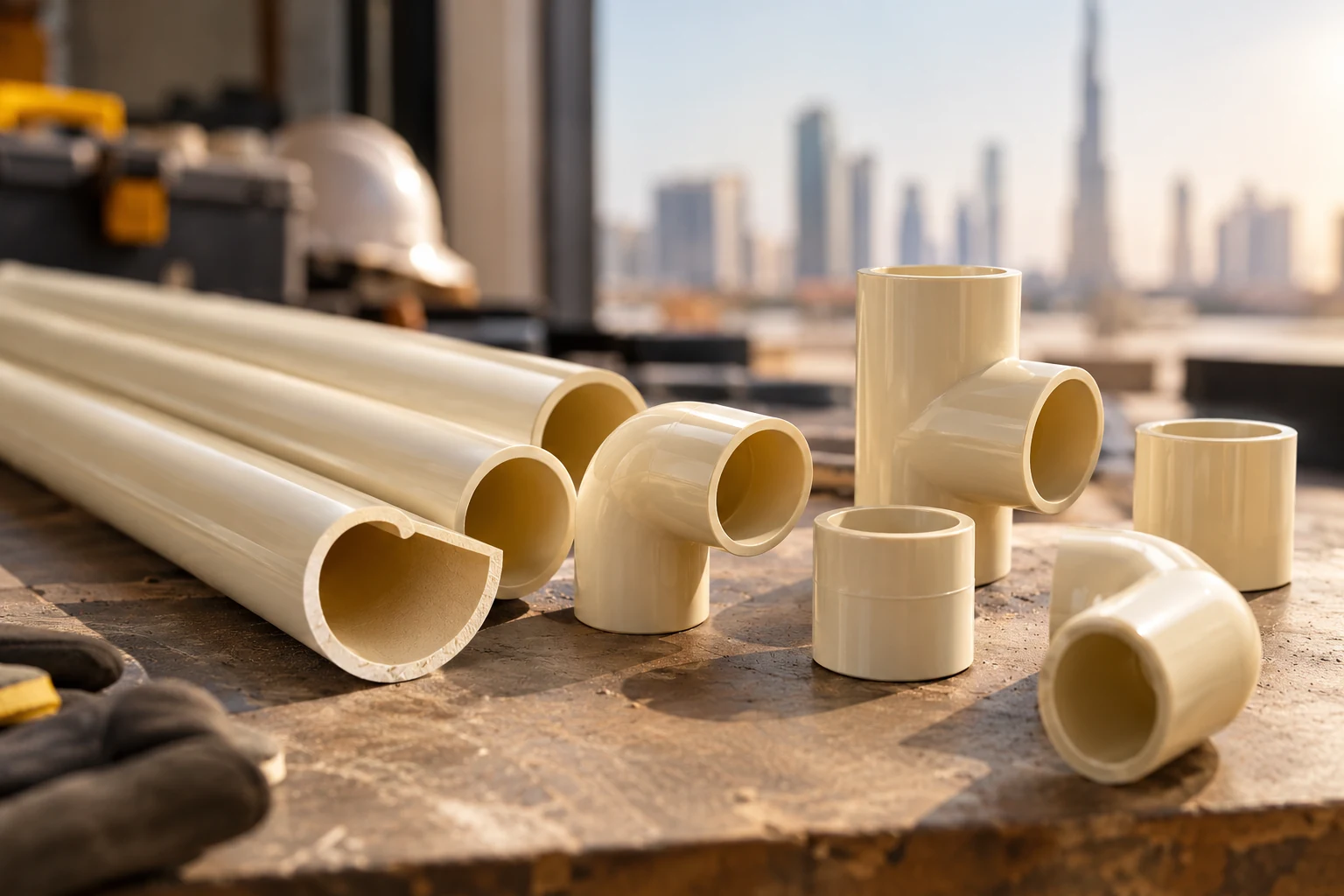
PVC is the default recommendation for most residential and light-commercial drainage in the UAE, and for good reason.
Where it’s used: residential sewer lines, yard and garden drainage, downspout extensions, foundation drainage.
Scenario: A villa in Arabian Ranches with recurring garden waterlogging after every storm was traced back to 90mm agricultural pipe undersized for the roof catchment area. Re-laying with 160mm PVC solid pipe at the correct 1.5% slope solved it in one visit — no re-excavation of the whole garden needed.
Before connecting any run, it’s worth learning how to check PVC pipe quality — a lot of failures trace back to substandard pipe, not bad design. If the system carries pressurised sections too, see our guide on PVC high-pressure valves and our full comprehensive guide to PVC pipes for a complete picture of the material’s capabilities. For sourcing, Dave Pools is a stocked drainage pipes supplier in Dubai.
HDPE earns its place wherever ground movement, heavy loads, or very large flow volumes are involved.
Why it works here: heat-fused joints (no glue, no weak points), flexes instead of cracking under compaction or vehicle load, and performs consistently across both summer heat and cooler winter nights.
Where it’s used: highway and road drainage, large-scale stormwater management, mining and landfill leachate collection, agricultural drainage.
For big commercial jobs, HDPE large-diameter pipe is the standard spec — and every batch should go through proper HDPE pipe testing before it goes in the ground. If a buried HDPE line ever springs a leak, our guide on how to fix a leak in HDPE pipes covers the correct repair method. For the full range, Dave Pools supplies HDPE pipes and fittings across Dubai and the UAE and can advise on sizes and pressure classes for any drainage application. To understand what makes HDPE the material of choice for heavy-duty applications, see our complete HDPE pipe guide.
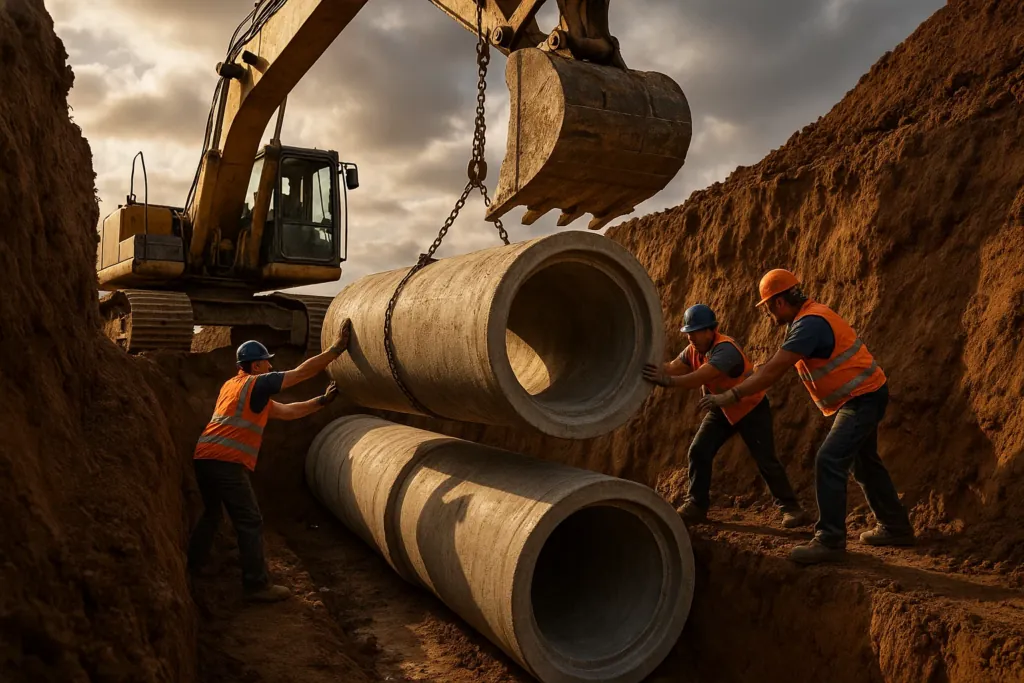
Concrete is the go-to when load-bearing capacity outweighs everything else — think culverts under a road, or municipal storm sewers carrying serious flow.
Trade-off to know: installation needs heavy machinery, which raises cost and project time. If you’re not dealing with vehicle loads or municipal-scale flow, this is usually overspecified for the job.
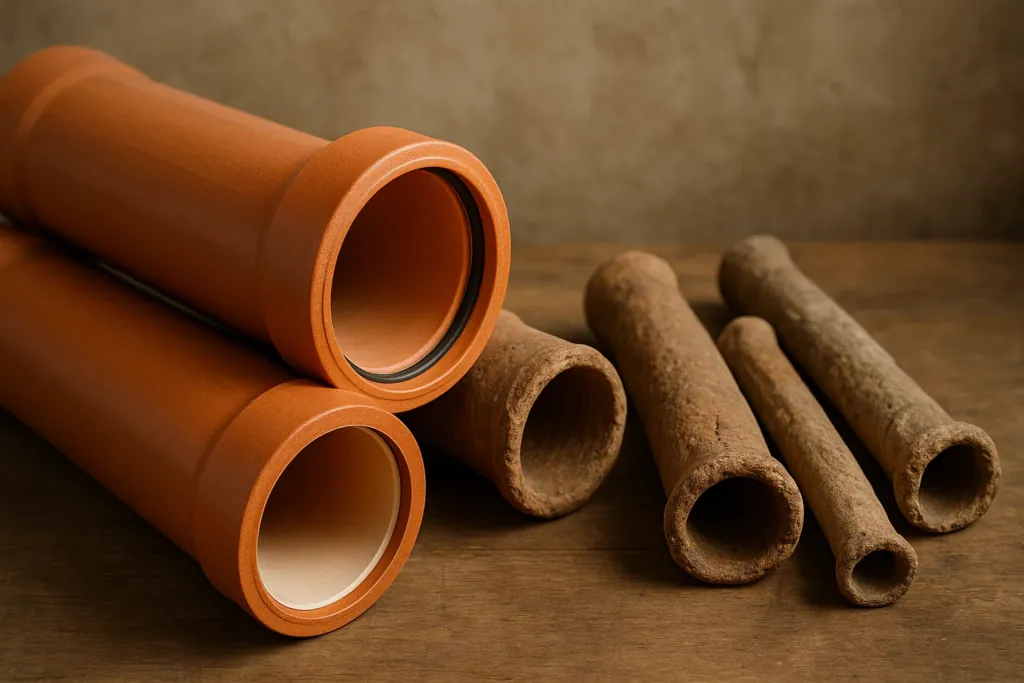
Rare in new UAE construction — brittle, harder to source locally, and priced higher than PVC or HDPE for equivalent performance. Still relevant for heritage restoration projects or where authenticity matters more than cost.
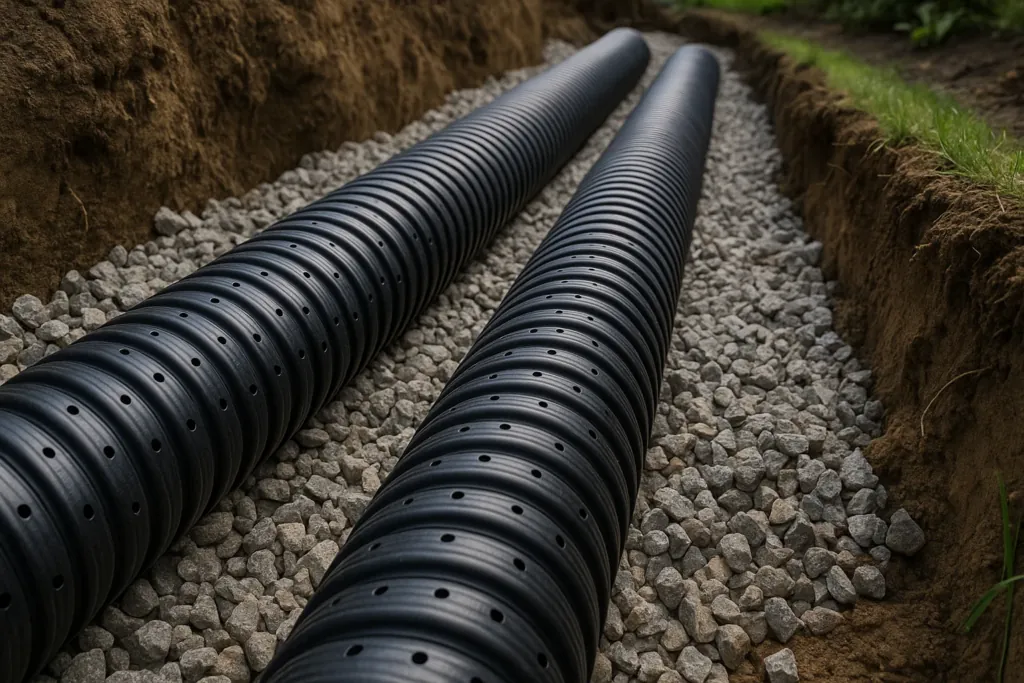
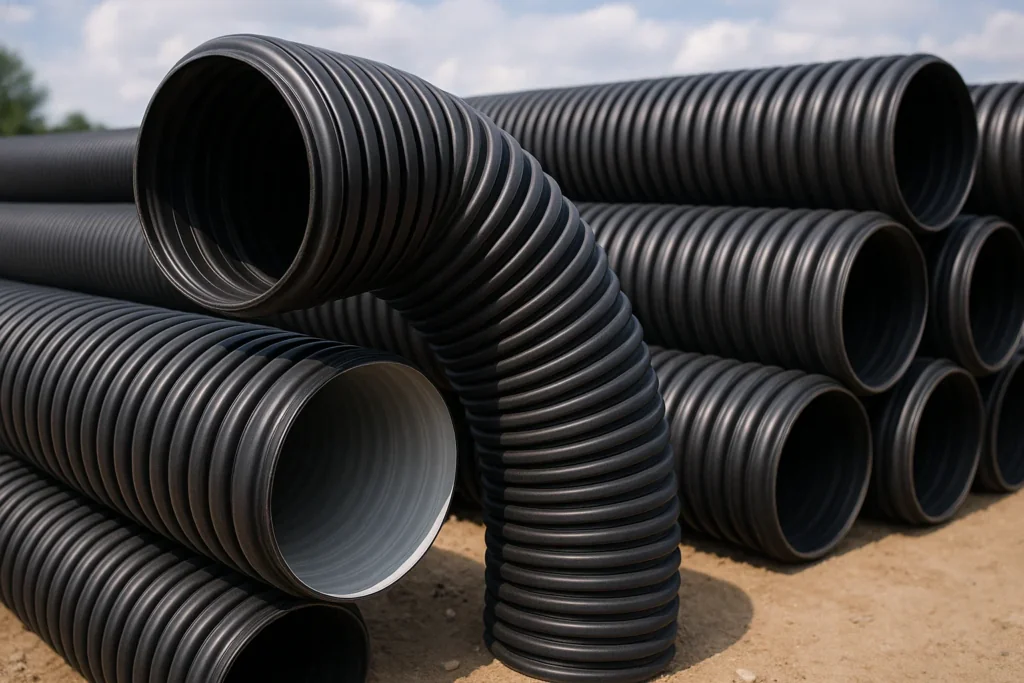
The workhorse of French drains and garden drainage. The ribbed exterior gives it crush resistance despite being lightweight, and perforated versions collect water from surrounding soil rather than just transporting it.
Where it’s used: French drains, agricultural field drainage, residential yard drainage, driveway culverts, septic leach fields.
If a corrugated run develops a soft spot or a sudden dry patch appears where the ground used to drain, that’s usually a sign of damage below ground — here’s how to find a broken pipe underground before it turns into a bigger dig. For corrugated runs that have become blocked, our guide on how to clear a blocked drainage pipe walks through the right approach step by step.
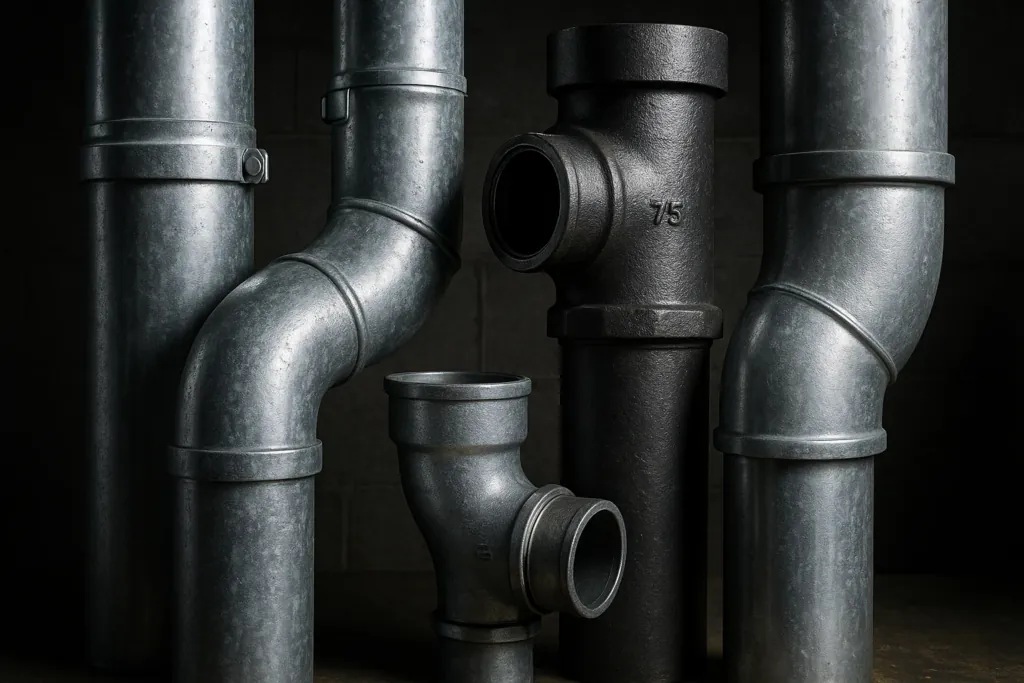
Galvanized steel, aluminum, or cast iron — used almost exclusively where heat resistance or fire rating is a hard requirement, such as industrial effluent lines. In the UAE’s coastal, high-salinity air, uncoated metal corrodes faster than inland regions, so it’s rarely the first choice unless the application demands it. In most comparable cases, PVC valves outperform metal valves on corrosion resistance and upkeep.
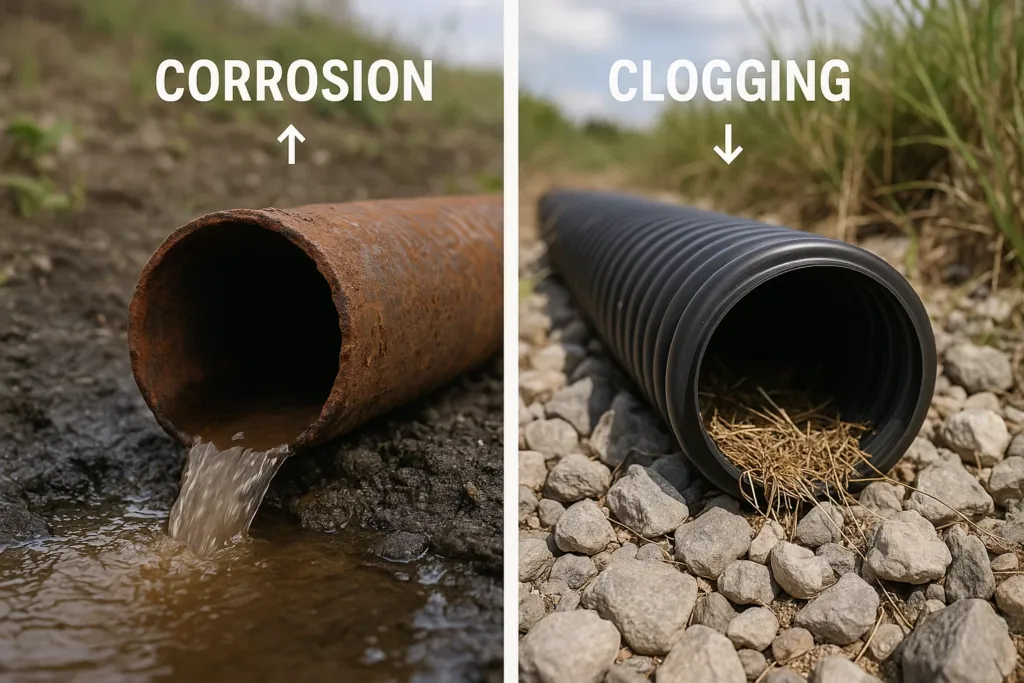
Drainage and irrigation planning often go hand in hand on the same site — if you’re speccing both, our irrigation systems and equipment range covers the supply side. And if you need to compare pipe materials in more depth before choosing, our guide on PPR vs PVC vs HDPE pipes walks through each material’s strengths and limitations across real project scenarios.
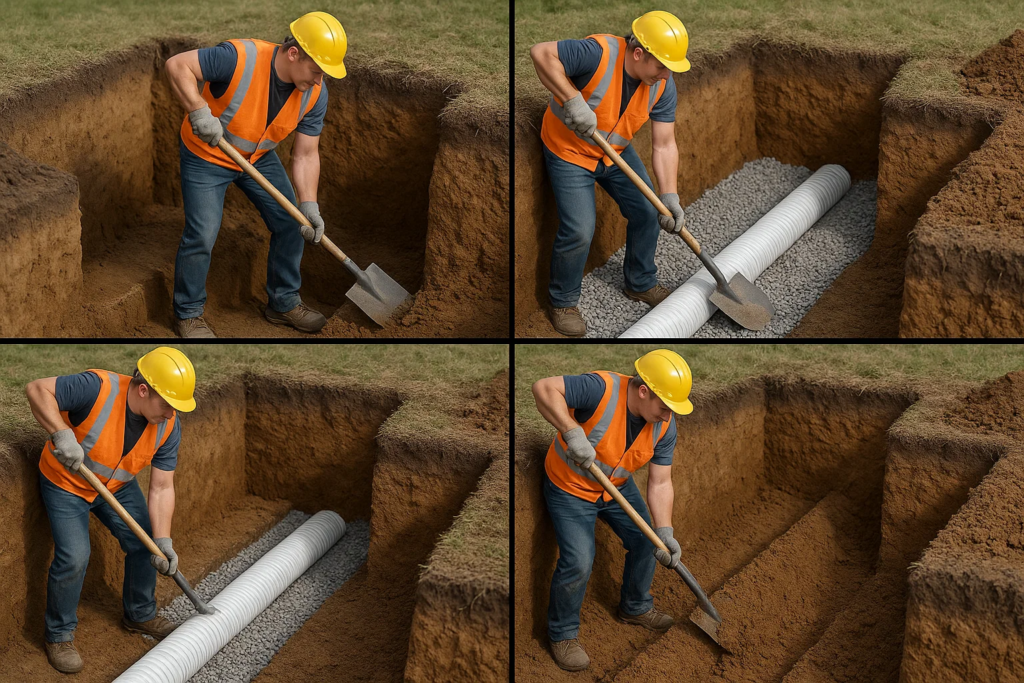
Installation: correct trench depth and slope, clean bedding material (no sharp debris against the pipe wall), manufacturer-specified joining method, and careful layered backfill — rushing backfill compaction is one of the most common causes of early pipe failure on UAE sites. For PVC joints specifically, our guide on how to glue PVC pipe covers the correct solvent-welding technique step by step. If you need to install pipe underground on a new project, read our detailed walkthrough on how to install PVC pipes underground for UAE soil and depth requirements.
Maintenance: inspect after major storms, clear inlets and catch basins of sand and debris (a bigger issue here than in most climates), and schedule a professional camera inspection every 3–5 years on main lines. Minor damage is far cheaper to fix early — see how to patch PVC pipe for small repairs before they become full re-lays. If noisy pipes are developing after installation, our guide on how to soundproof noisy pipes addresses the most common causes in UAE building drainage systems.
PVC is the best all-round choice for residential and light-commercial drainage — it resists the UAE’s saline soil, costs less to install than concrete, and lasts 50–100 years. For heavy vehicle loads or large-scale stormwater, HDPE or concrete is the better fit. Dave Pools supplies both as a trusted drainage pipes supplier in Dubai.
PVC lasts 50–100 years, HDPE 50–75 years, concrete 100+ years, clay 50–200+ years, and metal pipes 20–50 years depending on corrosion protection. In coastal, high-salinity soil, unprotected metal falls to the low end of that range fastest.
Most residential yard drainage uses 4-inch pipe; driveway culverts typically need 6-inch. Larger roof catchment areas or properties with heavy runoff may require 8-inch or larger — sizing should always account for peak storm flow, not average rainfall. For standard PVC sizes available in the UAE, our reference on standard PVC pipe sizes is a useful starting point.
Yes. A 1–2% slope (roughly 2–4mm drop per metre) keeps water moving without excessive velocity. Too flat causes standing water and blockages; too steep causes erosion and joint separation.
Without a frost line to worry about, UAE burial depth is driven by surface load: 300–450mm is typical for yard drainage, while pipes under driveways or parking should sit deeper, per local load-bearing and Dubai Municipality requirements.
Yes — using transition fittings designed specifically for the outside diameters and materials involved. Improvised connections between dissimilar pipes are one of the most common causes of underground leaks, so always use a rated coupling. Understanding how to measure pipe size correctly before ordering any transition fitting saves costly re-orders on site.
Watch for water backing up in fixtures, slow drainage after rain, gurgling sounds, pooling in areas that used to drain fine, and unexplained wet patches in the yard. Sand ingress is a common cause of blockages in UAE systems specifically. See our step-by-step guide on how to clear a blocked drainage pipe for the correct approach.
Perforated pipe is for collecting water from surrounding soil, as in French drains — solid pipe is for carrying water from one point to another. Most systems use both: perforated near the source, solid downstream to the discharge point.
There isn’t one universal “best” drainage pipe — there’s the right pipe for your load, soil, and budget. For most UAE villas and light-commercial sites, that means PVC for residential runs, HDPE for anything under vehicle traffic or exposed to ground movement, and corrugated perforated pipe for French drains and garden beds. Get the sizing and slope right, and the material choice does the rest for the next 50 years.
Not sure which pipe fits your project? Talk to Dave Pools’ drainage team — we’ll size and spec the system based on your site, not a generic table.
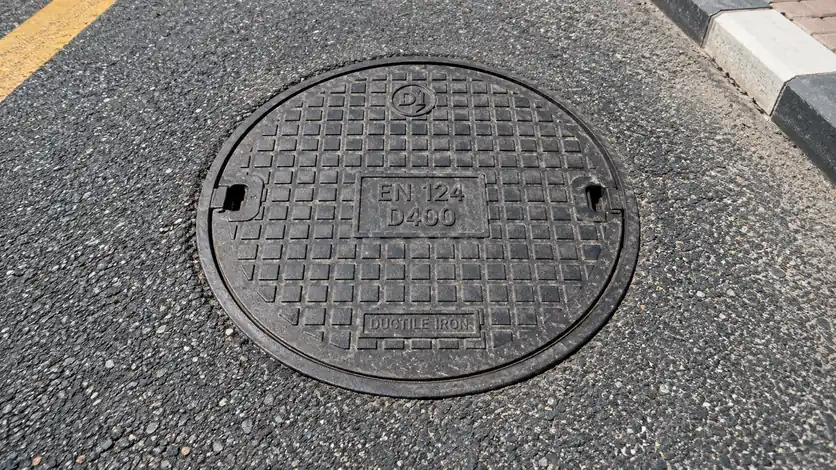
Explore our full range: drainage pipes in Dubai · HDPE pipes & fittings · UPVC pipes & fittings · manhole covers · complete water management solutions · pipes and fittings supplier in Dubai
Need Drainage Pipes for Your UAE Project?
Dave Pools supplies PVC, HDPE, corrugated, UPVC, and perforated drainage pipes across Dubai and the UAE — certified products, stocked locally in Al Quoz, delivered to your site.
→ Browse Drainage Pipes Supply in Dubai
→ Explore the Full Products Range
→ Contact Dave Pools — Get a Quote
📞 +971 04 393 4806 | +971 54 308 1083 | 📧 sales@davepools.com
Al Quoz Industrial Area 1, Street 5, Al Tayer Warehouse #18, Dubai, UAE