
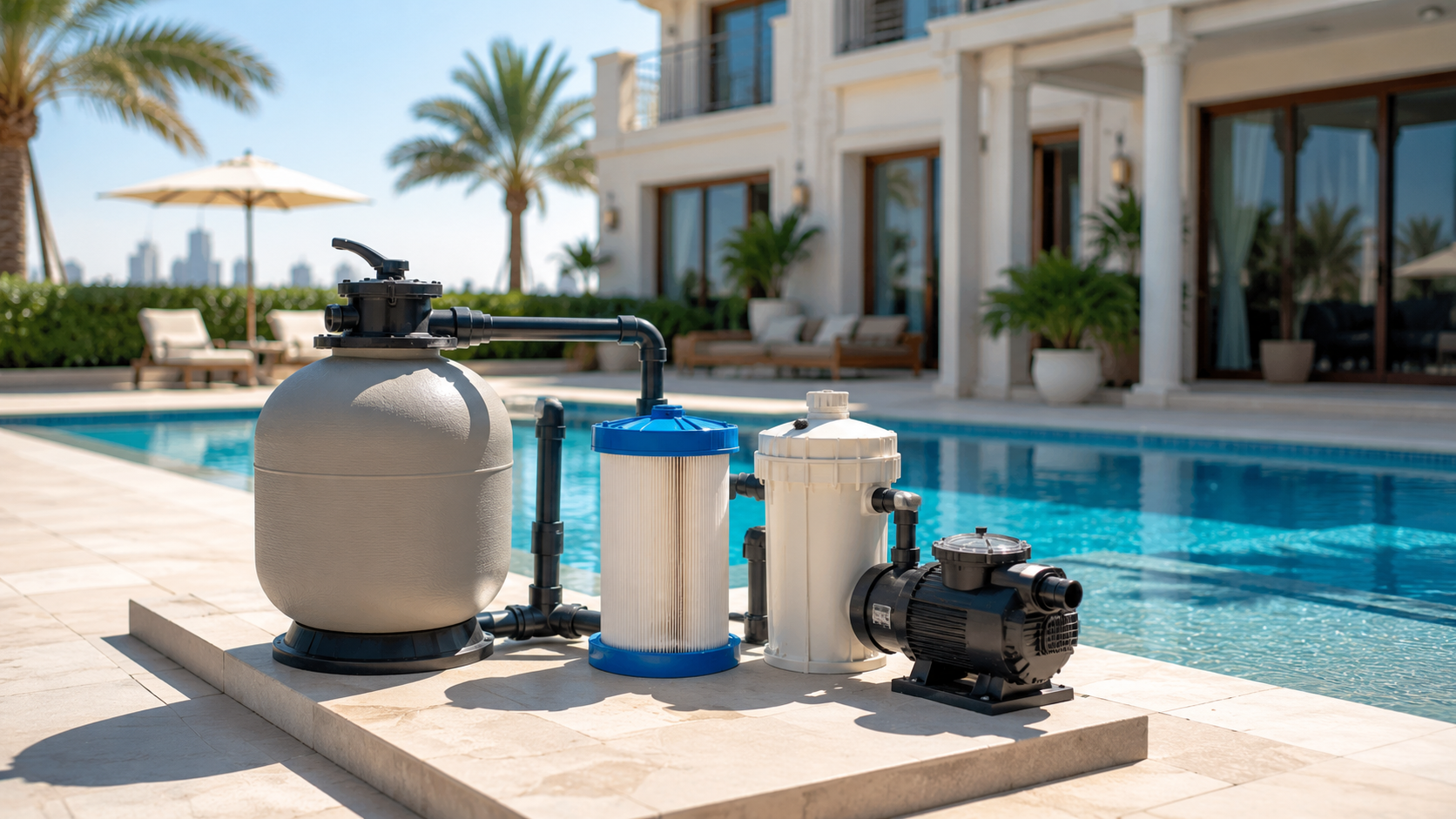
You shock the water. You run the pump on schedule. You skim the leaves every morning. And yet, by Thursday, the pool looks hazy again. If this sounds familiar, the filter is usually the real problem, not your maintenance routine.
Dubai pool owners deal with a tougher environment than most: fine desert dust, high bather loads in summer, and water temperatures that push equipment harder than cooler climates. The wrong filter type — or the right type sized wrong — simply can’t keep up, no matter how often you clean it.
This guide breaks down the types of swimming pool filters available today — sand, cartridge, and DE — so you know exactly which one fits your pool, your budget, and how much time you actually want to spend on maintenance. We’ll also cover sizing mistakes, real running costs, and when it’s time to call in a professional rather than guess.
If you’re already comparing brands, you may also want our side-by-side breakdown of AstralPool vs Emaux pool equipment once you’ve decided which filter type suits your setup.
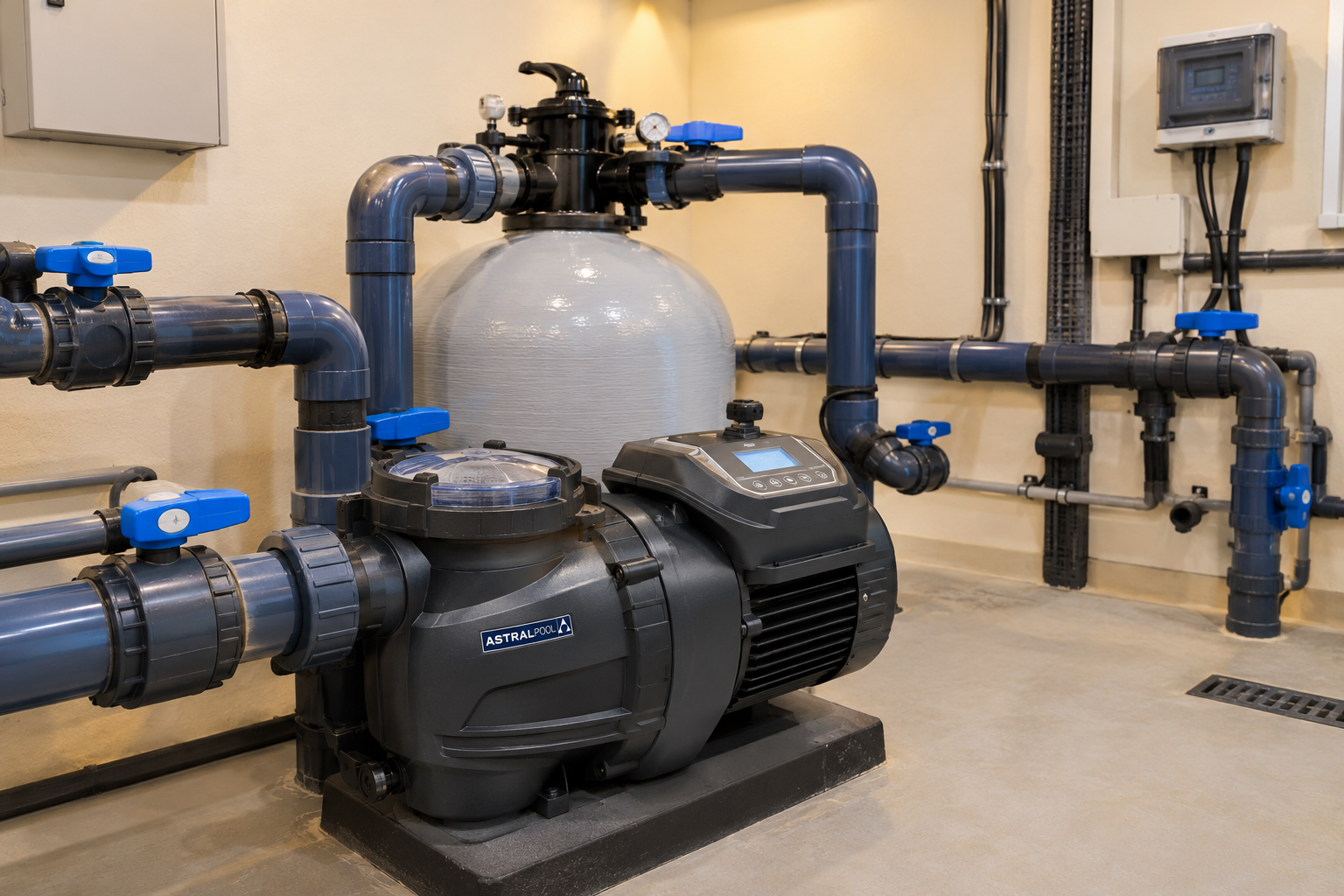
A swimming pool filter is the piece of equipment that physically removes dirt, debris, oils, and microscopic particles from your pool water as it circulates through the system. It works alongside your pool circulation pipes and pump setup, pulling water in, trapping contaminants, and returning clean water to the pool.
Without a properly functioning filter, chlorine and chemical balance alone can’t keep water clear. Chemicals manage bacteria and algae growth; the filter handles everything else — sunscreen residue, dust, pollen, skin oils, and fine sediment that chemicals can’t dissolve.
A filter that’s undersized, clogged, or the wrong type for your pool usage will show up as:
If you’re seeing any of these signs consistently, read our guide on how to maintain crystal clear pool water for a full diagnostic checklist before assuming the filter itself needs replacing.
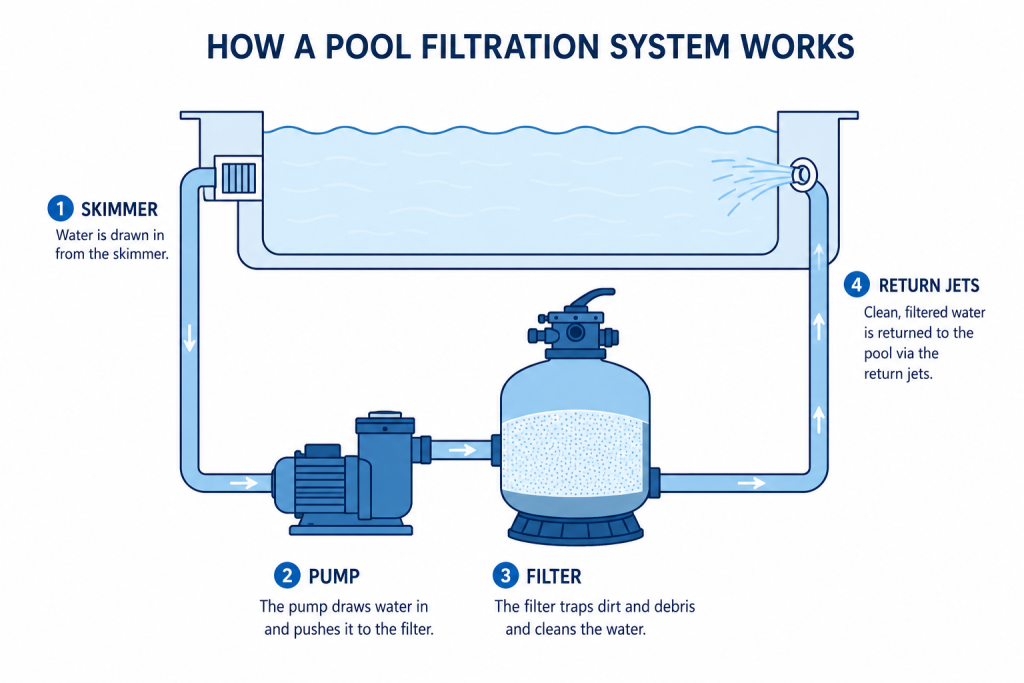
The pump draws water from the pool through the skimmer and main drain, pushing it toward the filter housing under pressure.
Inside the filter, water passes through a filtering medium — sand, a pleated cartridge, or DE-coated grids — that physically traps particles as water flows through.
Filtered water is pushed back into the pool through the return jets, completing one full cycle. A typical residential pool needs its entire water volume to pass through the filter at least once every 6–8 hours.
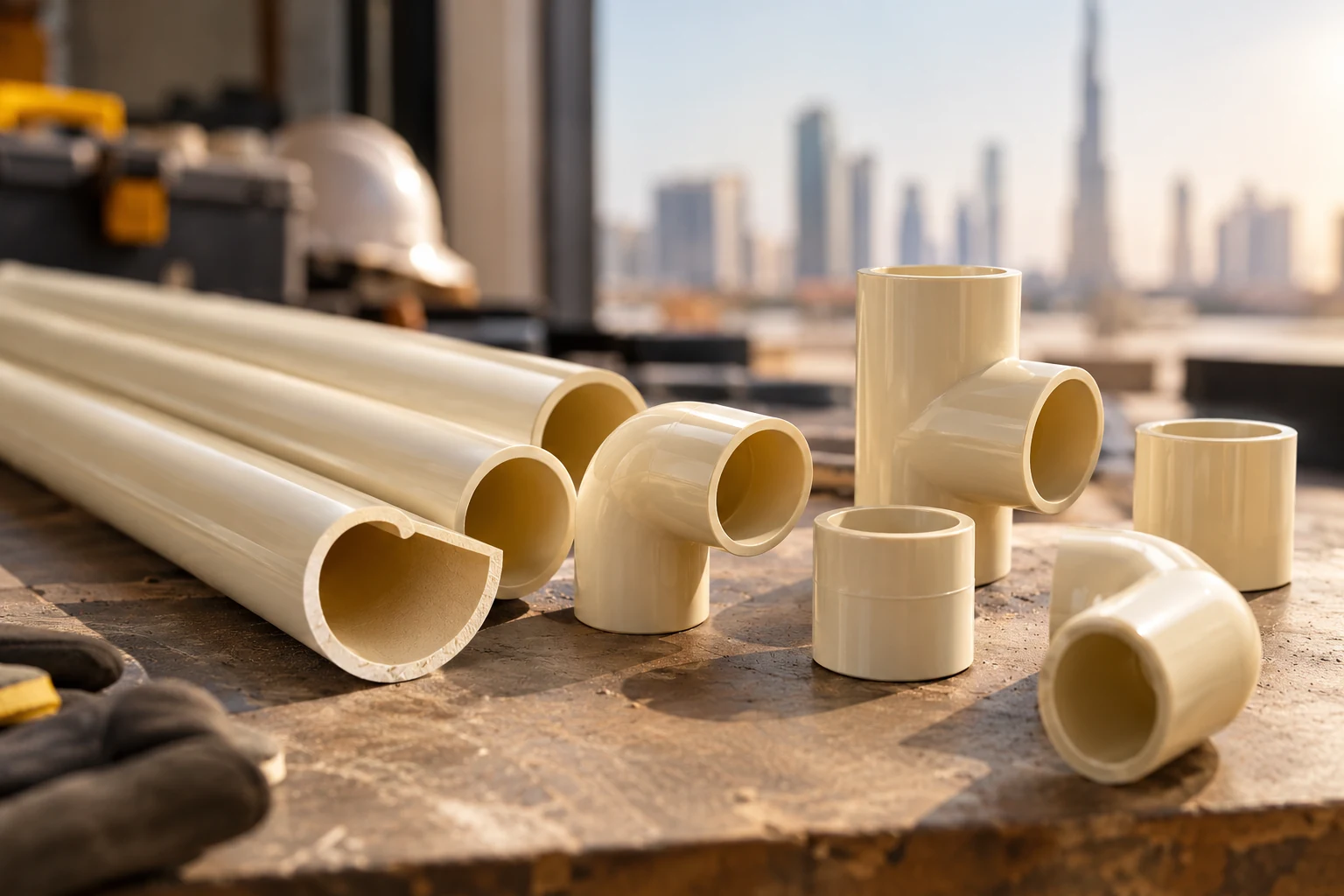
This cycle depends heavily on correctly sized PVC pipes and fittings and the right valve configuration — an undersized pipe run restricts flow regardless of how good the filter itself is. If you’re unsure whether your plumbing is holding back performance, our comparison of PVC ball valves vs gate valves is a useful next read.
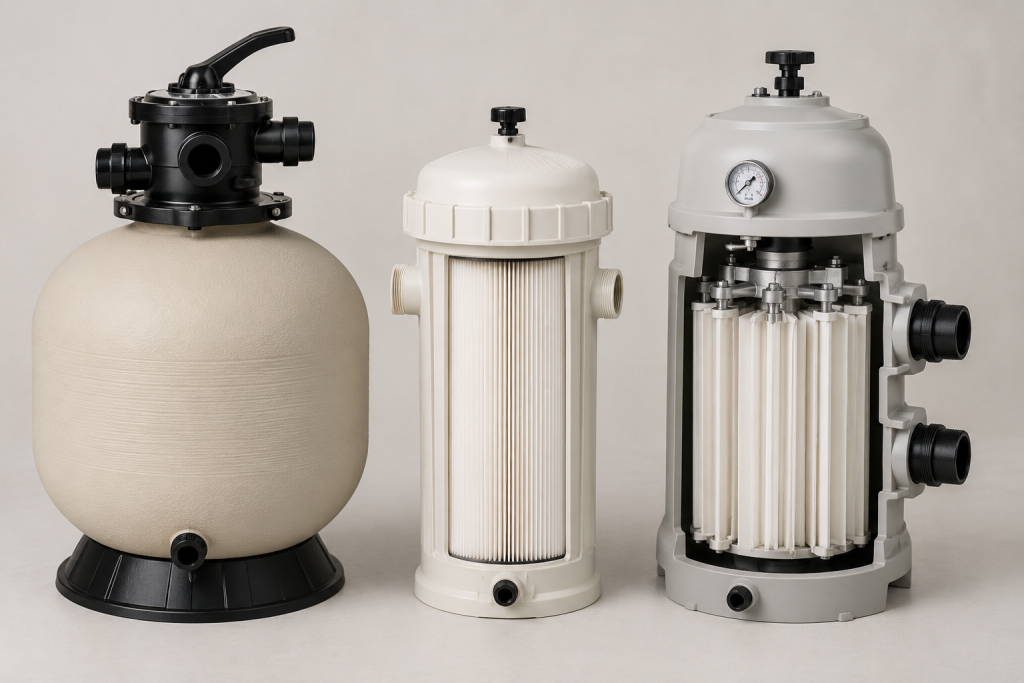
Each filter type uses a different medium to trap debris. Here’s how they compare in practice, not just on paper.
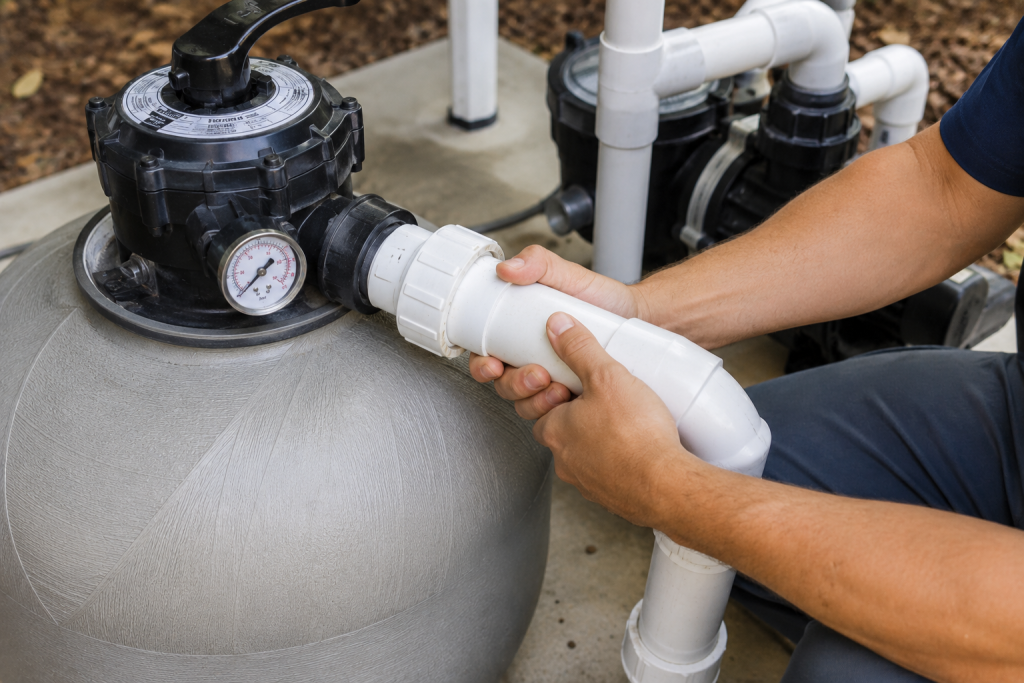
Sand filters use a bed of specially graded silica sand inside a pressure tank. Water flows down through the sand, and particles get trapped between the grains.
Cartridge filters use a pleated polyester element that physically traps debris on its surface. No backwashing is required — you simply remove the cartridge and hose it down.
If you already run a cartridge system, our step-by-step guide to cleaning a pool cartridge filter walks through the correct rinse technique and how to spot a cartridge that needs replacing rather than just cleaning.
DE filters use grids coated with diatomaceous earth powder — a naturally occurring, fossilized sediment. This setup produces the clearest water of the three filter types.
Commercial properties using DE systems should also check our complete commercial pool maintenance checklist to keep filtration, chemical balance, and equipment servicing on one schedule.
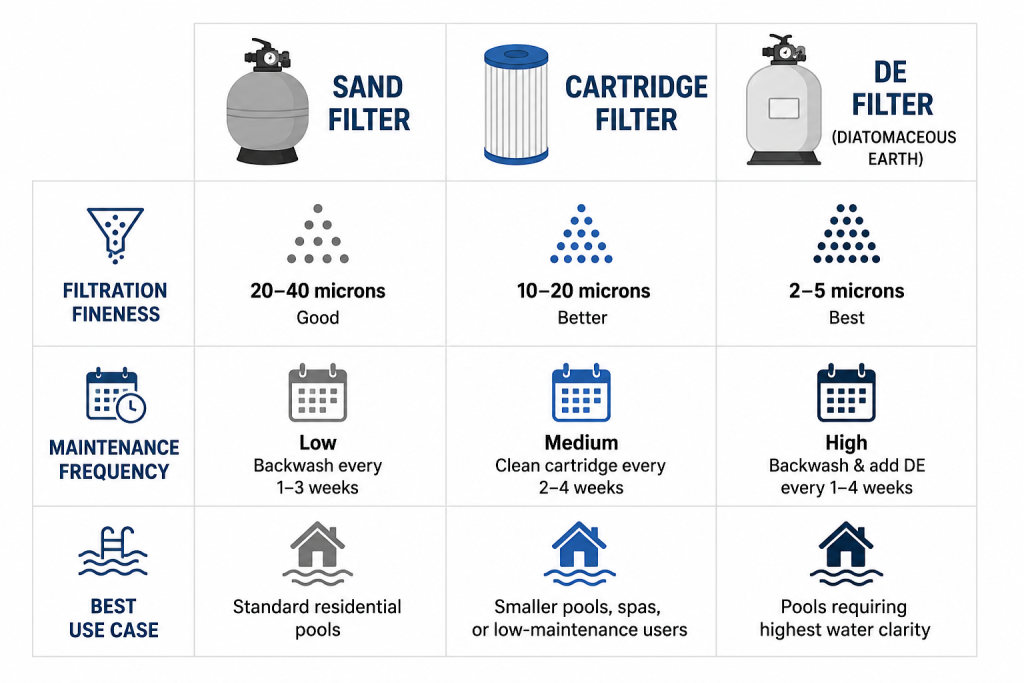
| Feature | Sand Filter | Cartridge Filter | DE Filter |
|---|---|---|---|
| Filtration fineness | 20–40 microns | 10–15 microns | 2–5 microns |
| Maintenance frequency | Backwash monthly | Rinse every 2–4 weeks | Backwash + DE recharge |
| Water usage | Moderate (backwash) | Low (no backwash) | Moderate–high |
| Lifespan of medium | 5–7 years | 1–2 years (cartridge) | Grids: 5–10 years |
| Best suited for | Villas, family pools | Small–medium pools | Commercial, competition pools |
| Hands-on effort | Low | Medium | High |
1. Clearer, Healthier Water
2. Lower Running Costs Over Time
3. Longer Equipment Life
For a broader look at how filters fit into your overall setup — pumps, heaters, chlorinators, and valves — see our overview of types of swimming pool equipment.
Brand quality matters as much as filter type. In the UAE, two brands dominate residential and commercial pool filtration: AstralPool and Emaux (Emac). Both manufacture sand, cartridge, and DE filtration systems, but they differ in build materials, pricing tier, and where they perform best.
We’ve covered this comparison in detail in our dedicated guide: AstralPool vs Emaux — Which Pool Filter Brand Is Better? If you’re choosing between the two for a villa or commercial project, that breakdown will save you time.
Other reputable brands stocked through verified UAE suppliers include Cepex, Cosmoplast, and MPI Atlas for valves, fittings, and filtration accessories that pair with most filter systems.
Multiply length x width x average depth x 7.48 (for gallons) to get your approximate pool volume. This determines the minimum flow rate your filter needs to handle.
Your filter and pump combination should turn over the full pool volume every 6–8 hours. Undersized filters force pumps to overwork; oversized filters waste energy and money.
Dubai’s dust levels and high outdoor temperatures mean filters here clog faster than in milder climates. If you’re near construction zones or open desert, lean toward sand or DE over cartridge.
If you’re upgrading an older system, confirm your existing pipe sizes and fittings are compatible with the new filter’s inlet and outlet connections before purchasing.
1. Buying a filter based on pool size alone, ignoring bather load. Why it’s bad: A pool used daily by a family of 6 needs more filtration capacity than the same size pool used occasionally. Fix: Size up one tier if your pool sees heavy daily use.
2. Skipping regular backwashing or cartridge rinsing. Why it’s bad: A clogged filter restricts flow, straining the pump and reducing water clarity. Fix: Set a recurring reminder based on pressure gauge readings, not just the calendar.
3. Mixing incompatible valve or pipe materials during installation. Why it’s bad: This causes leaks and pressure loss at connection points. Fix: Stick to one verified pipe and fitting standard — see our PVC pipe quality checklist before installation.
4. Ignoring the pressure gauge entirely. Why it’s bad: Pressure readings are the earliest warning sign of a clogging filter, long before water visibly clouds. Fix: Check weekly and clean once pressure rises 8–10 PSI above the clean baseline.
5. DIY installation without proper equipment knowledge. Why it’s bad: Incorrect installation voids warranties and risks leaks at the plumbing connections. Fix: Follow a verified process — see our guide on how to install pool equipment or use a professional installer.
Filtration equipment is only as reliable as the supplier behind it. Dave Pools has supplied pool, irrigation, and piping equipment across the UAE for years, working directly with verified brands rather than grey-market imports. You can read more about our approach on why Dave Pools is the best supplier in Dubai.
Every filter we supply is backed by the right piping and fittings to match, so you’re not left improvising connections on installation day. Browse our full swimming pool equipment range or check our product catalogue for everything from filters to chlorination systems.
If your pool also needs a chlorination upgrade alongside the new filter, our guide to salt chlorination systems is worth reading before you finalize your equipment list.
A: Sand filters are usually best for villa pools in Dubai. They handle desert dust well, need minimal hands-on maintenance, and are cost-effective for moderate bather loads.
A: Sand filters need backwashing every 4–6 weeks, cartridge filters need rinsing every 2–4 weeks, and DE filters need backwashing plus a powder recharge on a similar schedule.
A: Yes, but you’ll need to check pump flow rate compatibility and may need to adjust plumbing connections. A professional assessment avoids costly mismatches.
A: Yes. Spent DE powder should never be backwashed into regular drains in large quantities, as it can clog pipes. Many municipalities have specific disposal guidance.
A: Signs include cloudy water despite regular cleaning, the pump running longer than usual, and pressure gauge readings climbing quickly after cleaning. A sizing check resolves this fast.
There’s no single “best” pool filter — only the best filter for your specific pool, bather load, and how much maintenance time you’re willing to put in.
Sand filters suit most villa owners who want simplicity. Cartridge filters suit water-conscious owners with smaller pools. DE filters suit commercial properties or anyone chasing the clearest water possible. Once you’ve matched filter type to your situation, the next decision is brand — and our AstralPool vs Emaux comparison is the natural next read.
Not sure which filter fits your pool? Contact our team for a sizing recommendation based on your exact pool dimensions and usage.
Dave Pools supplies and supports sand, cartridge, and DE filtration systems from trusted brands across the UAE, alongside the pipes, valves, and fittings to install them correctly the first time. Explore our swimming pool equipment range or get in touch with our team for a filter recommendation tailored to your pool.