![RAKtherm vs Cosmoplast PPR Pipes: Which Is Better for Dubai Projects? [2026]](https://davepools.com/wp-content/uploads/2026/07/a_clean_studio_advertising_product_image_overall.webp "RAKtherm vs Cosmoplast PPR Pipes: Which Is Better for Dubai Projects? [2026] 4")


You installed new pipes. Six months later, one of them starts softening near the boiler connection. Water pressure drops. A small drip turns into a flood.
This isn’t fiction — it’s what happens when you use the wrong pipe for a hot water line.
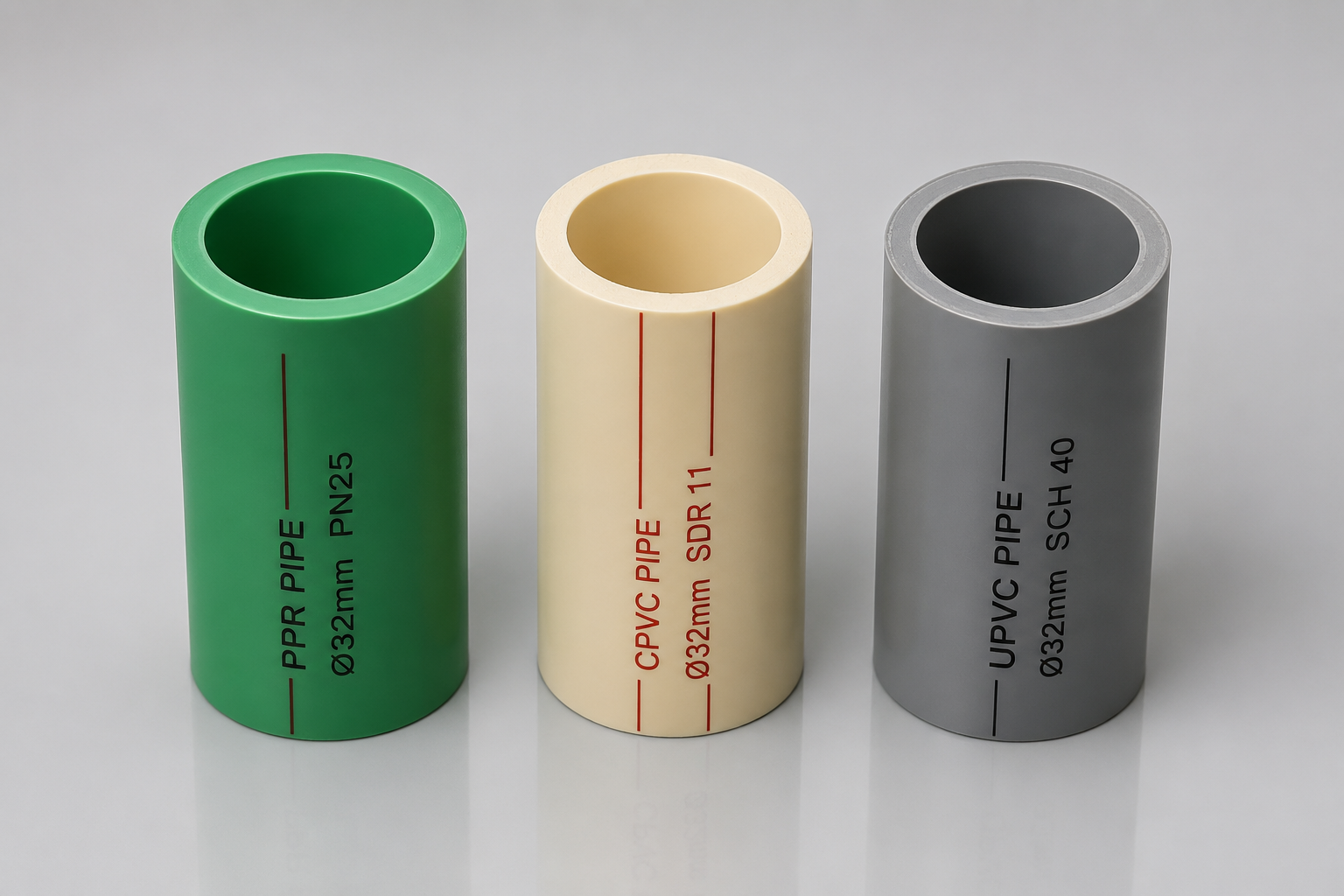
Two of the most common choices for hot and cold water plumbing systems are CPVC and PPR pipes. Both are plastic. Both look similar. But they perform very differently under heat and pressure — and picking the wrong one can cost you significantly in repairs and rework.
This guide focuses specifically on how CPVC and PPR pipes compare for hot water lines. If you want a broader overview of all pipe options, check out our post on which pipe is used for hot water supply and our full PPR vs PVC vs HDPE pipe comparison.
Quick Facts
- CPVC can handle temperatures up to 93°C (200°F)
- PPR pipes are rated for temperatures up to 95°C (203°F) at standard pressure
- PPR uses heat fusion (socket welding) — no glue required
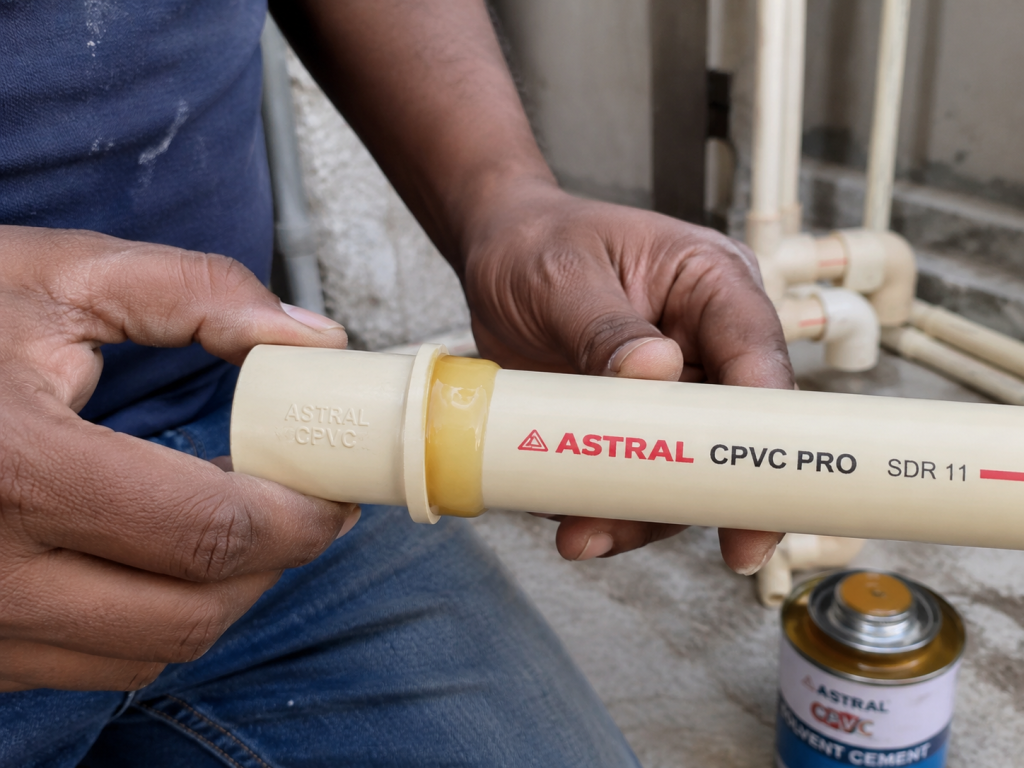
- CPVC uses solvent cement similar to standard PVC installation
- Both are corrosion-resistant and safe for potable water
CPVC stands for Chlorinated Polyvinyl Chloride. It is a step up from standard PVC — the chlorination process increases its heat resistance, making it suitable for hot water applications where regular PVC would warp or fail.
You can read more in our detailed guide on CPVC vs PVC pipe comparison and the difference between UPVC and CPVC pipes.
Dave Pools supplies CPVC pipes and fittings in Dubai for residential and commercial hot water systems.
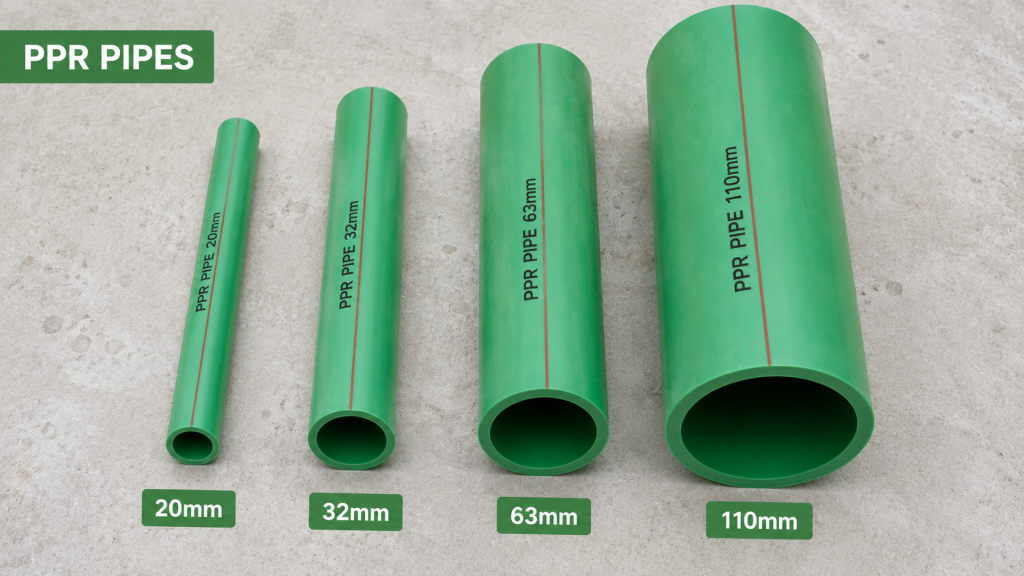
PPR stands for Polypropylene Random Copolymer. It is a thermoplastic pipe widely used in plumbing systems across the Middle East, Europe, and Asia — especially for both hot and cold water lines.
For a full introduction, read our post on what are PPR pipes and fittings and why PPR pipe is used.
Dave Pools is a trusted PPR pipes and fittings supplier in Dubai, offering a full range of sizes and fittings for plumbing projects.
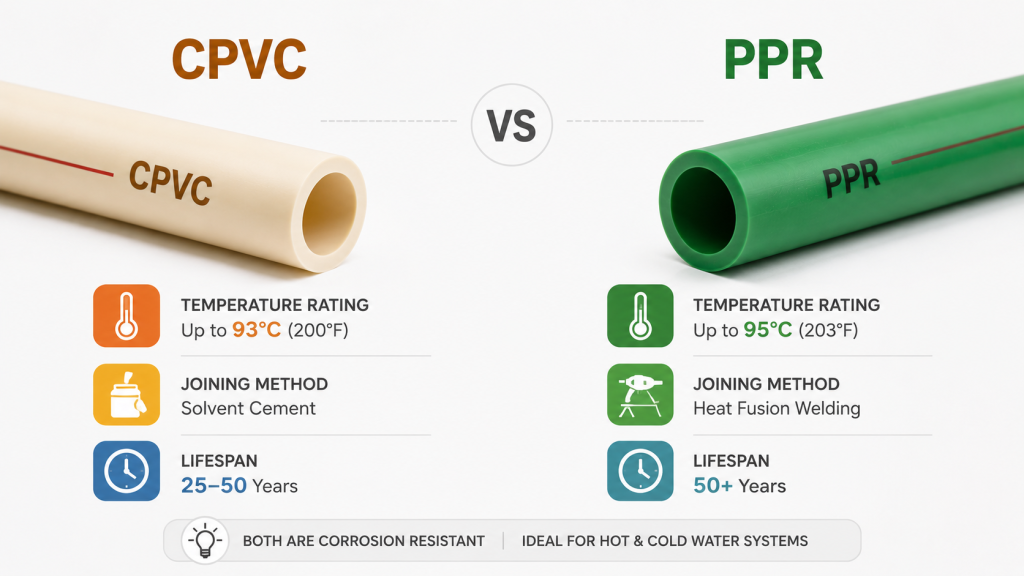
Here’s a side-by-side breakdown of how CPVC and PPR compare across the factors that matter most for hot water lines:
| Feature | CPVC Pipe | PPR Pipe |
|---|---|---|
| Max Temperature | 93°C (200°F) | 95°C (203°F) |
| Pressure Rating | Good (PN10–PN16 equivalent) | Good (PN10, PN16, PN20 available) |
| Joining Method | Solvent cement (glue) | Heat fusion (socket welding) |
| Flexibility | Rigid, slightly brittle | More flexible |
| Corrosion Resistance | Excellent | Excellent |
| Scale Buildup | Minimal | Minimal (smooth inner surface) |
| Lifespan | 25–40 years | 50+ years |
| Fire Safety Use | Yes (fire sprinkler systems) | Not typically used for fire systems |
| Availability in UAE | Available | Widely available |
For more on pressure ratings, see our guide on the difference between PN10 and PN16.
The honest answer: both work well for hot water, but PPR tends to be the preferred choice for residential and commercial plumbing in the UAE and across the Middle East. Here’s why:
For most new-build plumbing projects in Dubai and the UAE, PPR pipe is the go-to recommendation among contractors and suppliers — including at Dave Pools.
Standard PVC softens above 60°C. Always check the PVC pipe temperature rating before installation.
Using CPVC fittings on PPR pipe (or vice versa) without the right transition fittings leads to leaks. Always use compatible fittings for the materials you’re joining.
After installation, always test your lines. Read our guide on how to pressure test PVC pipe for best practices — many of the same steps apply to PPR and CPVC systems.
Incorrect heat fusion causes weak joints that fail under pressure. Learn how to weld PPR pipe correctly before starting any installation.
Not all pipes are made the same. Learn how to check PVC pipe quality — the same inspection principles apply when evaluating PPR and CPVC materials.
Yes. CPVC is approved for potable water and handles hot water temperatures safely up to 93°C, making it suitable for hot water supply lines in residential buildings.
Both handle UAE temperatures well when properly installed indoors. PPR is more widely specified by UAE contractors for new builds due to its longer lifespan and leak-free fusion joints.
Yes — with heat fusion or appropriate couplings. Read our guide on how to repair a PPR pipe leak for step-by-step instructions.
CPVC is familiar to those used to PVC gluing. PPR requires a heat fusion tool but creates stronger, permanent joints. Most professional plumbers find PPR faster once they have the right equipment.
Dave Pools is a reliable supplier of both. Visit our PPR pipes and fittings page or our CPVC pipes and fittings page for available options.
Both CPVC and PPR are solid choices for hot water lines — but the right answer depends on your project, your installation method, and your long-term goals.
If you’re building new or replacing an entire plumbing system, PPR is the stronger long-term pick for most applications in the UAE. If you need a pipe specifically certified for fire sprinklers or you’re working with an existing solvent-cement system, CPVC is the right tool for the job.
Need PPR or CPVC Pipes in Dubai? Contact Dave Pools Today
Browse our full pipes and fittings range or explore our products page to find what you need for your next project.