
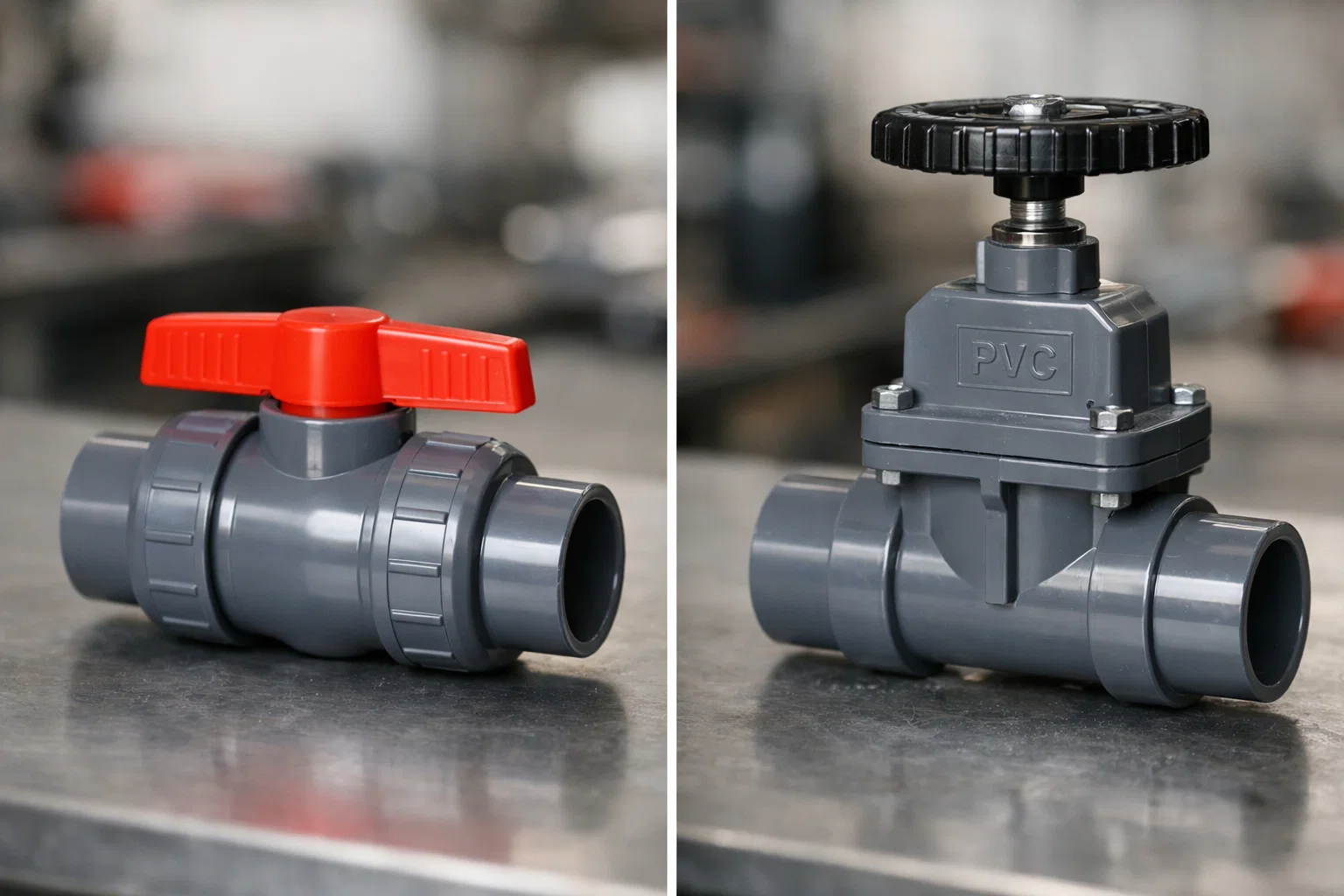
You are standing in front of two valves. They both control water flow. They both come in PVC. And they look similar enough that many contractors and homeowners just grab whichever one is available.
That is a mistake that leads to leaks, stuck valves, and systems that do not perform the way they should.
The choice between a PVC ball valve and a PVC gate valve is not just technical — it directly affects how easy your system is to operate, how long the valve lasts, and whether it will still work reliably five years from now.
In this guide, we break down exactly how each valve works, where each performs best, and how to choose the right one for your specific application — whether that is a pool system, irrigation network, or building plumbing.
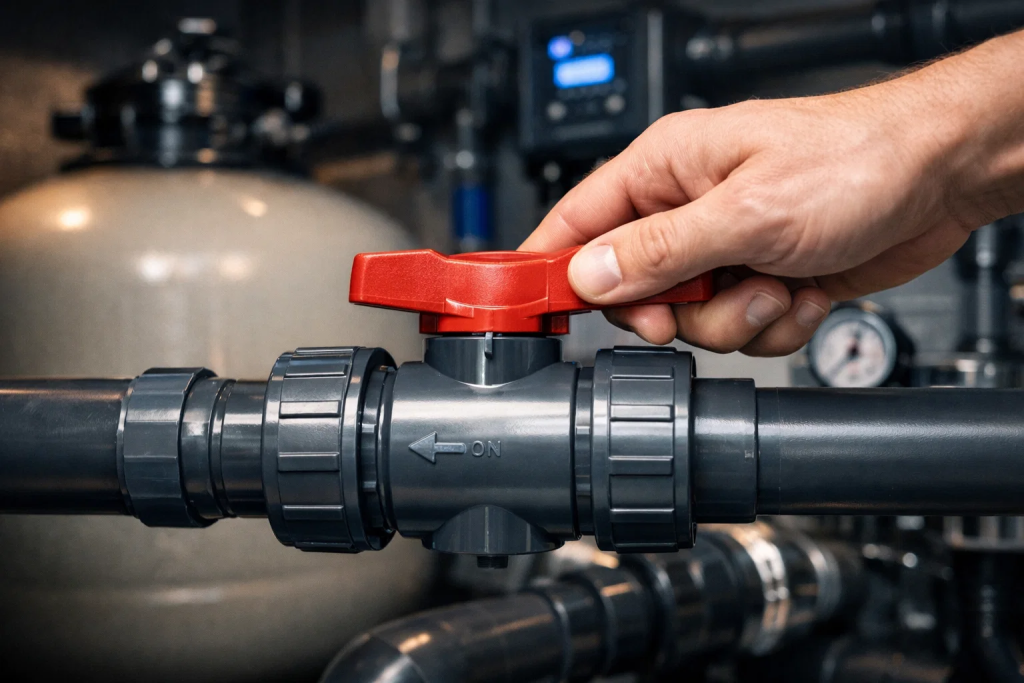
A PVC ball valve controls flow using a hollow sphere (ball) with a hole through the center. When the ball hole aligns with the pipe, water flows. Rotate the handle a quarter turn, and the ball blocks the flow completely.
Key characteristics of a PVC ball valve:
Related: PVC High Pressure Valves — What They Are and How They Work
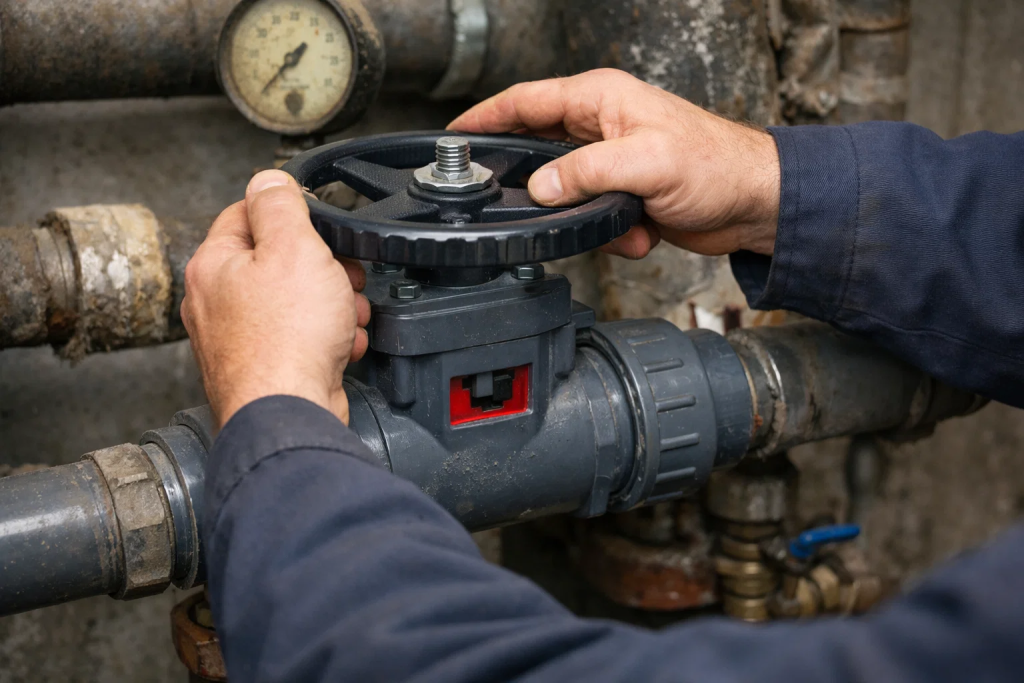
A PVC gate valve controls flow using a flat gate or wedge that moves up and down when you turn a handwheel. Turning the wheel multiple times raises the gate to open flow, or lowers it to close.
Key characteristics of a PVC gate valve:
Gate valves were the industry standard before ball valves became widely available in PVC. They still have their place — but it is a narrower place than most people think.
| Feature | PVC Ball Valve | PVC Gate Valve |
| Operation | Quarter turn — fast | Multi-turn — slow |
| Shutoff Speed | Immediate | Takes time (multiple turns) |
| Seal Quality | Excellent — tight shutoff long-term | Can deteriorate over time |
| Throttling | Not recommended | Not recommended |
| Flow Restriction (Open) | Very low | Very low |
| Frequency of Use | Handles regular use well | Best for infrequent operation |
| Longevity | Very long with PVC material | Can seize if unused for periods |
| Best For | Isolation, frequent on/off cycles | Infrequent shutoff, legacy systems |
Key insight: Both valve types are designed for either fully open or fully closed positions. Neither should be used to throttle or regulate flow — that is what butterfly valves or pressure regulators are for.
Read: How to Install Pool Equipment
Gate valves make sense in specific legacy contexts. But if you are starting from scratch, ball valves are almost always the better choice for PVC piping systems.
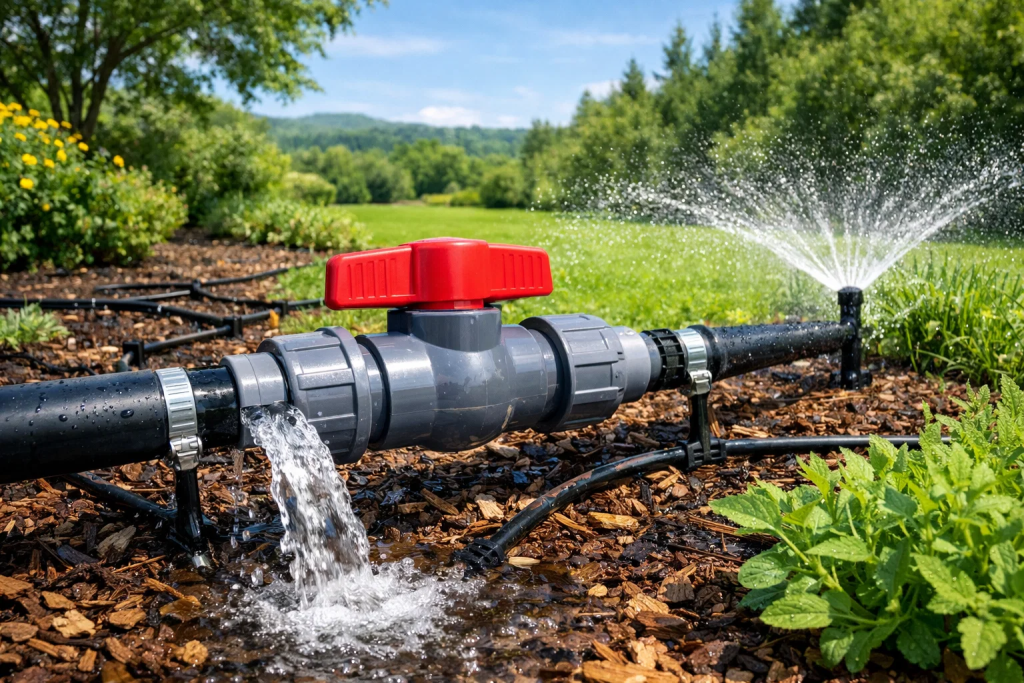
Pool systems require frequent valve operation — for backwashing filters, isolating pumps for maintenance, and adjusting flow during chemical dosing. Ball valves are the standard here because of their speed and reliability. You do not want to turn a gate valve wheel fifteen times when your pool pump is running.
Irrigation networks use valves at every zone control point, at the main supply, and at injection points. Drip and sprinkler systems benefit from ball valves because irrigation systems are turned on and off regularly — often daily.
Related: Different Types of Irrigation Systems
Related: Best Pipe Material for Irrigation Systems
Related: Smart Irrigation Systems for UAE Landscapes
In residential and commercial plumbing, ball valves are standard on all branch isolations, appliance connections, and main shutoffs. Gate valves sometimes appear on older buildings in riser pipework — but replacement is often recommended during renovation.
Related: Best Pipe for Home Plumbing
Related: PPR vs PVC vs HDPE Pipes — Full Comparison
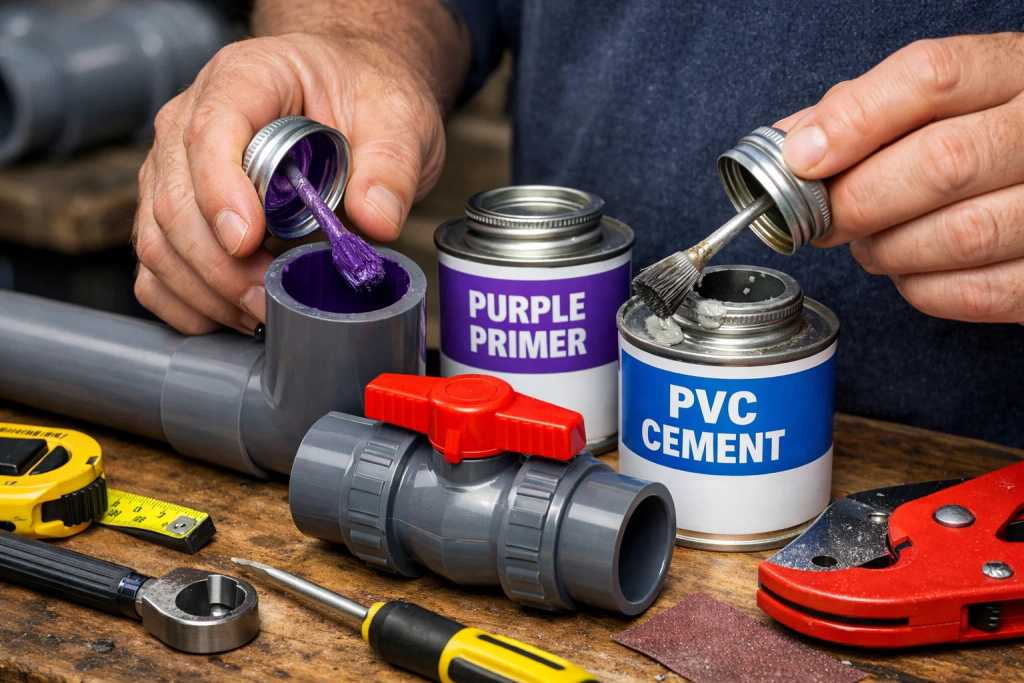
Both valve types in PVC are typically installed using solvent cement joints or threaded connections. The process mirrors standard PVC pipe installation.
Step 1: Cut the pipe squarely and deburr the end: Clean cuts are essential for a strong solvent joint.
Step 2: Clean and prime the pipe end and socket: Never skip priming on a pressure system — it ensures a proper bond.
Step 3: Apply the correct solvent cement and push fittings together firmly: Push and hold for 30 seconds. Do not twist after inserting.
Step 4: Allow full cure time before pressurizing: Minimum one hour — 24 hours is recommended for pressurized systems.
Cutting guide: How to Cut PVC Pipe — Step by Step
Cementing guide: How to Glue PVC Pipe Correctly
For seized valves: How to Remove Stuck Pipe Fitting
Testing guide: How to Pressure Test PVC Pipe
Mistake 1: Using a Ball Valve to Throttle Flow
Why it’s a problem: Ball valves are not designed for partial-open operation. Running a ball valve partially open causes turbulence and erosion at the ball seal, shortening its lifespan significantly.
Fix: Use a ball valve only at fully open or fully closed. Install a flow control valve if you need to throttle.
Mistake 2: Leaving a Gate Valve Partially Open
Why it’s a problem: A partially open gate valve vibrates under flow, causing the gate and seat to wear unevenly and eventually seize.
Fix: Gate valves should always be either fully open or fully closed — nothing in between.
Mistake 3: Choosing the Wrong Pressure Rating
Why it’s a problem: Undersized valves fail under system pressure. PVC valves have specific pressure ratings that decrease as temperature rises.
Fix: Check your working pressure and select a valve rated well above it.
Mistake 4: Ignoring Chemical Compatibility
Why it’s a problem: Pool chemicals, chlorinated water, and fertilizer solutions can degrade valve seals not specified for the application.
Fix: Confirm that the valve’s internal seals (EPDM or Viton) are compatible with the chemicals in your system.
Mistake 5: Pairing Quality Valves with Poor-Quality Pipe
Why it’s a problem: A high-quality valve connected to poor-quality pipe creates a weak point in the system.
Fix: Always match valve quality with pipe quality. Buy from trusted suppliers.
Quality guide: How to Check PVC Pipe Quality
Source valves: PVC High Pressure Valves Supplier Dubai
A: Yes, for pool applications ball valves are the better choice. They operate with a single quarter turn, provide tight shutoff, and handle the frequent on-and-off cycles that pool maintenance requires. Gate valves are slower and more prone to seizing in pool environments.
A: Standard PVC ball valves have temperature limits — typically up to 60°C. For hot water lines above this, CPVC valves or metal valves are required. See our hot water pipe guide linked below.
A: Generally yes. Gate valve seals can deteriorate faster than ball valve seats, especially when operated frequently or left partially open. Ball valves maintain tighter shutoff over a longer service life.
A: The valve should match your pipe size for full bore flow. If you are unsure how to measure your pipe, see our pipe sizing guide linked below — it covers how to measure accurately in under five minutes.
A: Dave Pools supplies a full range of PVC high pressure valves in Dubai, including ball valves and gate valves for pools, irrigation, and plumbing. Visit our PVC high pressure valves page or contact our team for product specifications.
So — PVC ball valve or gate valve?
For most modern applications, the ball valve wins. It is faster to operate, more reliable over years of use, and provides a tighter shutoff. Whether you are building a pool plant room, designing an irrigation network, or isolating zones in a building plumbing system — ball valves are the standard for good reason.
Gate valves still have a role — primarily in legacy systems or very infrequently-operated positions. But if you are starting fresh, choose the ball valve.
The most important thing is to buy quality, match the valve to your system’s pressure and temperature requirements, and install it correctly with properly jointed pipes
Get expert guidance and choose the right PVC solution for long-lasting performance—contact us today.