⚡ Quick Facts
- A solvent welded PVC joint cannot be unscrewed or loosened. The cement chemically fuses the pipe and fitting into one solid piece within seconds of application.
- Standard PVC begins to soften around 140°F (60°C), so an open flame or a heat gun held too close can warp, burn, or weaken the fitting permanently.
- Penetrating oil needs roughly 10 to 15 minutes of contact time on a seized metal fitting before it is effective.
- Overtightening and excess thread sealant are two of the most common, and most preventable, causes of a stuck threaded fitting.
- A strap wrench, not a metal pipe wrench, is the correct tool for gripping plastic fittings without cracking or crushing them.
Introduction
A stuck pipe fitting turns a five minute job into an afternoon one, and the wrong move, too much force, too much heat, or heat in the wrong place, can turn it into a replacement job instead of a repair. This guide covers both sides of the problem that most articles treat as one: freeing a seized metal or threaded fitting, and dealing with a stuck PVC fitting, which behaves completely differently and needs a completely different approach.
Common Reasons Pipe Fittings Get Stuck
- Corrosion, including rust and mineral buildup on metal threads, especially common with the mineral heavy water typical across the Gulf region
- Overtightening during the original installation, which galls the threads together
- Excess thread sealant or Teflon tape, which can harden over time and act almost like an adhesive
- Age and wear, as repeated thermal cycling gradually seats threaded fittings tighter
- Solvent welding, for PVC specifically, which is not a failure at all but the intended permanent bond. See our guide on how PVC pipe is glued to understand why this joint type behaves so differently from a threaded one.
- Pipe wrench (for metal and galvanized fittings only)
- Strap wrench (for plastic and PVC fittings)
- Adjustable pliers
- Heat gun or propane torch (metal fittings only, never on PVC)
- Penetrating oil
- Rubber mallet
- Pipe cutter or hacksaw, see our guide on how to cut PVC pipe for clean, square cuts
- Gloves and safety goggles
- Apply penetrating oil. Spray it around the threads, let it sit for 10 to 15 minutes, then wipe off the excess before attempting to turn the fitting.
- Use heat, for metal fittings only. Heat evenly with a heat gun or propane torch so the metal expands slightly and breaks its grip on the threads. Never apply this step to a PVC or plastic fitting, covered in the next section.
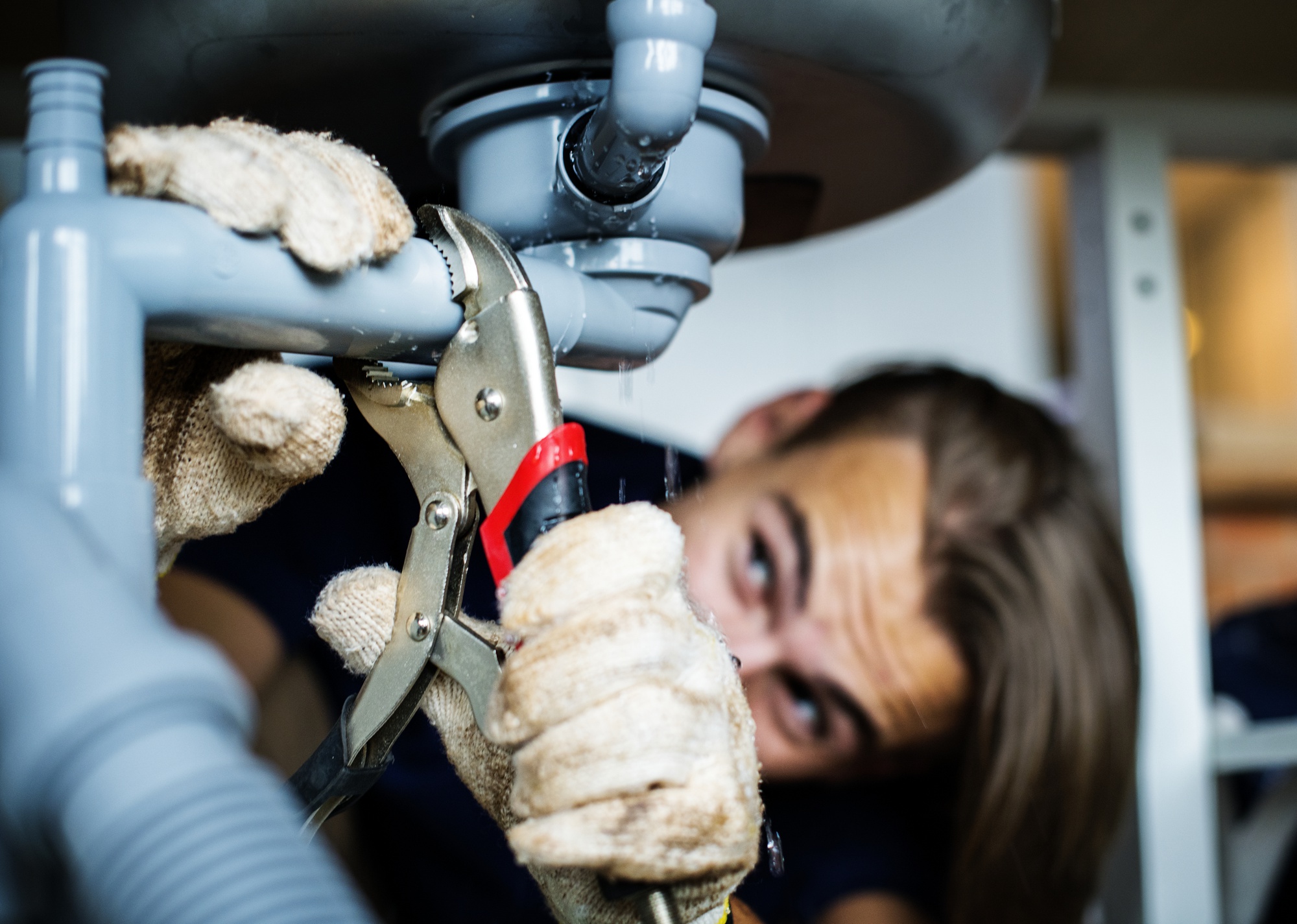
- Use a pipe wrench or adjustable pliers. Grip firmly and turn counterclockwise. If it resists, alternate between gently tightening and loosening to work the threads free rather than forcing a single direction.
- Tap gently with a rubber mallet. A few light taps can break a corroded fitting’s grip without the excessive force that risks cracking the pipe or damaging surrounding fittings.
- Cut the fitting out if necessary. Use a pipe cutter or hacksaw as close to the fitting as possible, then replace the cut section and prepare the new pipe ends before installing fresh fittings.
Removing Stuck PVC and Plastic Fittings
This is the part most guides skip, and it matters because the removal approach for PVC is almost the opposite of the metal approach above.
If the fitting is solvent welded (glued), it cannot be removed intact. PVC cement does not create a mechanical grip the way threads do. It chemically dissolves and fuses the surfaces of the pipe and fitting together, so once the joint has cured, it is effectively one continuous piece of plastic. There is no amount of twisting, heating, or penetrating oil that will separate it without damage. The only reliable method is to cut the fitting off using a pipe cutter or hacksaw, as covered in our PVC pipe cutting guide, and install a replacement using proper primer and cement technique.
If the fitting is threaded plastic, such as a PVC ball valve or a threaded adapter, a different set of rules applies:
- Never use an open flame. A propane torch will burn, deform, or release fumes from PVC almost immediately. If you need a small amount of heat to help break loose a seized plastic thread, a heat gun held well back and moved constantly is the only acceptable option, and even then, keep contact brief, since standard PVC softens starting around 140°F.
- Use a strap wrench, not a metal pipe wrench. A metal wrench’s teeth are designed to bite into steel. On plastic, the same grip can crack the fitting wall or crush it out of round before it ever turns.
- Check for a damaged valve rather than a stuck one. If a PVC ball valve or gate valve resists turning, it may be a failing valve rather than a seized thread. Our comparison of PVC ball valves vs gate valves and PVC valves vs metal valves covers how each type fails differently.
Preventing Stuck Fittings in the Future
- Use anti-seize products on metal threads during installation, and PTFE tape rather than excess liquid sealant on threaded plastic fittings.
- Avoid overtightening. Hand tight plus a controlled quarter to half turn with a wrench is usually enough. Overtightening is one of the leading causes of both metal seizing and plastic fitting cracks.
- Schedule regular maintenance checks, particularly on buried or hard to reach runs. Our guide on finding a broken pipe underground covers detection methods before a stuck fitting becomes a bigger problem.
- Choose certified, quality fittings from the start. Inconsistent wall thickness or poor thread tolerance in low quality fittings is a common hidden cause of premature seizing. Our guide on how to check PVC pipe quality and how to choose a PVC pipe manufacturer can help you avoid this at the sourcing stage.
When to Call a Professional
- The fitting is on a main supply line or a point that cannot be shut off easily
- Repeated attempts have already damaged the surrounding pipe
- The fitting is in a hard to reach or structurally sensitive location
- You are dealing with a buried joint, see our underground PVC installation guide before attempting any excavation yourself
- You are unsure whether the fitting is solvent welded or threaded, since using the wrong method risks turning a simple fix into a full section replacement
✅ Key Takeaways
- Identify the joint type before you touch a tool. Metal and threaded fittings respond to heat, oil, and leverage. Solvent welded PVC does not respond to any of them.
- Never use an open flame near PVC. It is not just ineffective, it is a genuine safety risk, since PVC softens well below torch temperature.
- A stuck solvent welded PVC fitting means cutting and replacing, not freeing. Plan for that rather than fighting a joint that was never designed to come apart.
- Prevention is cheaper than repair, correct torque, the right sealant, and certified fittings avoid most of this problem before it starts.
FAQs
Can I use a torch to remove a stuck PVC fitting?
No. Open flame will burn, deform, or release fumes from PVC almost immediately. Heat is only appropriate for metal fittings, and even a heat gun on plastic needs to be used briefly and from a distance.
How do I remove a glued PVC fitting without damaging the pipe?
You cannot separate a solvent welded joint intact. Cut the fitting off with a pipe cutter or hacksaw as close to the joint as possible, then install a new fitting on the cut section.
Why is my PVC ball valve stuck and not turning?
It may not be a stuck fitting at all. A valve that resists turning is often failing internally rather than seized at the thread. Compare symptoms in our PVC ball valve vs gate valve guide before assuming it just needs force.
What tool should I use on a stuck plastic fitting?
A strap wrench, not a metal pipe wrench. Metal wrench teeth can crack or crush plastic fittings that a strap wrench grips safely.
How long should I let penetrating oil sit on a stuck metal fitting?
Around 10 to 15 minutes is typically enough for the oil to work into the threads before you attempt to turn the fitting.
What is the most common cause of a stuck threaded fitting?
Overtightening during the original installation and excess thread sealant are the two most frequent causes, both of which are avoidable with correct installation technique.
Conclusion
Metal and plastic fittings get stuck for different reasons, and they need to be freed in genuinely different ways. A seized metal fitting responds to oil, heat, and leverage. A solvent welded PVC joint responds to none of those, since it was never designed to be reversible in the first place. Know which type you are dealing with before you reach for a torch, and when in doubt, cutting and replacing a short section of PVC is almost always faster and safer than fighting a joint that will not give.
Need Replacement Fittings or Expert Advice?
Whether you’re replacing a stubborn fitting or sourcing a full repair kit, Dave Pools stocks certified pipes and fittings and a team that can help you pick the right part the first time.
Explore PVC Fittings →