

Are you struggling with leaky pipe connections that waste water and damage your property? Improper pipe installation can lead to costly repairs, mold growth, and structural damage. The solution lies in mastering proper pipe connection techniques, especially when working with modern PPR pipes.
This comprehensive guide will walk you through everything you need to know about connecting PPR pipes properly to ensure leak-free, durable plumbing systems. Whether you’re a DIY enthusiast or a professional plumber, you’ll find valuable insights to perfect your pipe connection skills.

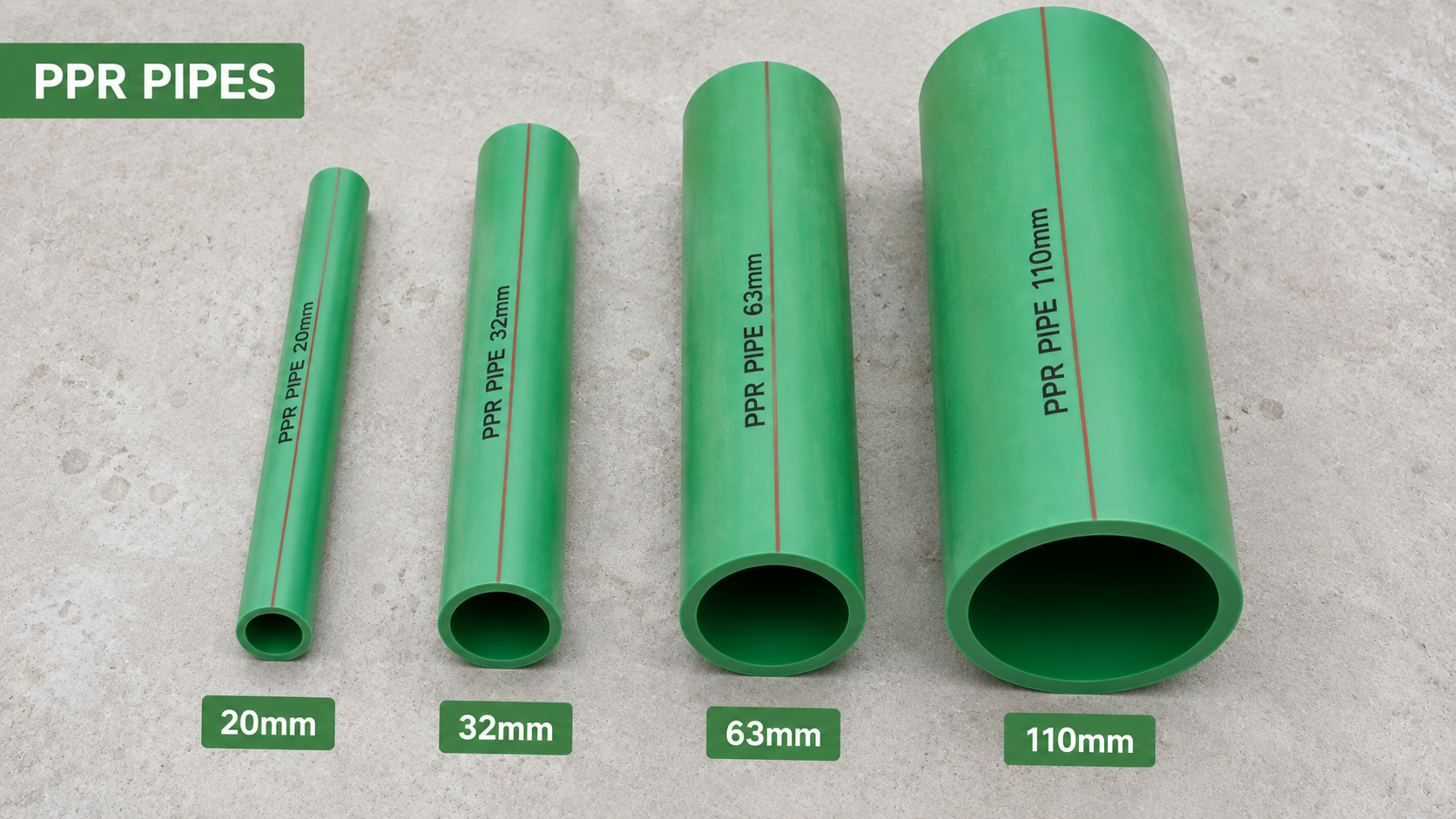
Polypropylene Random Copolymer (PPR) pipes have revolutionized modern plumbing systems with their exceptional durability and versatility. These thermoplastic pipes are made from a specific type of polypropylene material that offers superior heat resistance and longevity compared to traditional piping materials.
PPR pipes are manufactured through an extrusion process that ensures uniform thickness and quality. The molecular structure of PPR makes these pipes particularly resistant to chemical corrosion, making them ideal for various applications including hot and cold water supply systems.
One of the most significant advantages of PPR pipes is their heat fusion joining method, which creates homogeneous connections that are stronger than the pipe itself. Unlike traditional pipes that rely on adhesives or mechanical joints, PPR pipes form molecular bonds when heated and joined correctly.

To successfully connect PPR pipes, you’ll need the following tools and materials:
Quality matters significantly when selecting your materials. At Dave Pools, you can find premium quality PPR pipes and fittings from trusted brands like Raktherm and Cosmoplast, ensuring your plumbing project starts with the best materials available.

The foundation of a successful pipe connection begins with accurate measurements:
Pro Tip: Add an extra 5-10mm to your measurements to account for any adjustments needed during installation.

Proper cutting ensures clean edges that will fuse properly:
Important: Avoid using regular scissors or knives as they can create jagged edges that won’t fuse properly.

This crucial step prepares the pipe surface for optimal fusion:
Why This Matters: Even small debris can prevent proper fusion and create weak points in your connection.

Proper heat fusion requires the right temperature settings:
Temperature Note: Different PPR pipe manufacturers may recommend slightly different temperatures. Always check the specific recommendations for your brand of PPR pipes.

The heating process prepares the materials for fusion:
Critical Point: Insufficient heating time results in weak joints, while excessive heating can damage the material.

The fusion process requires quick, precise action:
Fusion Indicator: A small, even bead of melted material should form around the connection point, indicating proper fusion.

Patience during cooling ensures joint integrity:
Warning: Forced cooling with water or air will weaken the molecular bond and compromise the connection.

Connecting different pipe materials requires special transition fittings:
Available Transitions: Modern plumbing systems often require connections between different materials. Common transition options include PPR-to-copper, PPR-to-CPVC, and PPR-to-steel transitions.
For temporary or special connections:
Application Note: Mechanical connections are useful in areas where heat fusion is difficult or where future disassembly might be needed.

Connecting PPR to PVC requires specific techniques:
Important Consideration: The different expansion rates of PPR and PVC must be accounted for in your system design, particularly for hot water applications. PPR pipes are more suitable for hot water supply systems due to their superior heat resistance.

Different types of fittings require specific approaches:
The most common PPR connection follows the heat fusion process described above:
When connecting pipes of different diameters:
For direction changes and branches:
PPR pipe fittings come in various types, including elbows, tees, couplings, unions, and more, each designed for specific functions in your plumbing system.
For control points in your system:

Problem: Weak joint that may fail under pressure
Solution: Follow recommended heating times based on pipe diameter
Identification: No visible fusion bead or incomplete penetration
Problem: Material degradation and weakened connection
Solution: Use a timer and follow manufacturer guidelines
Identification: Discoloration, bubbling, or excessive melting
Problem: Stress on the joint and potential leakage
Solution: Use alignment tools and marks to ensure straight connections
Identification: Visible angle or offset at the connection point
Problem: Poor fusion and weak joint
Solution: Clean all surfaces thoroughly before heating
Identification: Irregular fusion bead or visible contamination in the joint
Problem: Molecular bonds don’t form properly
Solution: Allow full cooling time without disturbance
Identification: Joint failure under minimal stress or pressure

If you encounter leaking joints:
This serious issue often results from:
Ensure you’re using the appropriate pressure rating (PN10 or PN16) for your specific application.
If experiencing reduced flow:

PPR pipes and their connection methods are ideal for various applications:
PPR pipes excel in both hot and cold water applications due to their:
For more information on temperature compatibility, read about PPR pipe compatibility with hot or cold water.
PPR is increasingly popular for underfloor heating due to:
In industrial settings, PPR connections offer:
PPR pipes are excellent for swimming pool equipment systems due to their:

Understanding the advantages of PPR helps explain why proper connection is worth mastering:
Properly connected PPR pipes can last 50+ years due to:
PPR systems offer significant health benefits:
Despite higher initial material costs than some alternatives, PPR systems provide:
PPR is an environmentally conscious choice:
Comparing PPR with other materials reveals its advantages in various applications. For a detailed comparison, read about PPR pipe vs PVC pipe.
For most PPR pipe connections, set your welding machine to 260-270°C (500-518°F). However, always check the specific recommendations from your pipe manufacturer, as some formulations may require slightly different temperatures for optimal fusion.
Small diameter pipes (16-32mm) should cool for at least 30 minutes before light pressure testing, while larger pipes (40mm+) should cool for 1-24 hours depending on size. For critical systems, a full 24-hour cooling period before full pressure testing is recommended regardless of size.
No. Both the pipe and fitting must be completely dry before heat fusion. Moisture will turn to steam during heating, creating bubbles and weak points in the connection. Always work in dry conditions and thoroughly dry any wet pipes before attempting connection.
A proper PPR connection will show a small, even bead of melted material around the entire circumference of the joint. The pipe should be inserted to the full marked depth, and the connection should feel solid with no movement. Pressure testing is the final verification of connection quality.
No. Once a PPR fitting has been heated and an attempted connection made, it cannot be reused even if the connection failed. The material structure changes during heating, and a second heating will not create a reliable connection. Always use new fittings for any rework.
Standard PPR pipes come in pressure ratings of PN10 (10 bar/145 psi), PN16 (16 bar/232 psi), PN20 (20 bar/290 psi), and PN25 (25 bar/362 psi). A properly made connection will maintain the full pressure rating of the pipe itself. The pressure rating is determined by the pipe wall thickness and material composition.
For confined spaces, you can use:
– Socket fusion tools with removable heads
– Mechanical compression fittings (though not as reliable as fusion)
– Pre-fabricate sections with fusion joints where you have space, then connect the sections using unions or flanges
PPR pipes can be bent to a limited degree when heated uniformly, but this is not recommended for professional installations. The bending radius should be at least 8 times the pipe diameter, and the pipe strength will be reduced at the bend. For permanent installations, proper elbow fittings create more reliable connections.
The only reliable repair for a leaking PPR connection is to cut out the failed joint and replace that section with new pipe and fittings. Temporary emergency repairs can be made with specialized pipe repair clamps, but these should be replaced with proper fusion connections as soon as possible.
PPR is resistant to most chemicals found in residential and commercial plumbing, but can be damaged by:
– Petroleum-based products (gasoline, oil)
– Strong oxidizing agents
– Some organic solvents
– Concentrated acids Always check chemical compatibility charts when using PPR in specialized applications.
Connecting PPR pipes properly is a skill that ensures the longevity and reliability of your plumbing system. By following the detailed steps in this guide and using quality materials from trusted suppliers like Dave Pools, you can create leak-free connections that will perform flawlessly for decades.
Remember that practice makes perfect when it comes to PPR pipe fusion. Take your time, follow the procedures carefully, and don’t hesitate to start over if you’re unsure about a connection. The effort invested in making proper connections will pay dividends through years of trouble-free service.
For all your PPR pipe and fitting needs, explore the extensive range of high-quality products available at Dave Pools, Dubai’s premier supplier of plumbing and irrigation solutions.