
HDPE pipe leaks waste thousands of gallons of water annually and cause significant property damage when left unaddressed. Unlike traditional piping materials, HDPE’s unique polyethylene composition requires specialized repair techniques that standard methods can’t handle. This expert guide reveals proven repair strategies that restore HDPE pipe integrity permanently, saving you costly replacement expenses and preventing catastrophic failures.
High-Density Polyethylene (HDPE) pipes offer exceptional durability and corrosion resistance, yet leaks still occur due to specific failure mechanisms. Understanding why HDPE pipes leak helps you choose the most effective repair method.
Installation Errors:
Physical Damage:
Material Degradation:
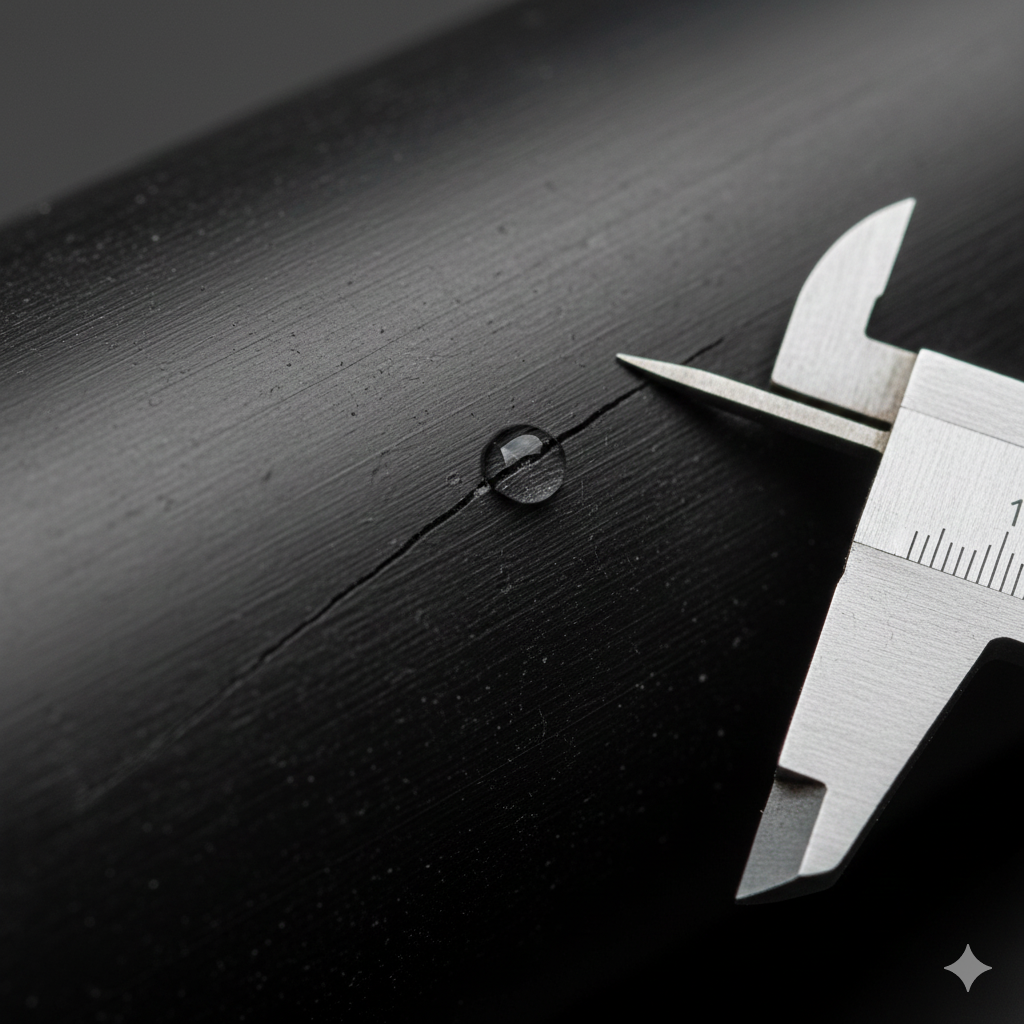
HDPE’s thermoplastic nature creates unique repair challenges. Unlike rigid materials such as PVC pipes, HDPE remains flexible and responds to temperature changes. Traditional adhesive-based repairs fail because HDPE’s smooth, non-porous surface prevents bonding.
The material’s thermal expansion coefficient means HDPE pipes can expand or contract significantly with temperature changes. A repair method that works in summer may fail in winter without proper technique. Understanding what HDPE pipe is helps you appreciate why specialized approaches are necessary.
For Heat Fusion Repairs:
For Mechanical Repairs:
Quality tools ensure reliable repairs. Attempting HDPE repairs without proper equipment often creates larger problems than the original leak.
Early leak detection prevents minor issues from becoming major failures. HDPE systems require specific detection approaches.
Surface Indicators:
System Performance Signs:
Pressure testing isolates leak locations systematically:
For detailed pressure testing procedures applicable to all pipe materials, review our guide on how to pressure test PVC pipe, which covers testing fundamentals.
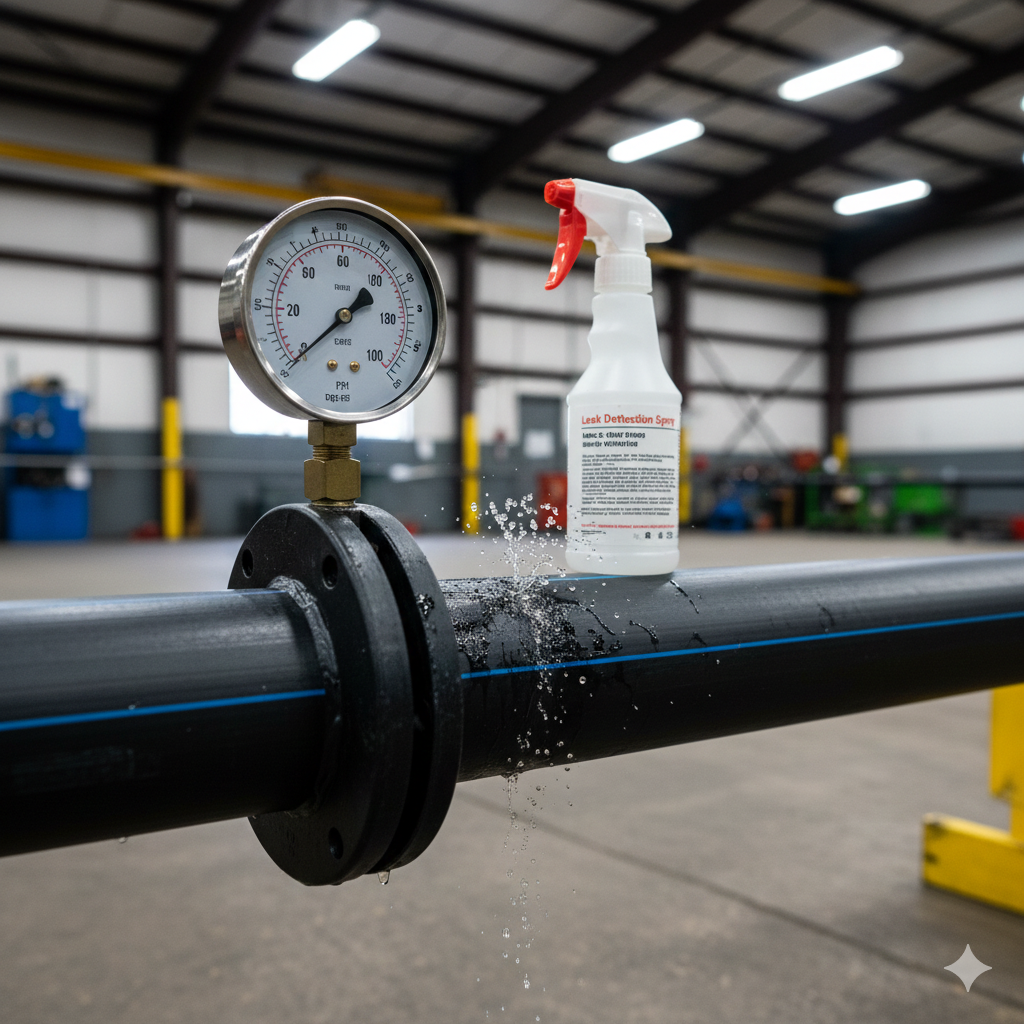
Acoustic Leak Detection: Professional ultrasonic equipment detects the sound frequency produced by water escaping under pressure. This method works excellently for buried HDPE pipes where visual inspection is impossible.
Tracer Gas Method: Injecting non-toxic tracer gas into the system and using detection equipment pinpoints leak locations precisely, even in underground installations.
Thermal Imaging: Infrared cameras detect temperature differences caused by escaping water, particularly effective for hot water systems or in cold environments where warm water creates thermal contrast.
For underground HDPE installations, techniques from our guide on how to find broken pipe underground apply equally well.
Temporary repairs provide emergency stopgaps until permanent solutions can be implemented. These methods work for small leaks and low-pressure situations.
High-pressure silicone tape offers quick temporary sealing:
Tape Limitations:
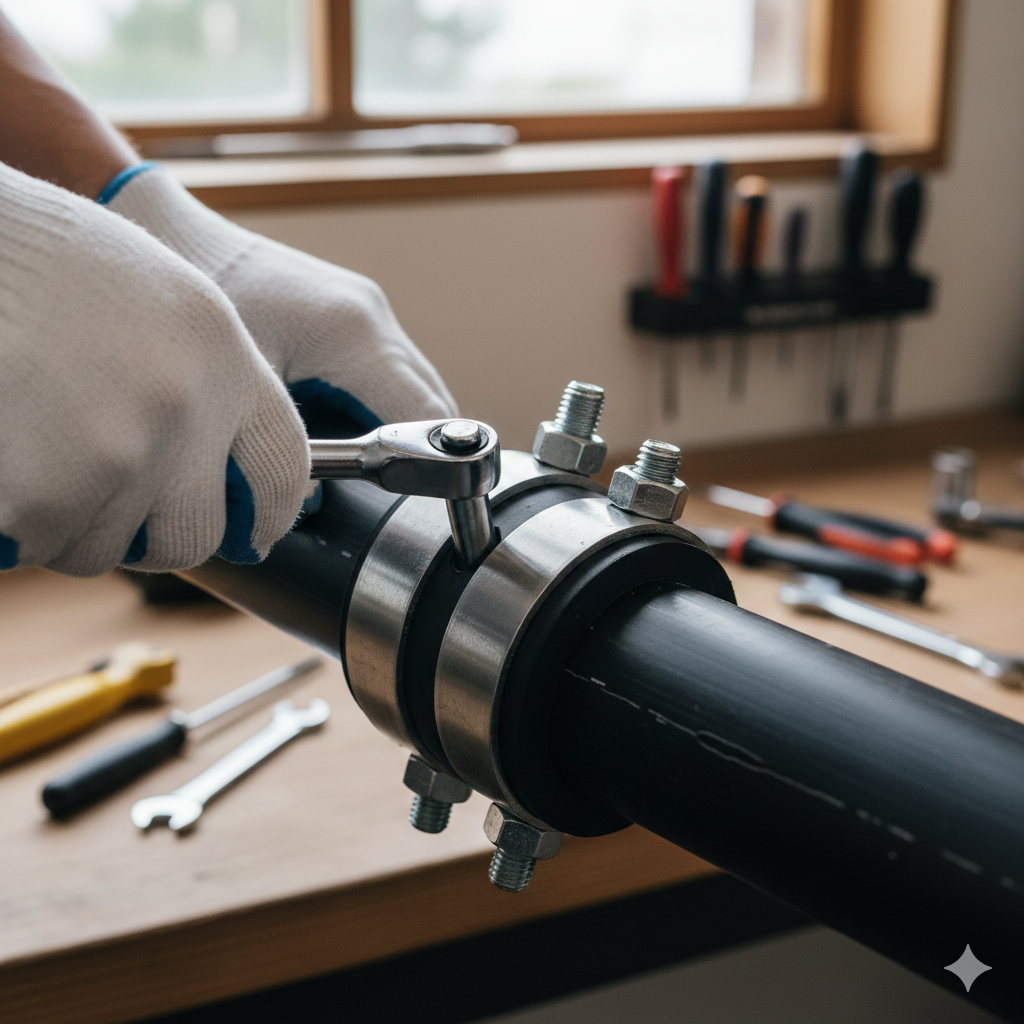
Repair clamps provide stronger temporary (or semi-permanent) fixes:
Installation Process:
Specialized polyethylene-compatible epoxy putty works for pinhole leaks:
Important Note: Standard epoxies don’t bond to HDPE. Only use products specifically formulated for polyethylene repair.
Permanent HDPE pipe repairs require proper technique and equipment. These methods restore full structural integrity.
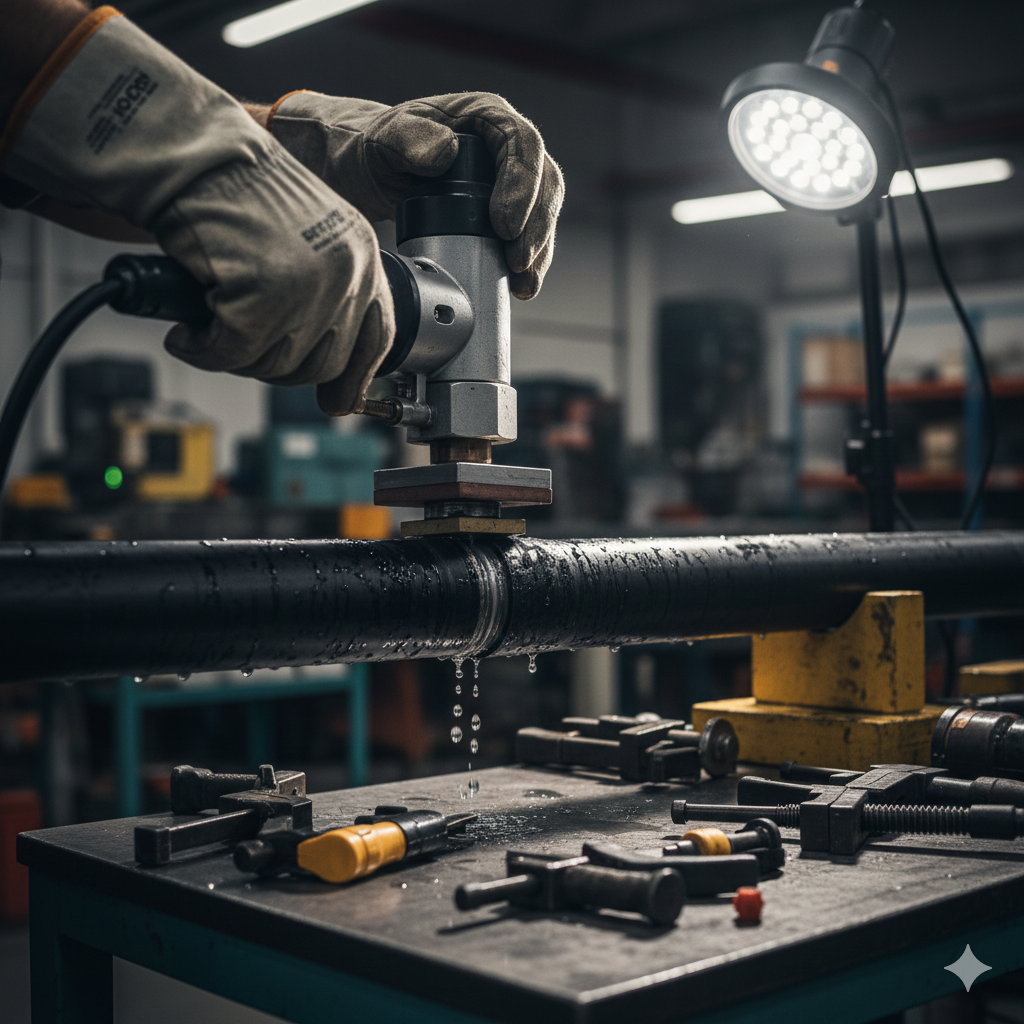
Heat fusion creates molecular bonds between HDPE materials, resulting in joints stronger than the pipe itself. Three primary fusion methods exist:
Butt Fusion:
Socket Fusion:
Electrofusion:
Heat fusion requires training and proper equipment. While DIY-friendly for small diameter pipes, large installations benefit from professional expertise.
Saddle fusion adds a fitting directly over the leak point without cutting the pipe:
This method works excellently for pinhole leaks and small cracks without requiring system shutdown or pipe removal.
Modern HDPE-compatible mechanical couplings provide reliable repairs without heat:
Advantages:
Disadvantages:
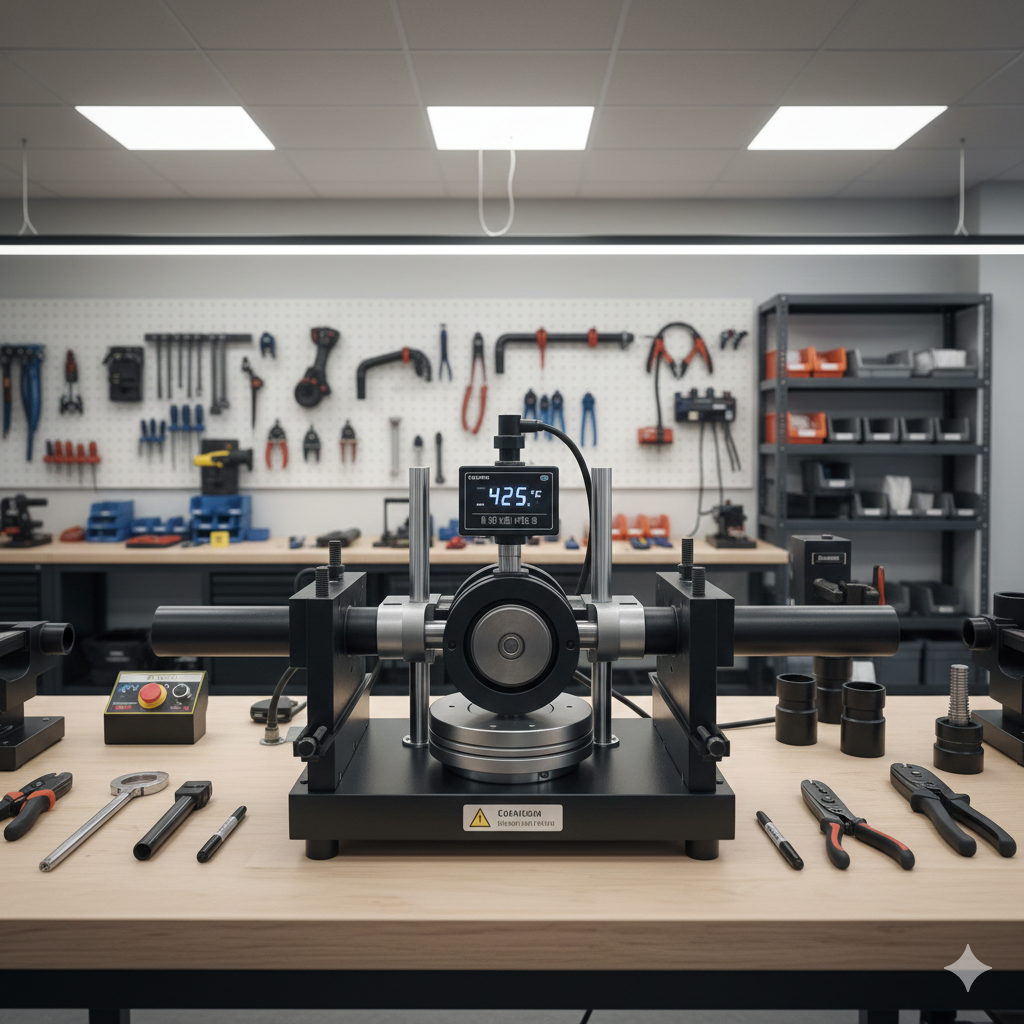
Butt fusion repair provides the most reliable permanent solution for HDPE pipe leaks. This detailed process ensures professional results.
System Shutdown:
Workspace Setup:
Cutting:
Cleaning:
Heating Phase:
Joining Phase:
Cooling Phase:
Visual Checks:
Pressure Testing:
Learn more about comprehensive pipe testing in our pressure testing guide.
When heat fusion isn’t practical, mechanical repair systems provide reliable alternatives for HDPE pipes.
Preparation:
Installation:
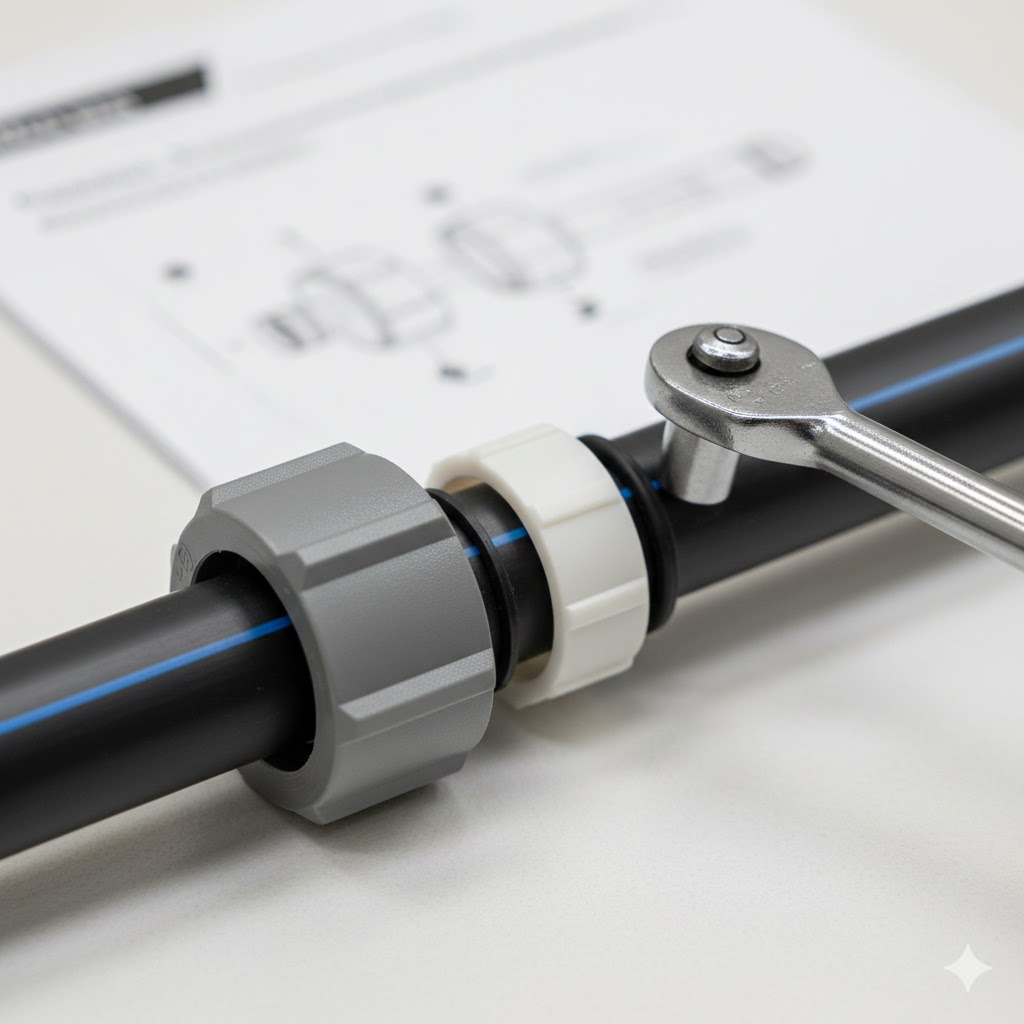
Electrofusion combines mechanical ease with fusion strength:
Process:
Advantages Over Manual Fusion:
For non-emergency repairs without system shutdown, saddle fittings excel:
This method effectively seals leaks while maintaining system operation in many cases.
Preventing HDPE pipe leaks proves far more cost-effective than repairs. Implement these maintenance practices:
Proper Bedding:
Fusion Quality Control:
UV Protection:
Monthly Checks:
Annual Inspections:
Multi-Year Assessments:
Track these indicators to catch leaks early:
Pressure Trends:
Flow Patterns:
Water Usage:
Understanding different types of drainage pipes and their maintenance requirements helps you develop comprehensive preventive strategies.
Not all HDPE pipe leaks warrant repair. Sometimes replacement provides better long-term value.
Good Candidates for Repair:
Repair Method Selection:
Consider Full Replacement When:
Pipe Sizing Considerations: When replacing, verify adequate capacity. Our guide on choosing the best pipe material helps with material selection decisions.
Repair Costs Include:
Replacement Costs Include:
Calculate total cost of ownership over expected service life. Sometimes higher upfront replacement costs deliver better value than repeated repairs.
For significant leaks or complex systems, professional evaluation provides:
Similar to selecting quality PVC pipe manufacturers, choosing qualified HDPE repair professionals ensures reliable outcomes.
Yes, HDPE pipe leaks can be permanently patched using heat fusion techniques like butt fusion, socket fusion, or electrofusion. Saddle fusion allows patching without removing pipe sections. Mechanical methods including compression fittings and repair clamps also work effectively. However, adhesive patches don’t work on HDPE due to the material’s non-porous surface that prevents bonding.
The best permanent solution is heat fusion repair, which creates molecular bonds as strong as the original pipe. For temporary fixes, use stainless steel repair clamps with rubber gaskets or high-pressure silicone repair tape. Emergency repairs can use polyethylene-compatible epoxy putty. The specific method depends on leak size, location, pressure requirements, and whether a temporary or permanent fix is needed.
Flex Seal and similar spray-on sealants provide only very temporary fixes for HDPE pipes and aren’t recommended for pressurized systems. HDPE’s smooth, non-porous surface prevents proper adhesion. These products may temporarily slow small leaks but won’t create reliable, long-lasting seals. For dependable repairs, use heat fusion methods or mechanical HDPE-specific repair systems designed for polyethylene materials.
No, PVC solvent cement absolutely will not work on HDPE pipe. PVC cement works by chemically dissolving and fusing PVC, but HDPE’s different molecular structure is incompatible with these solvents. HDPE requires heat fusion or mechanical joining methods. Attempting to use PVC cement on HDPE wastes time and materials without creating any bond whatsoever.
Small cracks can be repaired using saddle fusion over the damaged area. Larger cracks require cutting out the damaged section and installing a new piece using butt fusion or electrofusion couplings. For emergency temporary repairs, install a repair clamp with rubber gasket over the crack. The repair method depends on crack length, location, system pressure, and whether permanent or temporary repair is needed.
HDPE pipes crack due to improper installation techniques, physical damage from excavation or ground movement, stress concentration from poor bedding, UV exposure degrading material strength, extreme temperature cycling, and occasionally manufacturing defects. Preventing cracks requires proper installation with adequate bedding, UV protection for exposed sections, appropriate burial depth, and avoiding over-tightening mechanical fittings which creates stress points.
Yes, underground HDPE pipes can be repaired by excavating to expose the damaged section. The repair area must be clean and dry for heat fusion. Electrofusion fittings work well in confined excavations. For pipes that can’t be fully excavated, saddle fusion repairs can sometimes be performed. Proper access, cleaning, and drying are critical. Professional equipment may be needed for larger diameter pipes or difficult access situations.
Properly installed HDPE pipe lasts 50-100 years in underground applications with minimal maintenance. Above-ground installations without UV protection degrade faster, typically 10-25 years depending on sun exposure. Service life depends on installation quality, operating pressure, temperature cycles, chemical exposure, and maintenance practices. HDPE doesn’t corrode like metal pipes, maintaining structural integrity throughout its lifespan when properly installed.
HDPE requires heat fusion or mechanical joining because adhesives don’t bond to polyethylene. PVC uses solvent cement that chemically fuses joints. HDPE is more flexible and tolerates ground movement better. PVC is rigid and may crack under stress that HDPE would flex through. HDPE repairs typically require more specialized equipment and skills compared to PVC’s simpler cementing process. For a detailed comparison of their properties, applications, and advantages, read our guide on PVC vs. HDPE pipes.
Basic socket fusion for small diameter HDPE pipes can be learned with proper instruction and practice in a few hours. Butt fusion for larger pipes requires more training and experience to achieve consistent quality. Electrofusion is easier to learn due to automated controls. Professional certification programs typically require 1-2 days training. DIYers can successfully perform small repairs with rented equipment and careful attention to manufacturer instructions.
HDPE pipe repairs are more challenging in cold weather but possible with precautions. Fusion temperatures must be maintained despite cold ambient conditions. Heating tents or tarps may be necessary. Cooling times increase in cold weather. Material becomes less flexible, making handling more difficult. Moisture must be completely removed before fusion. Many professionals postpone non-emergency repairs until temperatures exceed 40°F for optimal results.
Properly executed heat fusion repairs create joints as strong as the virgin pipe and can handle full rated pressure. Mechanical repairs using compression or electrofusion fittings typically handle 80-100% of pipe rated pressure depending on fitting design. Temporary repairs with clamps and tape should be limited to 50% of rated pressure maximum. Always pressure test repairs before returning to full service.
Fixing HDPE pipe leaks requires understanding the material’s unique properties and applying appropriate repair techniques. Whether you choose temporary solutions like repair clamps for emergency situations or permanent heat fusion repairs for long-term reliability, success depends on proper preparation, quality materials, and correct execution.
Remember that HDPE’s thermoplastic nature makes it fundamentally different from rigid pipe materials. Standard adhesive repairs simply don’t work—you must use heat fusion or mechanical methods specifically designed for polyethylene. While temporary fixes provide short-term relief, investing in proper permanent repairs prevents recurring problems and extends system life.
For small diameter pipes and accessible locations, DIY repairs using socket fusion or mechanical fittings are achievable with the right tools and careful technique. Larger pipes, critical applications, or complex situations benefit from professional expertise to ensure code compliance and reliable results.
Ready to repair your HDPE pipe leak professionally? Visit Dave Pools for quality HDPE pipes, professional-grade fittings, fusion equipment, repair supplies, and expert technical guidance. Our team provides the products and knowledge you need for repairs that last, whether you’re tackling the project yourself or working with professional installers.